

WASHINGTON — When the Supreme Court issued its abortion ruling last June overturning Roe v. Wade, House Republican leader Kevin McCarthy said “our work is far from done.” He didn't say what might come next.
A year later later, McCarthy is the speaker, Republicans are in the majority and the blanks are beginning to be filled in.

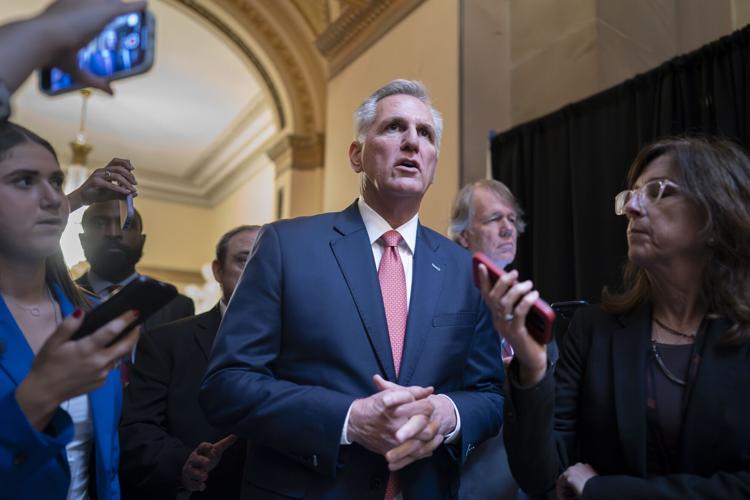
Speaker of the House Kevin McCarthy, R-Calif., walks with reporters after votes June 22 in the House.
In a flurry of little-noticed legislative action, GOP lawmakers are pushing abortion policy changes, trying to build on the work of activists whose strategy successfully elevated their fight to the nation's highest court.
In one government funding bill after another, Republicans are incorporating unrelated policy provisions, known as riders, to restrict women's reproductive rights. Democrats say the proposals will never become law.
“This is not just about an attack on women’s health,” said Connecticut Rep. Rosa DeLauro, the top Democrat on the House Appropriations Committee. “I view it as an attempt to derail the entire process of funding the federal government by injecting these riders into the appropriations process.”
Rep. Kay Granger, the Texas Republican who heads the committee, said during a hearing last week that the riders that were included continue “long-standing pro-life protections that are important to our side of the aisle.”
Using budget bills this way is hardly new, but it points to a broader divide among Republicans about where to go next on abortion after the Supreme Court's decision cleared the way for state-by-state restrictions on abortion rights.

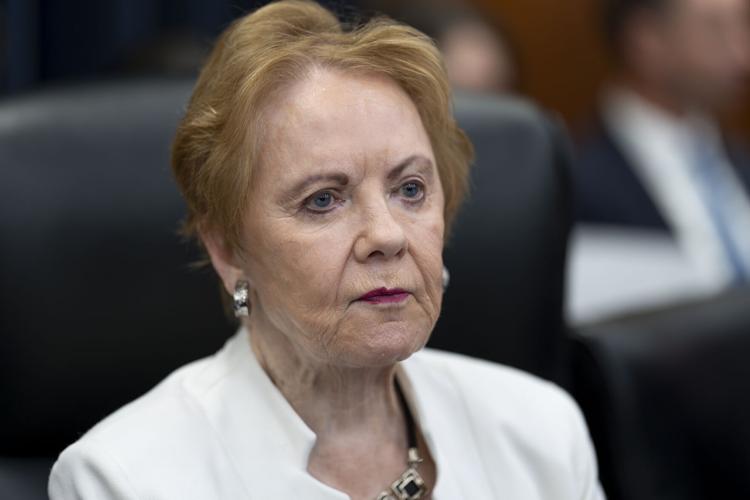
House Appropriations Committee Chair Kay Granger, R-Texas, and her panel begin work on fiscal 2024 spending bills at the Capitol in Washington on June 14.
Republicans for years held stand-alone votes in the House on bills to restrict abortion. Now, some in the party — particularly the nearly 20 Republicans running for reelection in swing districts — are hesitant, if not outright opposed, to roll calls on abortion proposals. They say such bills will never see the light of day as long as Democrats control the Senate.
The GOP's new push is taking place line by line in the sprawling legislation drafted each year to fund government agencies and programs.
Nearly a dozen anti-abortion measures have been included so far in budget bills. In the agricultural one, for example, Republicans are looking to reverse a recent move by the Food and Drug Administration that would allow the contraception pill mifepristone to be dispensed in certified pharmacies, as opposed to only in hospitals and clinics.
Anti-abortion proposals have found their way into the defense bill, where GOP lawmakers are aiming to ban paid leave and travel for military service members and their family members who are seeking reproductive health care services. Rep. Mike Rogers, chairman of the House Armed Services Committee, said he warned Defense Secretary Llyod Austin about it.
“I told them that that was going to be a poison pill when it came to getting their legislation done over here,” Rogers, R-Ala., said this past week. “I told him, you know, you’re asking for trouble. And now they got trouble.”
There are riders, too, in the financial services bill, where Republicans want to prohibit local and federal money to be used to carry out a District of Columbia law that bans discrimination over employees’ reproductive decisions.

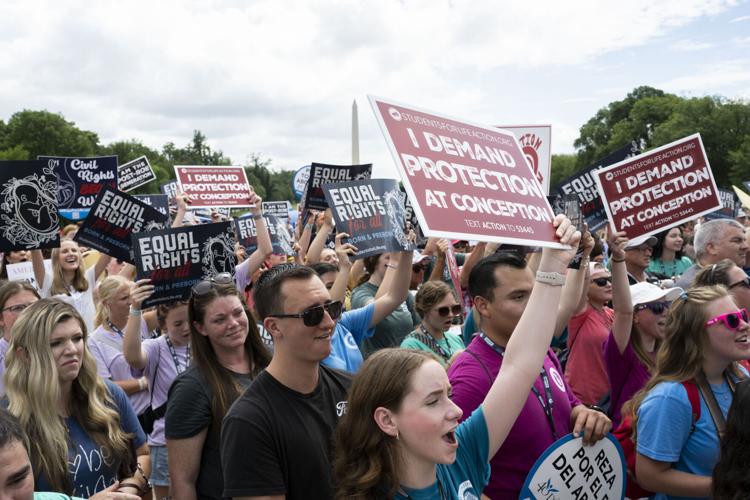
Anti-abortion activists cheer before Republican presidential candidate former Vice President Mike Pence speaks June 24 at the National Celebrate Life Rally at the Lincoln Memorial.
“It seems like they can’t do anything without trying to put something in there to restrict abortion rights,” Rep. Suzan DelBene of Washington state, chair of the House Democrats' campaign arm, said. “I don’t think the public is fooled by that and absolutely, this will be a critical issue in the next election.”
She and the Democratic Congressional Campaign Committee are working to target the vulnerable Republicans on the issue before the 2024 election.
The broad effort by Republicans to include what critics often deride as “poison pills” in the appropriations process steps up the confrontation with Senate Democrats and the White House come September over spending bills, potentially heightening the odds of a government shutdown with the Oct. 1 start of the new budget year.


DeLauro, who headed the Appropriations Committee in the last Congress, said the decision by Republicans to include these measures is a betrayal of the agreement the parties made years ago to not include any provisions in spending bills that would block passage.
She said committee Democrats who spent the past week marking up these bills late into the night pleaded with their Republican colleagues to rethink the abortion language.
The Senate recently passed the military and agriculture bills out of committee without any abortion measures attached.
Sen. Patty Murray, chair of the Senate Appropriation Committee, said that she has made it clear that she would be a “firewall” against House Republicans’ efforts to further restrict reproductive rights.
But the growing tension between GOP factions over abortion legislation remains apparent.
The Republican Study Committee — the largest single group in the House GOP conference — recently issued a memo to members urging leaders to hold vote on a proposal that would “clarify that health insurance plans that provide elective abortion would be ineligible for federal funding.”
That bill would effectively codify the Hyde Amendment, which restricts government funding for most abortions.

