

Following a recent five-hour drive east from Tucson, the New Mexico desert sky was robin-egg blue, with wildflowers gently opening to the sun’s warmth.
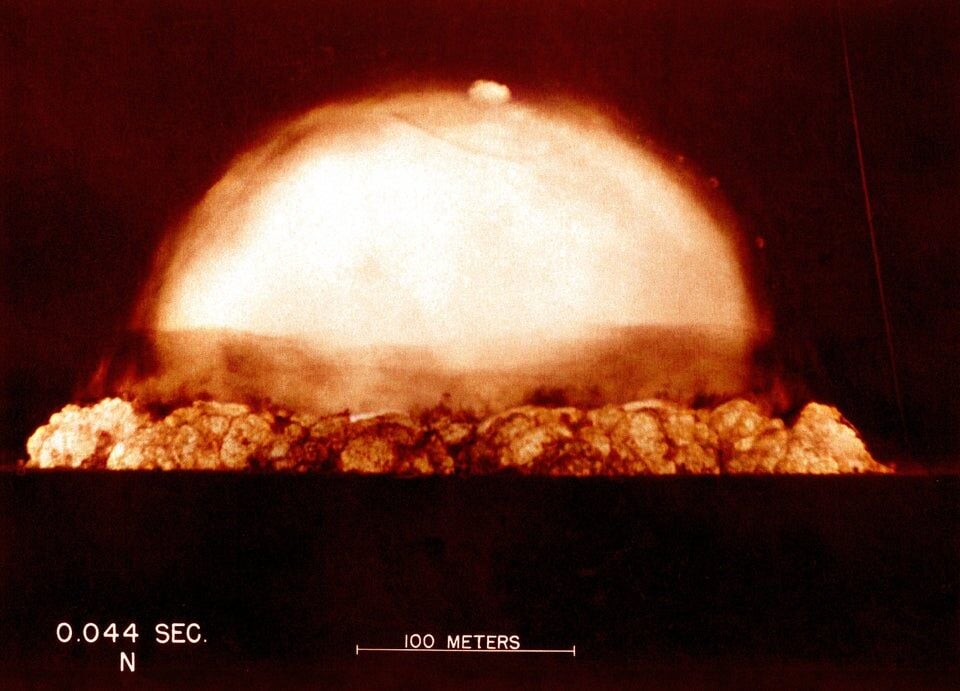
I was standing at Trinity, ground zero, where the first atomic bomb exploded at 5:30 a.m. on July 16, 1945. Seismographs in Tucson detected the explosion from 280 miles away.
The test bomb, code name Gadget, would have been suspended from a steel tower approximately 96 feet directly above my head. Upon detonation, it produced enough energy to compress the ground below me 10 feet into Earth’s crust. The steel tower vaporized.
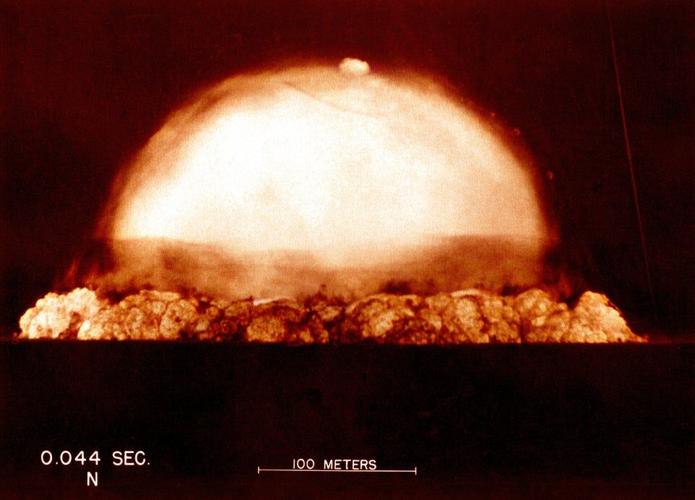
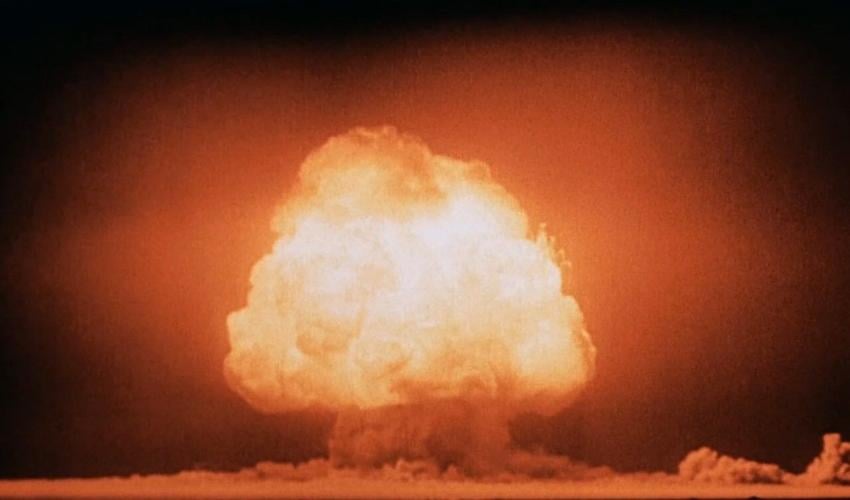
On that morning in 1945, a spectacular white flash of heat and light blanched the barren landscape. Initially, tongues of fire shot out at ground level and splashed across the desert floor. Yellow, green and scarlet flashes came from the hemispherical plume. It rose rapidly, like an enormous sweltering blister, and popped. Then it gushed up and up, boring a hole into the heavens, searching for air and room to grow.
As the cloud stem reared, it appeared twisted like a left-handed screw. The mass soared into the atmosphere more than 40,000 feet in the early morning sky. The sun rose twice that day and a blind girl, 120 miles away, said she saw the flash.
The Atomic Age had shown its teeth to the world for the first time.
Seconds later, the thundering sound echoed against the Sierra Oscura Mountains, the rocks, and the desert floor, for what seemed an eternity. The sound was deafening as it bounced over and over in the Jornada del Muerto. This area in the desert is known ominously as the Dead Man’s Trial — The Journey of Death.
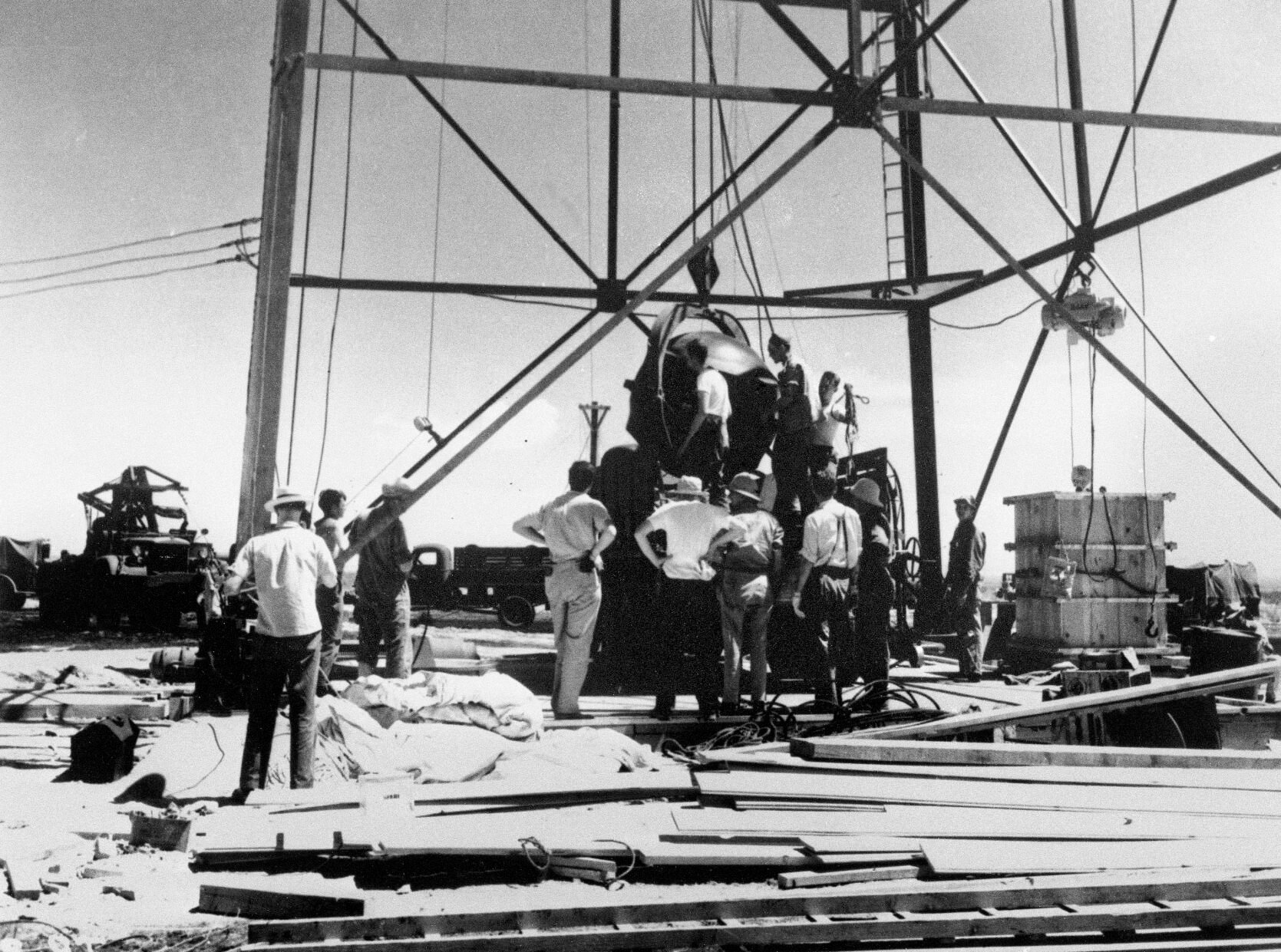
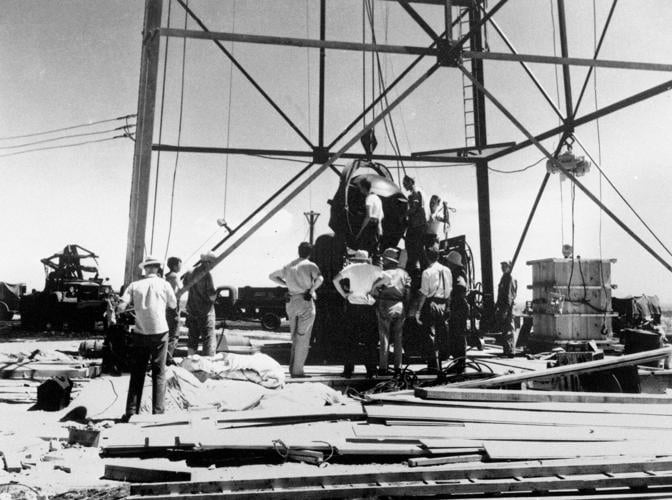
In this July 6, 1945, file photo, scientists and workers rig the world's first atomic bomb to raise it up onto a 100 foot tower at the Trinity bomb test site near Alamagordo, New Mexico.
Less than a month after the Trinity test, at 2:45 a.m. on Aug. 6, 1945, pilot Col. Paul Tibbets took off in the Enola Gay B-29, from Tinian, part of the Mariana Islands in the Pacific. “Dimples 82” was loaded with the four-ton bomb named “Little Boy,” bound for Hiroshima.
The world would never be the same.
One of the senior guides at Trinity asked me who I thought was most responsible for the U.S. producing the atomic bomb. Prominent names were recalled. Then he answered: Adolf Hitler.
Before the war, Hitler forced the most brilliant scientific minds from the Jewish community in Germany out of the country. The massive depth of mental aptitude and technical skills of these engineers came to work in the U.S. and helped develop the Manhattan Project.

In approximately two minutes, the Trinity site mushroom cloud reached 7.5 miles (12.1 km) in height. The test released an explosive force of 22.1 thousand tons of TNT, more than scientists had predicted.
The site is open twice a year to visitors, the first Saturday in April and the first Saturday in October. The White Sands Missile Range is under the command of the U.S. military.
As I walked out of the squared-off fenced and gated sector containing the Trinity National Monument, I heard a slight ticking sound following from behind. It came from a fellow carrying a Geiger Counter. This grave reminder of what humans produced at this very site, to my vexation, was still ticking.

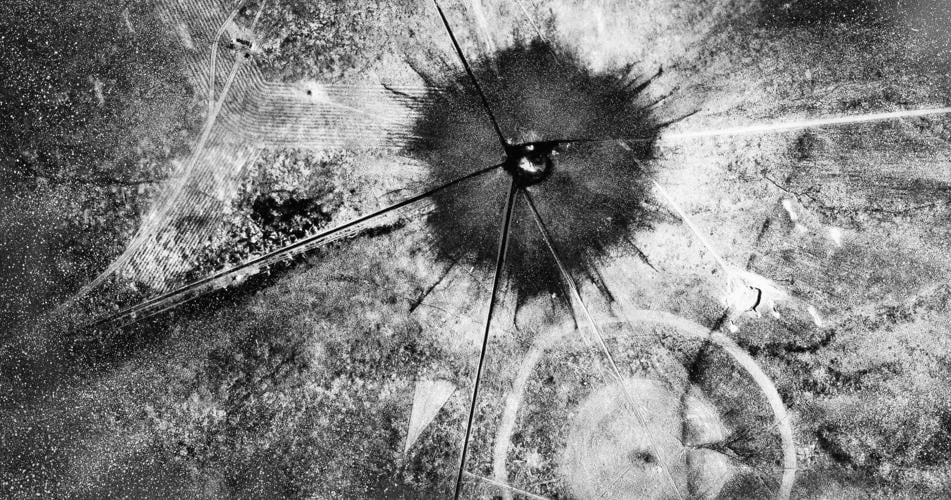
This July 16, 1945 file photo shows an aerial view after the first atomic explosion at Trinity Test Site, New Mexico.
Photos: Strategic Air Command bombers in Tucson
Strategic Air Command in Tucson
Updated
A SAC B-47 bomber from Davis-Monthan AFB slides underneath a KC-97 tanker 15,000 feet above Southern Arizona in 1955. The jets slow to 210-250 mph to fly with the slower prop-driven tanker. The tanker transfers thousands of pounds of aviation fuel in a few minutes.
Strategic Air Command in Tucson
Updated
A KC-97 refueling tanker boom operator watches a B-47 bomber from Davis-Monthan AFB approach for refueling 15,000 feet above the Arizona desert in 1955.
Strategic Air Command in Tucson
Updated
The Job Control Room – the "brain center" of the 303rd Maintenance Squadron at Davis-Monthan AFB in 1959, where all maintenance acivities are scheduled, coordinated and monitored. They track accumlated flight hours and pull planes from active status for routine maintenance.
Strategic Air Command in Tucson
Updated
It was no small task to keep Davis-Monthan's huge fleet of B-47 bombers in the air. What it took for one plane in 1959: Row 1: Bomber's three-man flight crew. Rom 2: Crew chief and two assistants. Row 3: Maintenance supervisors, support personnel and quality control inspectors. Remaining rows: Field maintenance techs, personnel from the Armament and Electronics Squadron and Aviation Depot Squadron personnel.
Strategic Air Command in Tucson
Updated
"Operation Skywatch" at Davis-Monthan AFB in 1955. The around-the-clock aircraft tracking project used 130 civilian obeservers at posts throughout Arizona and New Mexico to track enemy aircraft.
Strategic Air Command in Tucson
Updated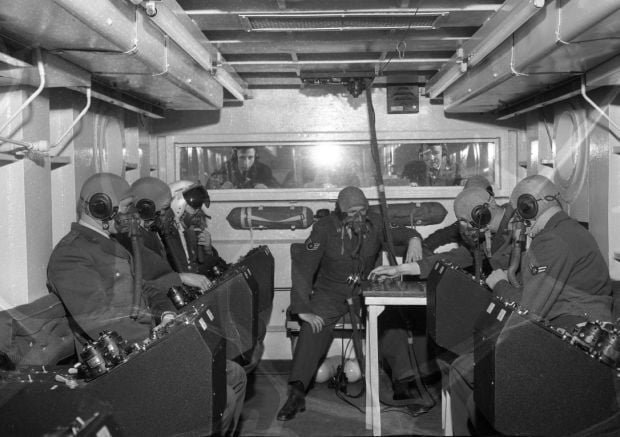
Bomber flight crews are monitored during their time in a high altitude chamber at Davis-Monthan AFB in Feb. 1955.
Strategic Air Command in Tucson
Updated
A B-47 bomber on the flightline at Davis-Monthan AFB in March, 1956.
Strategic Air Command in Tucson
Updated
The high tail of B-47 bombers at Davis-Monthan AFB in March, 1956. The aircraft had a remotely operated tail gun.
Strategic Air Command in Tucson
Updated
A massive 60-foot bulldozer at Davis-Monthan AFB in 1958. It can push a fully-loaded B-36 bomber at 200 tons off the runway in less than 20 minutes. Getting those bombers airborne fast is important in nuclear war.
Strategic Air Command in Tucson
Updated
The new nuclear bomb-proof alert center for flight crews at Davis-Monthan AFB in March, 1960. Much of the structure is below ground. Eight tunnels connect the lower rooms with emergency vehicle parking areas.
Strategic Air Command in Tucson
Updated
Pilot and co-pilot in the B-47 bomber flight simulator at Davis-Monthan AFB in October, 1954. (Water-damaged negative.)
Strategic Air Command in Tucson
Updated
Air Force technician works on the massive computer that powers the B-47 bomber flight simulator at Davis-Monthan AFB in October, 1954. (Water-damaged negative.)
Strategic Air Command in Tucson
Updated
An Air Force technician operates the controls for the B-47 bomber flight simular at Davis-Monthan AFB in October, 1954. (Water-damaged negative.)
Strategic Air Command in Tucson
Updated
An Air Force crew member tracks the location of B-47 on the flight line at Davis-Monthan AFB in Nov, 1959.
Strategic Air Command in Tucson
Updated
Citizen photo Jul. 7, 1955 Tucson-based B-47's rehearse for Monday dedication of Air Force Academy.
Strategic Air Command in Tucson
Updated
Citizen photo by Bernie Sedley Jul. 20, 1955 B47 co-pilots handle the guns on a 600-mile-an-hour Stratojet bomber and regulations call for co-pilots to practice regularly at Sahuarita Range. Rapid-fire cannon 10 mm. are radar-controlled, each turret has control room in building behind practice guns. As tiny target drone plane maneuvers in front of guns, co-pilots watch radar screens ready to blast the drone from sky. Gunners pick up target on radar scope, lock guns on target where they follow by radar and gunner presses a button every time he has target in range.
Strategic Air Command in Tucson
Updated
The height finder antenna and artic tower at the Mt. Lemmon Air Force Station in May, 1957. Sitting at 9,150-feet, it was the said to be the highest radar installation in the world.
Strategic Air Command in Tucson
Updated
Air Force staffers monitor air traffic in the Southwestern U.S. at the Mt. Lemmon Air Force Station in May, 1957, as part of an extensive array of radar stations that watched for enemy Soviet aircraft in the days before satellites. A Tucson Citizen writer said "electronic miracles of perception are performed by radar scopes and charting screens."
Strategic Air Command in Tucson
Updated
Workers from the 2704th Air Force Aircraft Storage and Disposal Group mothball the first B-47 Stratoget bomber to be retired from active service in February, 1964.
Award-winning columnist Jerry Wilkerson lives in SaddleBrooke. He is a former press secretary for two U.S. Congressmen, a prior Chicago CBS radio and Chicago Daily News correspondent. Wilkerson is a navy veteran and former police commissioner. Email: franchise@att.net

