


Arizona Attorney General Kris Mayes is challenging utility regulators' recent approval of an electricity service agreement between Project Blue developers and Tucson Electric Power.
Mayes said the agreement illegally gives the two parties the power to set electricity rates for Project Blue's data centers, apparently without the state's approval, in violation of the state Constitution.
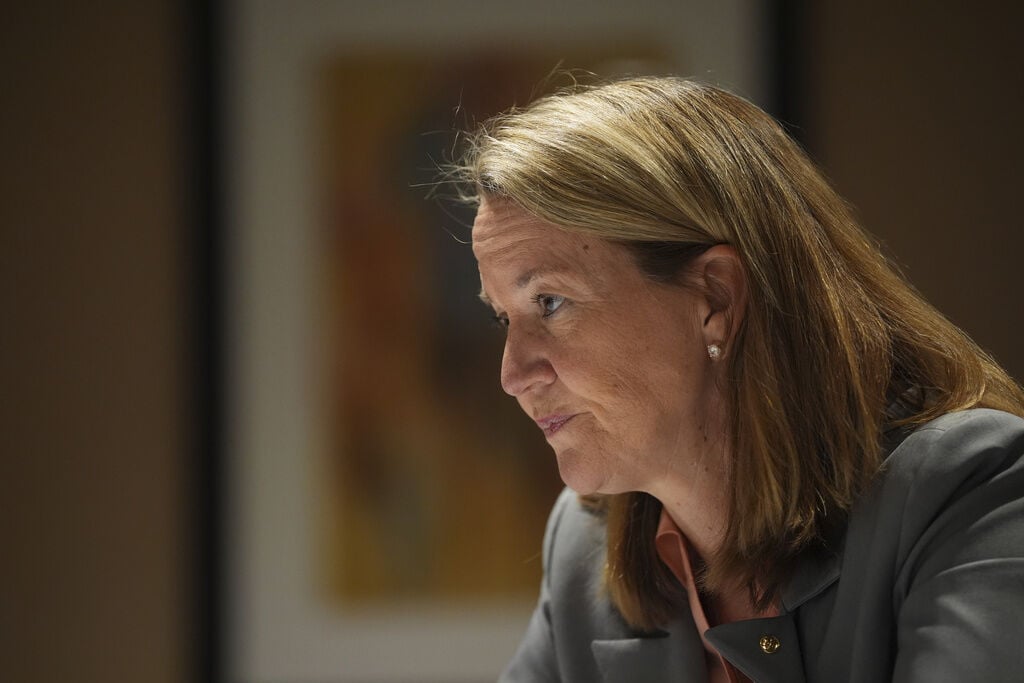
Arizona Attorney General Kris Mayes
“The loophole created for the developers of this data center to secretly set electricity rates behind closed doors and outside of the public process is new, rare, and a dangerous recipe for massive price hikes for Arizona consumers,” said Mayes in a news release Monday announcing her challenge. “That’s why my office is stepping in.”
The attorney general is asking the Arizona Corporation Commission to vacate its decision, made in a 4-1 vote Dec. 3, approving the agreement between TEP and Project Blue's owner, Humphrey's Peak LLC, and its developer, Beale Infrastructure. Mayes also asked the commission to order a rehearing of the case, in which the commission approved an agreement for TEP to sell Project Blue 286 megawatts of generating capacity.
Project Blue is a planned, major data center complex that would be built on 290 acres on Tucson's far southeast side.
In seeking another hearing on the case, Mayes joins similar requests made separately by the city of Tucson; Reed Spurling, who is active with the No Desert Data Center Coalition; and Daniel Dempsey, representing Underground Arizona Inc. The requests were filed starting Dec. 23. Mayes' request was the most recent, filed Dec. 30.
Mayes singled out a provision in the agreement that she said would allow the utility and Project Blue owners and operators to set the rate the project pays for electricity.
In one instance, she said the agreement left it unclear whether such a rate change would require Corporation Commission approval. Elsewhere in her written request, however, she said more than once that such a rate change under the agreement wouldn't require ACC approval.
"In approving an agreement between a utility and its customer that contains a provision allowing the parties to 'choose their own rate,' the commission abdicated its constitutional and statutory authority and its obligation to protect ratepayers," Mayes wrote.
She cited Page 11 of the agreement's language that says, "Electric service hereunder may be changed to a different rate schedule ... only upon the mutual agreement of utility and customer."
The paragraph containing that sentence starts with a provision that TEP will bill Project Blue for electric service in accordance with a standard rate structure for what it calls "large power service." In between that sentence and the language allowing for revisions to the rates is a second sentence that's blacked out.
"As mentioned above, nothing in the agreement specifies that modifications and specifications ... approved by TEP and Customer are to be reviewed and specified by the commission," said the third sentence.
Reached for comment Monday, TEP spokesman Joe Barrios denied Mayes' allegation that the agreement will allow it and Project Blue to "set their own electricity rates without commission oversight."
"The project will pay for service under TEP’s Commission-approved rate for customers that take service at our highest retail voltage. This tariff, like all of our other retail tariffs, are reviewed and approved by the ACC in a public and legal rate-making process, and is designed to cover the costs of providing service to customers," Barrios said.
He declined to elaborate on that point in a brief phone conversation with the Star, saying, "At this point what we said, that’s all I can really offer you. My understanding is if they, the customers, want to change the rate they were under, that would also require approval from the commission."
Mayes, however, said the commission "delegated its exclusive ratemaking authority to private parties, in violation of the state constitution."
In a statement, ACC Chairman Kevin Thompson said of Mayes, a commissioner herself from 2003-2010, "You'd think a former commissioner would better understand the procedural role of the ACC in approving energy supply agreements, but this protest isn't actually about process or form.
"This is more performative bandwagoning theater from the AG. The irony is that if the commission rejected this special contract, TEP would still be able to move forward under existing tariffs and ratepayers would not realize the enhanced protections secured in this agreement that will actually reduce transmission costs for all other customers," Thompson said.
In a brief conversation with the Star Monday, Thompson said he would comment specifically on Mayes' allegations once he's had time to review them.
Mayes also argued in her request for rehearing that the commission failed to adequately set a "fair value" for TEP's in-state property. Such a failure likely puts the commission in a position of failing to assure the utility is charging the project "just and reasonable rates," Mayes wrote.
The commission's action also possibly allows for discriminatory electric rates in favor of Project Blue, also in violation of the state Constitution and state law, Mayes said.
When the commission approved the agreement last month, the four members who supported it said it offered more than adequate assurances that other TEP ratepayers including individual consumers wouldn't have to pay for the extra energy delivered to the data center complex.
Project Blue would house up to four individual data centers upon commencing operations in 2027 and could eventually play host to up to 10 data centers.
The project has drawn huge opposition from many Tucsonans, opposition that led the Tucson City Council in August to kill Project Blue's request to have the 290 acres annexed into the city and served by reclaimed water from the Tucson Water system. But the Pima County Board of Supervisors voted 3-2 in June to sell Project Blue's owners the 290 acres and in December voted to close the sale for $20 million.
At the December Corporation Commission hearing, dozens of speakers, most from Tucson, spoke against the agreement and only one speaker supported it, a speaker representing the Arizona Manufacturers Council and the Arizona Chamber of Commerce.
The utility said the agreement would protect existing TEP customers in part by making it last for 10 years, and by including minimum monthly billing requirements in the event Project Blue operators demand less electricity than the existing generating capacity set aside for it. Project Blue can only terminate the agreement by giving a three-year advance notice, and must make a termination payment, TEP said.
Mayes, however, in her request for rehearing, chided the commissioners for what she said was ignoring concerns and questions from opponents of the agreement, led by Commissioner Rachel Walden, who cast the lone "no" vote. Walden, for instance, argued that existing TEP ratepayers would have to pay for higher costs to the utility made necessary to maintain its existing margin of generating capacity once Project Blue is operating.
Walden, like all other commissioners a Republican, complained along with other speakers that construction of a new switchyard needed to carry out this agreement also would be paid for in part by other utility customers, Mayes noted.
"Nevertheless, far from employing its plenary powers to ensure full vetting of TEP's and Beale/Humphrey's (agreement), the commission rubber-stamped it," said Mayes, a Democrat.

