

PHOENIX — You can't yet buy it in stores.
But a Benson lawmaker is moving to make sure that lab-grown meat is never available in Arizona.
Not at the grocery stores. And not at restaurants.
The proposal by Republican Rep. Lupe Diaz would make it illegal to sell "cell-cultured protein for human consumption'' in the state. And his HB 2791 has teeth: Violators could wind up in state prison for 18 months.
If enacted, it would appear to be the first outright ban in the country. By contrast, other states with similar laws simply deal with misrepresentation, with requirements that the products be clearly labeled as lab-grown meats.
In fact, that is what Rep. Quang Nguyen is attempting.
His HB 2672 does not prohibit the sale of any product. But it would require that anything containing lab-grown meat have a label stating "This product is derived from cultivated cells.''

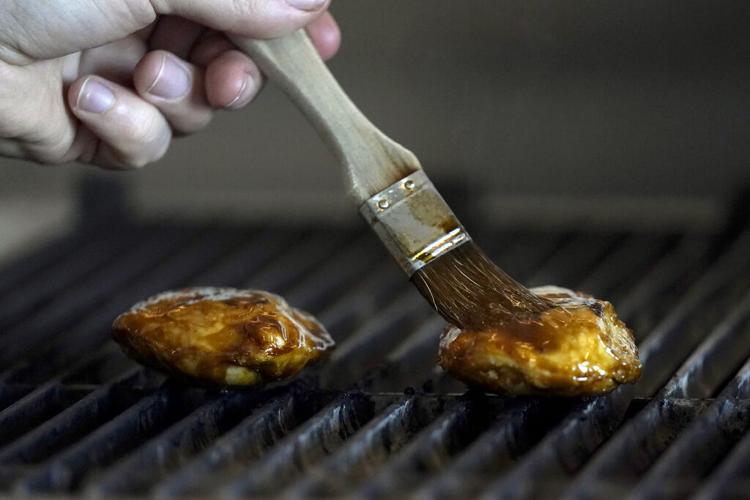
A chef prepares cultivated, or lab-grown chicken from producer Good Meat. A state lawmaker is moving to make sure that lab-grown meat won't be available in Arizona either on store shelves or in restaurants.
Diaz, however, is defending his approach.
"The way that the meat is made, I just don't trust it,'' he told Capitol Media Services. "It's accelerated cell growth.''
And Diaz said that it's a new product that "hasn't really been proven out.''
"There's a lot of cancer concerns in that because they're using enzymes and that kind of stuff,'' he said. "How do they accelerate it, where does it stop, how does it affect the body?'' Diaz said. "I don't think those studies have really been done yet.''
He acknowledged that in 2003, the U.S. Department of Agriculture and the Food and Drug Administration approved the sale of lab-produced chicken. And two companies, Upside Foods and Good Meat, have been given permission to sell their products to restaurants.
Diaz, however, said he remains unconvinced.
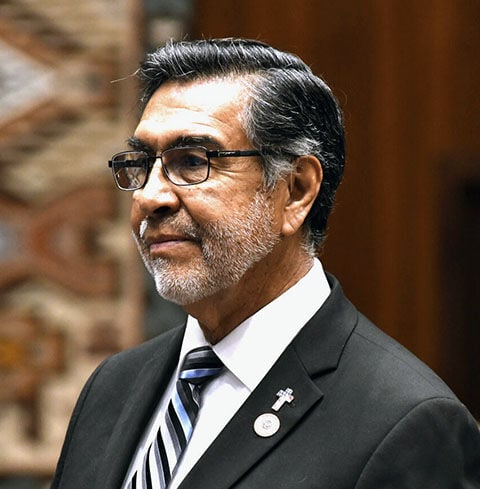
Rep. Lupe Diaz
And he said his beliefs that Arizonans should be eating only those meats that came from live animals are buttressed by the more recent focus of Make America Healthy Again.
Yet the new "food pyramid'' released by the Department of Agriculture and Robert F. Kennedy Jr., the secretary of Health and Human Services, actually is promoting the consumption of more protein at the top.
And there is no question but that what is being produced in the lab does qualify at protein.
But Diaz said there are other factors behind his push to outlaw its sale in Arizona.
"I'd really like to go ahead and support our ranchers as well,'' he said.
This isn't the first go-around of the idea.
Two years ago, Rep. David Marshall pushed a similar measure through the House to keep such products off the shelves of Arizona grocery stores based at least in part on his claims that billionaire Bill Gates and the World Economic Forum "have openly declared war on our ranching.'' He expressed some of the same concerns as Diaz.
"What's the issue with ranching, what's the issue with cattle?'' the Snowflake Republican told colleagues at a legislative hearing.
On one hand, Marshall described himself as a "free-market capitalist.''
"And I believe in business,'' he continued. "However, when you're dealing with companies like this that are seeking to eradicate ranching in our state, in our country, it has to be dealt with.''
But Marshall's bill also contained a provision to allow any business that is "adversely affected'' — meaning cattle ranchers — to seek damages of up to $100,000.
His measure did not get a hearing in the Senate.
What may prove more acceptable is a scaled-back approach crafted Nguyen.
"I'm not advocating for banning anything,'' the Prescott Valley Republican said.
"All I want to do is to make sure is that there's some level of transparency,'' he said. "As a consumer, I should be able to see what I'm buying.
And that, Nguyen said, specifically means telling shoppers "it's not from any slaughtered animal.''
"Maybe 'slaughtered animal' sounds like kind of a mean thing to say,'' Nguyen said. "But that's what it is.''
In fact, Nguyen said, he believes there's actually a place for lab-grown meat — assuming it eventually can be economically produced.
"If this is one way of having meat in a Third World country, I'm all for that,'' he said. And Nguyen said he can speak from experience, having been a refugee from Vietnam.
"I don't think if I were growing up in Vietnam, if you put a piece of steak in front of me, I don't think I would go, 'Hey, where did this come from?' '' he said.
The bottom line, Nguyen said, is informed choice. And that, he said, could mean a lot for those who like meat but don't want to contribute to some of the downsides of traditional ranching, including the methane produced by cattle.
Nguyen had a similar proposal in 2024, which cleared the House but never got a final Senate vote.
Some other states already have their own versions.
In Wyoming, for example, anything labeled "meat'' has to have qualifying terms on the label, like whether it contains cell-cultured products, is vegetarian or plant-based.
Texas law requires similar disclaimers. And Kansas considers anything that is designed to appear and have the texture and flavor of meat but does not actually contain any must have a prominent and conspicuous label disclosing that fact.

