


Arizona Gov. Katie Hobbs and leaders of the six other Western states that rely on the Colorado River ended a Friday meeting in Washington, D.C. with no deal to end a stalemate over rights to the river's dwindling water supply.
Hobbs indicated that progress was made thanks to newfound flexibility from upstream states over their willingness to make commitments to cut some of their river water use, as the Lower Basin states, including Arizona, have already done.
But Colorado officials all but directly contradicted Hobbs' comments, saying they and Upper Colorado River Basin states were sticking to their position opposing any mandatory water use cuts on their part. The meeting was hosted by U.S. Interior Secretary Doug Burgum.
“I was encouraged to hear Upper Basin governors express a willingness to turn water conservation programs into firm commitments of water savings,” Hobbs posted on social media after the two-hour meeting. "Arizona has been and will continue to be at the table offering solutions to the long-term protection of the river so long as every state recognizes our shared responsibility.

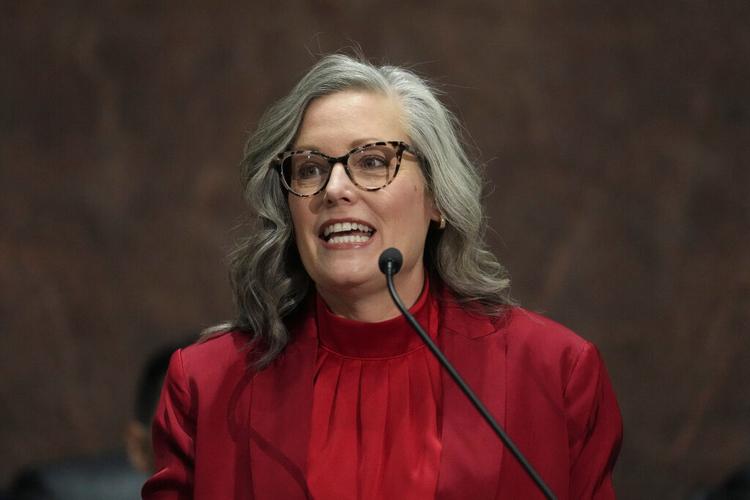
Gov. Katie Hobbs
"I look forward to continued discussions and hope that we can work across state and party lines to find a fair deal that protects Arizona farmers, families and businesses, and America’s national security and resilience," Hobbs wrote.
Among the Upper Basin governors at the meeting was Colorado’s Jared Polis, who sat next to Hobbs at the Department of the Interior offices. But while Polis said in a statement after the meeting that his state remains committed to working collaboratively to find solutions to the river's chronic supply-demand deficit, Colorado River Commissioner Becky Mitchell said in her own statement after the session that the state is sticking to its guns in being unwilling to commit to any mandatory conservation measures.
Polis said in his statement, “We have offered sacrifices to ensure the long-term viability of the Colorado River and we remain committed to working collaboratively to find solutions that protect water for our state, while supporting the vitality of the Colorado River and everyone who depends on it."
Mitchell said, "Colorado is committed to being part of the solution, and with our Upper Basin partners, we have offered every tool available to us. This includes making releases from our upstream reservoirs and establishing a contribution program as part of a consensus agreement. However, any contributions must be voluntary, and we have real ideas and plans to achieve the goals.
"As several upper basin governors clearly stated at the meeting, we cannot and will not impose mandatory reductions on our water rights holders to send water downstream," she wrote. "Our water users are already facing uncompensated reductions through state regulation. In many cases, these reductions impact 1880s water rights that predate the (Colorado River) Compact. Any contribution program must recognize our hydrologic realities: we simply cannot conserve water that we do not get to begin with.”

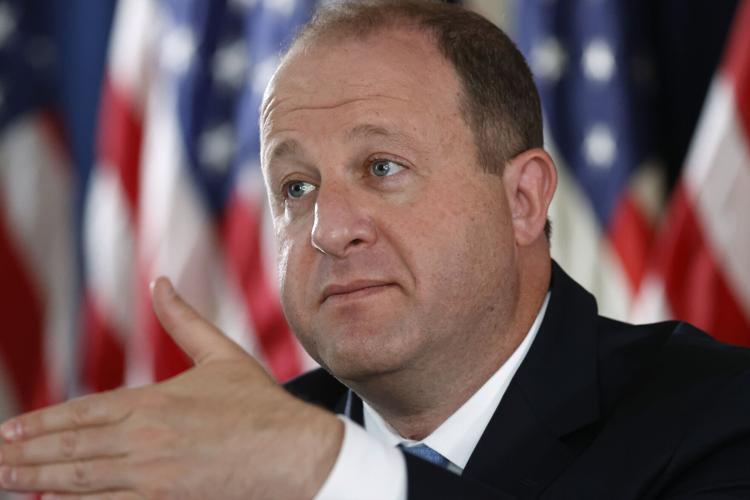
Colorado Gov. Jared Polis
An Arizona source familiar with the negotiations, however, told the Arizona Daily Star that at Friday's meeting, some Upper Basin governors did appear to be open to possible mandatory conservation measures and indicated they realized "it's not a good look" to offer only voluntary conservation measures.
"I think the other Upper Basin states expressed a willingness to put water on the table in a way that Colorado has not," said the source late Friday, requesting anonymity to protect their ability to continue to participate in interstate river discussions.
Mitchell spoke in even stronger terms earlier in the week at a public talk she gave in Aurora, a suburb of Denver. She spoke at the annual meeting of the Colorado Water Conference, a professional association that advocates for policies and laws that protect the state’s waters.
“For more than a century, we built a system on optimism and entitlement. We planned for abundance, labeled it normal, wrote it in the law, and when the water showed up, we spent it,” Mitchell told the gathering, in remarks reported by the Colorado Sun news website. “When it didn’t, we blamed the weather, climate change or each other. Anything but the simple math.”
The seven states need to tie reservoir releases more closely to the actual amount of water coming in, Mitchell said in an interview after the speech. That was a nonnegotiable for the Friday meeting, she said.
Overuse by the Lower Basin is draining the system, Colorado officials say.
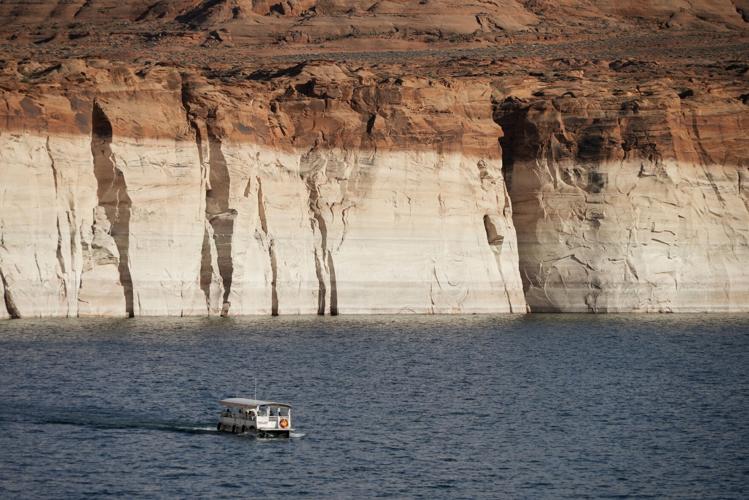
In the 1980s, Lake Powell was overflowing with water. As of Tuesday, it stored 6.2 million acre-feet, or about 25% of its capacity.
The basin has been using the reservoirs like credit cards, rather than savings banks, Mitchell said.
In the negotiations, Colorado can’t agree to another set of rules with reservoir release plans that will drain Powell over time, Mitchell said.
Nor will the state agree to mandatory conservation, she added.
The fight over potential cuts is at the center of the dispute between basin states. The Upper Basin — Colorado, New Mexico, Utah and Wyoming — says it already has had to limit its water use in dry years and cannot commit to mandatory conservation. The states have committed to voluntary water-saving efforts.
The Lower Basin — Arizona, California and Nevada — has said future water restrictions should be shared among all seven states. The downstream states have promised 1.5 million acre-feet in water cuts and called for Upper Basin states to commit to some form of mandatory cutbacks.
Mitchell said in her Aurora talk that mandatory conservation for Colorado is a no-go. The state’s constitution preserves the right for Coloradans to put available water to beneficial use. Mandatory conservation would go against that, the state’s lawyers argue.
“We can’t do it constitutionally within the state of Colorado. There is more flexibility with a voluntary program,” she said. “We can’t bend on that. We’ll get sued.”

A boat floats past bathtub rings showing how low Lake Powell levels have dropped, near Page, Arizona.
Doug MacEachern, the Arizona Department of Water Resources' communication administrator, said the Lower Basin states have offered 1.5 million acre-feet of cuts from the outset of talks, but the Upper Basin states hadn’t budged.
An acre-foot is the amount of water needed to cover an acre of land with water 1 foot deep. That’s about 325,851 gallons. A million acre-feet could fill nearly 500,000 Olympic-sized swimming pools.
“They’re not interested in any kind of mandatory cuts,” MacEachern said ahead of Friday’s meeting. “That’s pretty radical. It’s not exactly what one would call a negotiating posture, but that’s where we’re at.”
The river supplies nearly 40 million people in seven states. A 1922 compact signed when populations were far smaller allocated 7.5 million acre-feet annually to each basin. Arizona is entitled to 2.8 million acre-feet.
But in the last decade, the total supply has only reached 12.5 million acre-feet on average, with the totals falling well below that in the past five years.
The states have spent two years trying to update a 2023 plan that authorized short-term Lower Basin cuts. After they missed a November 2025 deadline, the federal government gave them until Feb. 14 to avoid a settlement imposed by Washington.
With time running out, Interior Secretary Burgum summoned the governors to his office for Friday’s meeting.
“This is one of the toughest challenges facing the West, but the Department remains hopeful that, by working together, the seven basin governors can help deliver a durable path forward,” Burgum said in a statement after the meeting. “Looking at this as a former governor, the responsibility each of them carries to meet the needs of their constituents cannot be understated, and we are committed to partnering with them to reach consensus.”
Six of the governors attended. California Gov. Gavin Newsom sent his state’s natural resources secretary.
Hobbs praised Burgum for stepping in. “That level of leadership is necessary, overdue and essential if we are going to break the logjam and reach a durable agreement,” she said ahead of the meeting.
Hobbs has been critical of the Upper Basin states, which have blamed shortages on hotter temperatures, drought and reduced overall supply. The downstream states largely blame overuse and want all states to absorb cuts.
Ahead of the meeting, Hobbs, a Democrat, pitched Arizona’s case in a way that might win sympathy from Republican President Donald Trump. She stressed the state’s key role in artificial intelligence, semiconductors, winter agriculture and advanced manufacturing as reasons to maximize its share of the river.
The AI and chip industries, in particular, are high priorities for the president.
Much of Arizona’s population relies on the Central Arizona Project, a $4 billion, 336-mile system of aqueducts, tunnels, pumping plants and pipelines that delivers water from Lake Havasu, which is downstream from Lake Mead on the Colorado River.
Andrea Gerlak, a University of Arizona professor and director of the Udall Center for Studies in Public Policy, said “little Band-Aids” like the 2023 deal have bought time, but a long-term solution is still needed.
“There have been a lot of good incremental steps over the past 10 years,” she said by email. But, she added, the stalemate is a problem. “No one, me included, would have predicted that the states would not have been able to move forward with a post-2026 agreement.”
Behind the series: The Star's longtime environmental reporter Tony Davis shares what inspired him to write the investigative series "Colorado River reckoning: Not enough water."

