

NEW YORK — A jury will decide whether three men accused of funneling cash to basketball prospects and their families were defrauding the universities they purported to help.
Closing arguments ended Thursday at the Moynihan U.S. Federal Courthouse in Manhattan, and the jury will reconvene Monday morning to begin deliberations.
“You have heard a spectacular set of closing arguments by some very fine lawyers,” Judge Lewis A. Kaplan told the 12-member jury before sending them home for the weekend with the instructions to remain “in a state of sterilization from information about this case” and to stay away from television, newspapers and social media.
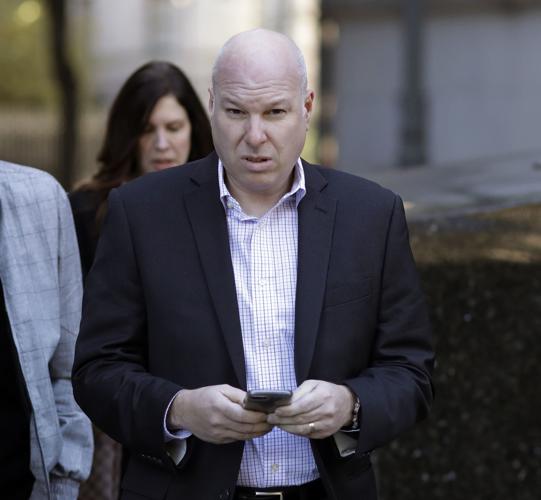
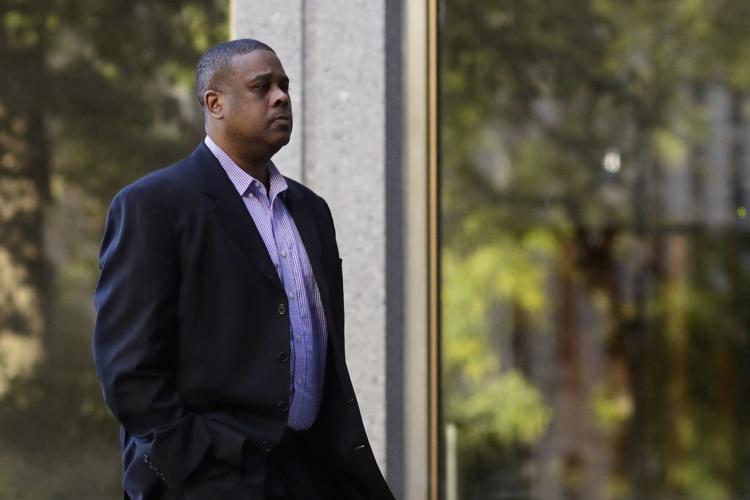
Would-be sports agent Christian Dawkins, former Adidas consultant Merl Code and Adidas executive Jim Gatto have pleaded not guilty to charges that they committed wire fraud and conspiracy to commit wire fraud by paying families of coveted basketball prospects to get them to commit to programs sponsored by the sneaker company.
The prosecution says N.C. State, Louisville, Kansas and Miami, all Adidas schools, were victims of the conspiracy. Their logic: Players whose families received payments would be ineligible, and the schools would suffer financially as a result.
“To Jim, the decision that you reach will be the most important moment in his entire life,” Michael Schachter, Gatto’s defense attorney, told the jury.
Arizona was mentioned several times during a trial that has been dominated lately by testimony about the programs at Louisville and Kansas.
Adidas consultant T.J. Gassnola testified that he paid the mother of former Wildcat Deandre Ayton $15,000 through a family friend, and that he was crushed when Ayton chose the UA, a Nike school, over Kansas.
Federal documents and witness testimony have also alleged that Arizona was prepared to pay for recruits Nassir Little and Brian Bowen Jr.
Bowen’s father, Brian Sr., testified he was told by Dawkins that Arizona assistant coach Joe Pasternack offered “50 grand” for his son to commit to the UA.
But there has been no evidence presented that coach Sean Miller approved a $100,000 payment to Ayton, as ESPN.com reported last February, and text messages shown in court cast doubt as to whether Little’s family asked for or received any money.
Lawyers for Dawkins, Code and Gatto haven’t disputed that there was an effort to pay the players’ families. They argued that the schools were aware of what was going on, and that neither they nor the NCAA suffered any harm.
Further, they argued, other shoe companies do the same thing.
“There is no federal statute that states you can’t give money to a student-athlete,” said Merl F. Code, Code’s father and attorney.

Former Adidas consultant Merl Code pleaded not guilty to charges of wire fraud and conspiracy to commit wire fraud.
Schachter argued Thursday that Kansas coach Bill Self and former Louisville coach Rick Pitino knew about payments to players. He said Gatto acted on the coaches’ behalf to help Adidas and their schools, not to defraud them.
During a 70-minute closing argument Thursday, Schachter pointed to testimony — including some from Gassnola — that showed the coaches wanted the payments to be made.
“There’s not a single example where any of these payments are Jim’s idea,” Schachter said.
Take Gatto’s phone call to Pitino to discuss Brian Bowen Jr., Schachter said.
“Coach Pitino knows exactly why Jim is calling: to discuss a player with Coach Pitino,” Schachter said. “He’s arranging this payment because he wants Louisville to be a great basketball team, because the Adidas logo is on the … Louisville jersey, and that has his company associated with a winner.”
Gassnola testified he paid $2,500 to the guardian of recruit Silvio De Sousa to influence his decision to choose Kansas. He said he planned to pay the guardian an additional $20,000, but never did.
De Sousa committed to Kansas on Aug. 30, 2017. Self had a five-minute phone conversation with Gatto a day later, during a time the FBI was wiretapping Gatto, but the conversation was not recorded because of a “technical issue.”
“Coach Self, in T.J. Gassnola’s view, speaks for Kansas, and Kansas wants Adidas to help Kansas recruits. That’s what T.J. thinks,” Schachter said.
“He just wants Coach Self to be happy. And he wants Kansas to be happy. He views this as a win-win. He wants Kansas to win, and that’s going to help Adidas win because its brand will be associated with a winner.
“Not defrauding — helping. … Nike does the same thing for their schools — and if Adidas doesn’t do the same, it’s going to lose its sponsorships to Nike.”
Edward Diskant, the government’s lead prosecutor, argued there was “no mention” of money when Pitino and Self dealt directly with the Adidas reps. He called offers like the one Arizona was alleged to have made to Bowen “another one of these corrupt, off-the-books, under-the-table payments” to the prospect’s father.
Diskant added that the Nike-does-it-too defense “makes no sense at all.”
“I think the argument is simply that other similar corrupt people were doing this, too, so you should look the other way …” he said.
“It’s like getting pulled over for speeding or drag racing and saying: Officer, that other driver was speeding, too. I was just trying to level the playing field.”

