


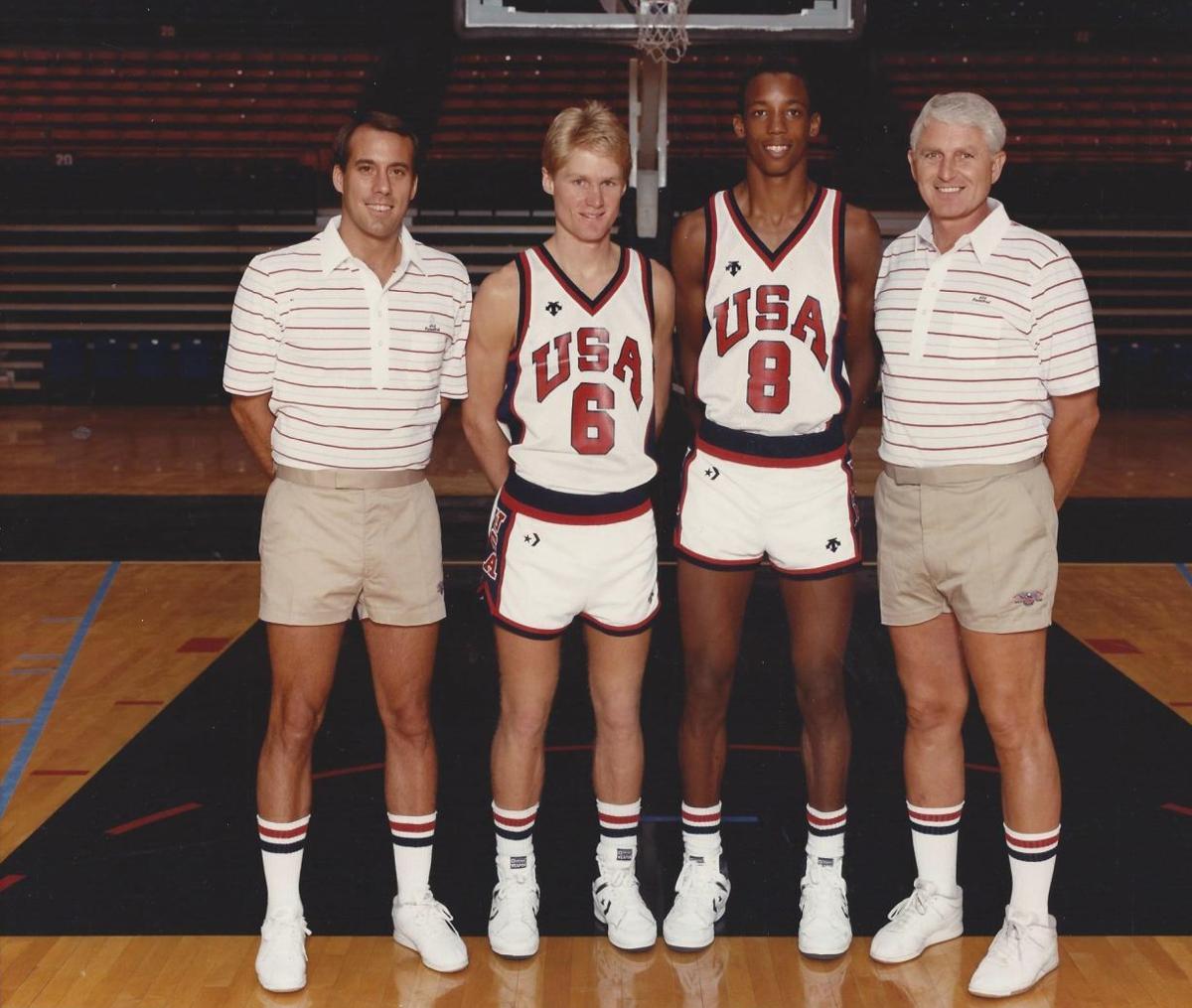
In the world of NCAA Division I basketball, Lute Olson is a legend. Today he embodies Babe Ruth’s timeless quote, “Heroes get remembered, but legends never die.” I know this as a fact, because I spent most of my life learning from Lute, a tall, white-haired Norwegian coach born Robert Luther Olson.
In April of 1983, Lute and I flew to the desert of Tucson where he would become the Wildcats’ new head basketball coach. At the time, our Iowa coaching staff and players thought he was crazy to make the move from a Final Four-level Big Ten program to an obscure 4-24 dead end. Lute saw that Arizona had great potential. His long-standing ties to the California recruiting scene made Arizona an attractive opportunity to start something new. As an assistant coach, I knew that wherever he went we would win; I was also up to the challenge.
Having played for Lute as his captain, MVP, and later as an assistant coach at the University of Iowa, I learned quickly that Lute instilled a lasting philosophy. He firmly believed that becoming a team player was important for both your “game” and in your life. Lute taught us that even the simple things, such as not turning over the ball and shooting in rhythm, brought significant value to the team.
He expected his players to make good decisions on and off the court. If you played for Lute, you understood the following: “Be on time.” “Don’t miss the bus.” And “Remember, you aren’t the only player on the floor.”

Scott Thompson
Lute has influenced hundreds, if not thousands, of players over the years. Just look at the national and global impact of people like Sean Elliott, Steve Kerr, Harvey Mason, Kenny Lofton and so many others. Lute taught us well and proved it over and over again that championships require you to give your all. His was a lesson that true and meaningful success can be reached only when you want the best for others — not just yourself.
His kind of leadership recognized people’s strengths and encouraged everyone to grow. Lute’s signature offense and defense employed existing skills rather than focusing on weaknesses.
He’d say, “Play hard, play smart, and play together!” More than any other head coach I’ve been around, Lute could take a group of misfits and help them develop the confidence to reach their best.
When former UA athletic director Cedric Dempsey lured Lute to the University of Arizona, Tucson was unaccustomed to a coach who cared about the community as much as his team. As a member of his staff, I witnessed his concern and personal commitment and the responsibility he felt for Tucson. Lute thought it was his duty to give back, by working hard to win championships and by being available for community events. I will always remember how Lute willingly accepted almost every invitation to serve our nonprofits.
Because of my training with Lute, I also became a head basketball coach, working at Rice, Wichita State and Cornell.
I retired from coaching in 2000 to battle stage 3 colon cancer. At the same time, Bobbi Olson, Lute’s first wife, was fighting for her life against advanced ovarian cancer. Bobbi passed away on Jan. 1, 2001. Lute, always the competitor, never gave up the fight against cancer or fighting for his team to succeed.
Very few coaches make a lasting, positive impact on players, academic institutions, and communities. Lute Olson represents an era of leaders who coached more than the game. Lute coached values, and the University of Arizona is a better place because of his contributions. My family and I send our best wishes to Lute’s children and their families, and his wife, Kelly, and her two sons. Basketball will miss a great coach and a friend to many.

