


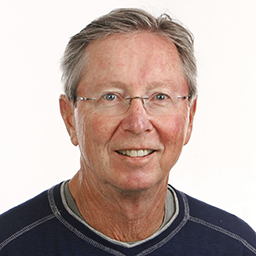

The state’s top all-around athlete in the 1950-51 high school season was probably Phoenix Carver High School’s 6-foot-2-inch Hadie Redd, who would have been considered a four- or five-star prospect in basketball and baseball in today’s evaluation system.
But when Redd showed up at Bear Down Gym for the Class 3A state championship basketball game against undefeated Miami High School, March 1951, he did not have an offer from anyone, in any sport.
Redd figured he would be inducted into the Army after he graduated from the all-Black high school. His father, Robert, worked on a maintenance crew at a Phoenix hotel. His mother, Hattie, was a janitor for the U.S. Postal Service. They didn’t have enough money to pay Hadie’s way to an out-of-city college; hometown ASU — then Arizona State College — did not offer Hadie a scholarship.
“I did have a dream to play for the Harlem Globetrotters," Redd told me in 1992, a few days before he was inducted into the UA Sports Hall of Fame. Globetrotters star "Marques Haynes was friends with my high school coach, Joe Flipper, and they were going to give me a tryout."
Arizona basketball coach Fred Enke watched Redd play that afternoon at Bear Down Gym and waited by the Carver locker room. He introduced himself to Redd and asked if he would like to play for the Wildcats.
“I said, ‘You don’t have any Negroes,’" Redd remembered in that '92 interview. “Coach Enke asked if I’d be willing to be the first. I was so excited I forgot about losing the state championship game."
Redd, who is No. 28 on our list of Tucson’s Top 100 Sports Figures of the last 100 years, would become the Jackie Robinson of Arizona’s sports department. He led the Wildcats in scoring in 1954 and 1955 and played a prominent role on the UA’s powerhouse baseball teams of the mid-'50s.
He twice left Tucson; the first time, 1953, to get a job in Phoenix and help his family make ends meet while his mother was ill. Later, a month before his senior season, 1955-56, he left to join the Army to support his new wife and young son.
There was much more involved than playing ballgames. Redd was barred from playing UA games at both Texas Tech and UTEP. In a game at Hardin-Simmons in Abilene, Texas, a fan held up a sign that said “Blackbird Go Home.”
“It was a lot for a young man to carry," Redd told the Star. “It digs deep and lingers with you your entire lifetime."
In his 1971 book “They Fought Like Wildcats," author Abe Chanin, then the Star’s sports editor, wrote that Redd faced more than cultural and competitive challenges on the road.
Putting Redd in uniform “was not a popular move," wrote Chanin. “The athletic department was totally geared to all the blatant prejudices against (Black people)."

Yet Redd persevered. He was a two-time All-Border Conference forward, becoming the first Black athlete to fill a high-profile role at the UA. Only three Black athletes had played varsity sports at Arizona before Redd arrived, but none carried the load the way Redd did.
He told me he considered quitting school altogether, but “there was too much at stake to leave."
And he wasn’t talking about basketball. He was talking about setting an example for future UA Black athletes.
After he was honorably discharged from the Army, Redd moved to California and was hired by the San Francisco Police Department. He worked the streets his first three years and was then promoted to a bureau’s communications department, helping to incorporate minorities in the police department.
By 1971, Redd was promoted to become the chief of investigations, a detective overseeing 16 other investigators for the San Francisco District Attorney’s office. After retiring in the mid '80s, Redd worked for San Francisco’s Black Leadership Forum and with the Frederick Douglass Symposium group.
He spent 33 years, 1955-88, without returning to Tucson until he was honored by the UA’s Black Advisory Council and introduced to a sellout crowd at halftime of a game at McKale Center.
He said he was not bitter about his days at Arizona.
“I had a lot of learning to do myself," Redd told me. “In the end, it turned out better for all of us. I did have some low moments, but I had more high moments than I did low."
Redd died of a stroke in 2011. He was 77.

