


When the Mexican Baseball Fiesta wraps up its four-day event at Kino Veteran’s Memorial Stadium in October, which kicks off the Mexican Pacific Winter League season, one of the teams won’t have to return to Mexico.
Tucson is set to have a team from the Mexican Pacific Winter League, also known as Liga ARCO Mexican del Pacifico (LAMP), for the upcoming season, the first non-independent professional team to call the Old Pueblo home since 2013, when the Tucson Padres, the Triple-A affiliate of the San Diego Padres, moved to El Paso in 2013.
Tucson was also a longtime home to other minor-league franchises, including the Tucson Toros (Houston Astros) and Tucson Sidewinders (Arizona Diamondbacks), which played its last season in 2008.
Last week, Mayos de Navojoa announced its plans for the Sonoran team to relocate to Tucson, becoming the first U.S.-based team in the Mexican Pacific Winter League, which has 10 teams and was founded in 1945. The Mexican Pacific Winter League has seen several MLB standouts, including Dodgers legend Fernando Valenzuela, first baseman Adrian Gonzalez, the late Ricky Henderson, Robinson Canó and former Arizona Diamondback Yasmany Tomás, among others. Valenzuela and Henderson both played for Mayos de Navojoa.
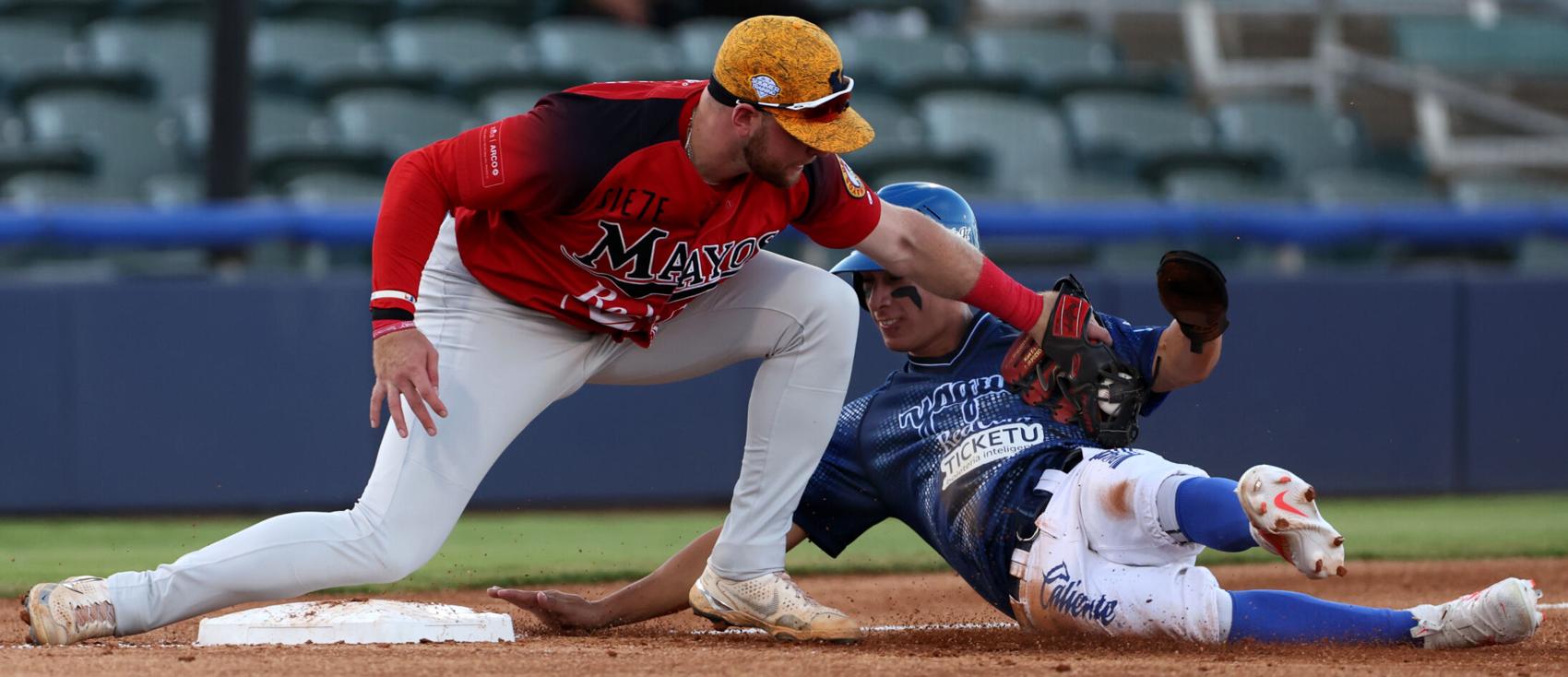
Mayos de Navojoa, a regular participant in the Mexican Baseball Fiesta at Kino Veterans Memorial Stadium, are relocating to Tucson and will play at Kino full time.
For Tucson’s inaugural season, similarly to the NFL’s Washington Commanders and the NHL’s Utah Mammoth, the franchise will be known as “Tucson Baseball Team,” and fans will have an opportunity in the future to vote on a team name for the second season and beyond.
An official media event to welcome the franchise to Tucson will be in June, and the first official home game at Kino Veteran’s Memorial Stadium is slated for Oct. 16. The Mexican Pacific Winter League’s 68-game regular season starts in October and ends in late December, with the postseason in January. The champion will play in the Caribbean Series, an annual tournament with the top teams from leagues in Latin America.
Mexican Baseball Fiesta co-founder Francisco Gamez, who started the Mexican Baseball Fiesta in 2011, was a pitcher for Mayos de Navojoa’s last championship team in 2000.
Landing a Mexican Pacific Winter League team “was a dream come true for me and the Mexican Baseball Fiesta,” said Mexican Baseball Fiesta CEO Frank Gamez, the son of Francisco Gamez.
“We’ve been paving the way, hoping that was something we gain from doing the Fiesta,” said the younger Gamez.

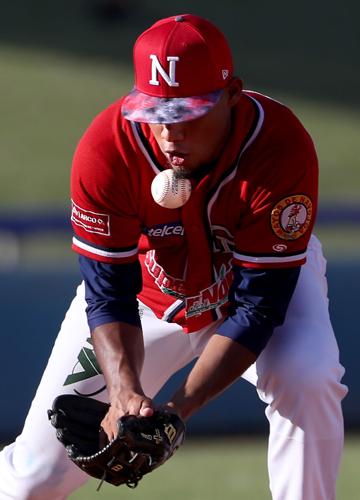
Mayos de Navojoa third baseman takes it on the chin fielding a hopping ground ball by a Mexicali batter off his glove at the Vamos a Tucson Mexican Baseball Fiesta, Tucson, Ariz., October 3, 2021.
In recent years, the Mexican Baseball Fiesta has drawn an average of 20,000-22,000 people over four days. Coupled with the World Baseball Classic qualifiers earlier this year, along with the Mexican Pacific Winter League hosting its international series between Yaquis de Obregón and Águilas de Mexicali, Tucson’s baseball events in the wake of minor-league baseball and MLB Spring Training leaving “showed that the Tucson community is hungry for baseball,” Gamez said.
“There is no question about a fanbase in Tucson, because we’ve been working — at least the hispanic side of the fanbase — heavily with the Mexican Baseball Fiesta,” Gamez said. “When teams looked at us and said, ‘Hey, can we go? Is this something that can happen? Is this something we can do?’ For us, we had all the cards on the table.”
Gamez recently joined “Spears & Ali” on ESPN Tucson to discuss the influence of Mexican Baseball Fiesta, team names and Tucson’s team becoming America’s team. Here’s part of that interview:
How did all of this happen?
A: “We’ve been bringing the team that is moving, Navojoa, throughout our whole (Mexican Baseball Fiesta) history. My dad, Francisco Gamez, played for Navojoa the year of their last championship. I lived in Navojoa and my dad played there, so it’s a beautiful circle. We’ve been working with them and they’ve trusted us, especially early on when it was just three or four teams (in the Mexican Baseball Fiesta). That has been fostering in Mexico. ... We’ve been hearing about baseball coming back to Tucson, and we were like, ‘Hey, we’re the baseball people. What’s going on? We want to be involved.’ That led to the World Baseball Classic qualifiers.
“As we were taking the next step, Tucson took the next step. ... Part of it is the momentum of the Mexican Baseball Fiesta and another part is the hunger that Tucson has for baseball. It was the perfect storm and it made people interested in the Tucson market.”

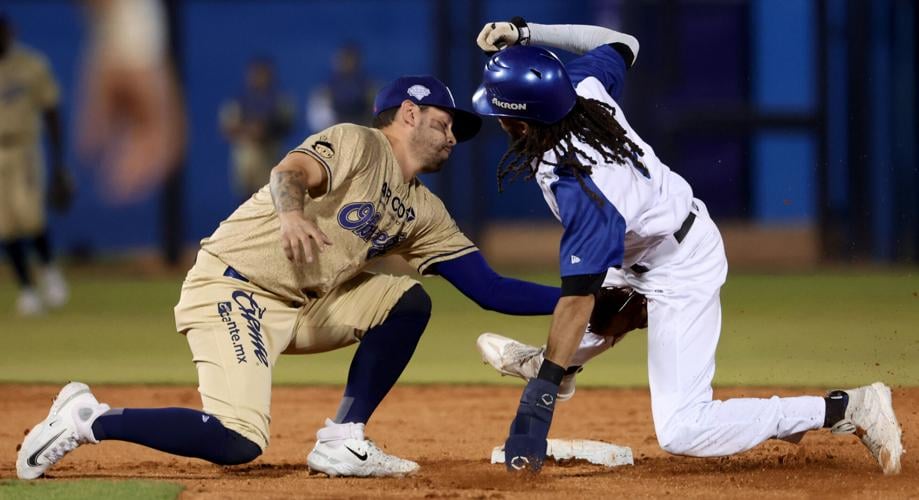
Obregon shortstop JC Gamboa, left, puts the awkward tag on the stolen base attempt by Jalisco’s Billy Hamilton’s, ending the fifth inning of their matchup on the opening night of the 2024 Mexican Baseball Fiesta at Kino Veterans Memorial Stadium on Oct. 3.
How much influence do you think the Mexican Baseball Fiesta had in bringing a team to the U.S. and Tucson?
A: “I think we had an influence. Tucson is a great geographical location when it comes to the Mexican Pacific Winter League. Where it is, it keeps everything within a drivable distance. But this (opportunity) would be years down the road if we didn’t pave the road with Mexican Baseball Fiesta. ... It definitely expedited the process. To them, to me, to people involved, it has promise, but it would’ve taken a longer time for this to happen.
“We have a proven concept for the preseason that excites us to have the whole winter and bring baseball back and have a team that wants to win, stay here and win championships. From a competitive side, that’s what gets me excited.”
Pima County spent $1.12 million — $700,000 for a video board and $425,000 for a new playing surface — on renovations for Kino Veteran’s Memorial Stadium leading up to the World Baseball Classic qualifiers. How does the stadium stack up against other venues in the league?
A: “Now that it has a video board and beautiful grass, it looks ready and good to go. A lot of stadiums in Mexico have two or three video boards. Now that we have one, it’s the perfect start to put a team (in Tucson) and create noise around Kino. In two or three years, we’ll have another (video board).”

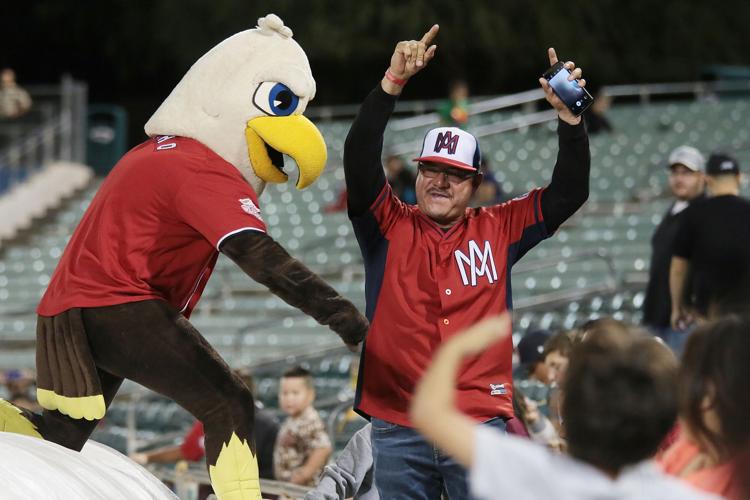
Mexicali’s mascot Lucho appears to pick the pocket of a fan after giving him a big hug during their game against Los Mochis in the Mexican Baseball Fiesta, Friday, Oct. 5, 2018, in Tucson.
Any leads on team names?
A: “We had some names and we’re really excited about those, but the idea is we want to involve the community. When we bring it to Tucson, we don’t want it to be called something else and Tucson follows us. ... We started with Spanish names and we’re trying to find something that’s in the lingo. It’s something that’s easily said for the general market and Americans. It’s Tucson, so the Spanish influence is heavy, but if we get too fancy with it, it could get changed.”
With Tucson having the only U.S.-based team in the Mexican Pacific Winter League, it’s akin to the Toronto Blue Jays as the only Canadian team in MLB. How will the American dimension affect the league?
A: “We made that analogy when we were talking to a group of people to try and get them excited, because that is literally what it’s going to be like. ... What we really want to do for the team is make it their own and make it a Tucson thing. For the Blue Jays, even though it’s MLB, when you go to Toronto, that’s their team. That’s what we want to do.
“We want to make this about Tucson. There’s enough culture blend and I think it’s a beautiful melting pot here. Living here in Tucson, you don’t see those lines when it switches from one community to another, it’s a mix. That’s something I’ve always loved here. We want people to resonate with it.”

