


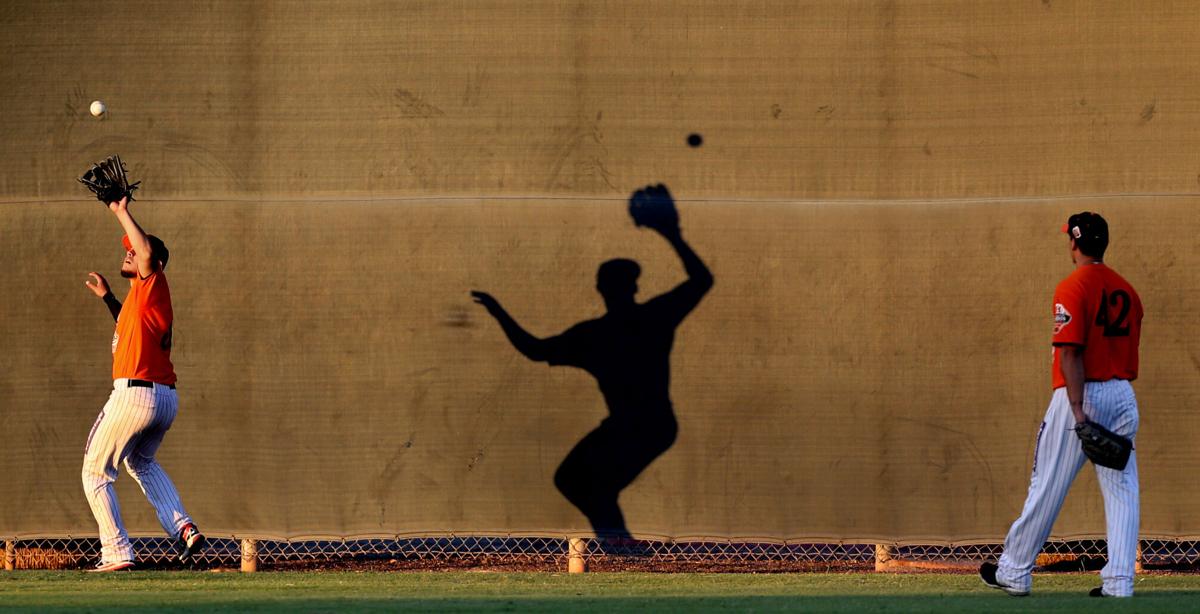
The Star's longtime columnist on the future of baseball in Tucson, the upcoming Lute Olson movie, and why ASU's coaching failures fall on someone other than Herm Edwards:
Baseball players will suffer if Reid Park renovations are made
The City of Tucson Parks and Recreation Department is in the process of selecting one of three master plans to redevelop Reid Park, all of which would effectively squash baseball at Tucson’s historic and most utilized public baseball facility.
Two of the parks and rec "concepts" would eliminate three of the four baseball fields adjacent to Hi Corbett Field. A third concept would eliminate two of the fields.
Eliminating the baseball fields would make space for restrooms, splash pads, running trails, bike paths, public ramadas and greenspace (more trees).
You can imagine the feeling of potential loss within Tucson’s baseball community. This is sure to become a political issue of great magnitude.
“We host the Lancer Baseball Classic at Reid Park Annex and have done so for the last 10 years,” says Salpointe Catholic High School state championship baseball coach Danny Preble. “Last year with the help of the City of Tucson, we played 92 high school baseball games in five days. It is an incredible event that people look forward to every year. We use all four baseball fields from 8 a.m. to 10 p.m. during that week.”
Preble estimates that the tournament helps the Lancers raise between $20,000 to $25,000 to help fund the school’s baseball program.
“Not to mention all of the revenue that comes in through hotels, restaurants and entertainment during that week,” says Preble.
And Salpointe is just one of many schools that makes use of the Reid Park baseball compound.
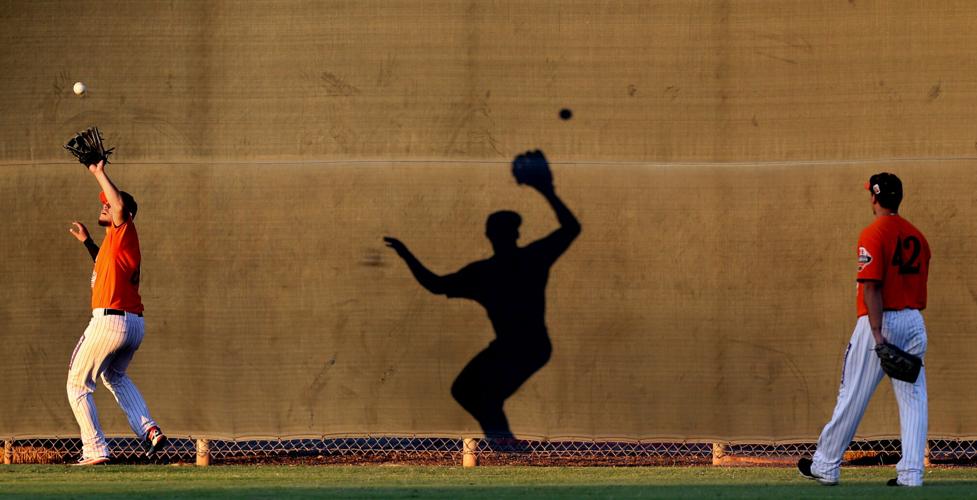
Pima College baseball coach Ken Jacome, who grew up playing in youth baseball leagues at Reid Park, takes his team to two tournaments at Reid Park every year; one hosted by the Aztecs and another by the UA.
“I would hate to lose any of the Reid Park fields,” he says. “Pima rents a field every year to use for practice and games while our field is being over-seeded. I also run tournaments every year both in the fall and summer for Fivetool Baseball that attracts players and families from all over to come play in Tucson.
“I truly believe this plan is bad for Tucson and especially to all the young and old who play year-round on those fields.”
Young and old?
City leagues and community leagues in Tucson for players aged 9 to 60 have been played at the Reid Park annex for more than a half-century. All of Tucson’s baseball immortals have coached and played there: Rich Alday, Jerry Kindall, Alex Kellner, Eddie Leon, Ed Vosberg, Mark Carreon, Ron Hassey, Pat Darcy, J.J. Hardy, George Arias, you name it.
UA football coach Dick Tomey played city league baseball at Reid Park in the 1980s and '90s. It’s been a Tucson baseball treasure since the 1940s, a facility used by the Cleveland Indians, Colorado Rockies and now the Arizona Wildcats.
The UA uses one of the fields in the annex as a part of its contract with the city, which includes being the master tenant at Hi Corbett Field.
The Korea Baseball Organization has also used the Reid Park annex for spring training.
If the “Reid Park Reimagination” indeed shrinks its baseball inventory by at least 50%, the options for high school, summer league, fall league and youth league baseball will create an immediate need for another facility in Tucson.
The shrinking baseball presence at the Kino Sports Complex — with many of the baseball fields replaced by soccer fields — has not been a good option.
“We started the Lancer Baseball Classic at Kino and played there for three years,” says Preble. “In Year 4, the prices went through the roof and we made the move to Reid Park. it was the best decision we have made.”
For better or worse, Reid Park and Kino are the two best options for amateur baseball in Tucson.
Says Preble: “Most (Tucson players and their parents) spend half of their baseball lives in Phoenix because they have way more resources and facilities for people to use — so the bulk of our money goes up there.”
The parks and rec department says it is trying to “meet the needs of Tucson over the next 50 years.”
Public comments can be submitted to the Reid Park Reimagined website through Friday. It plans to hold a public meeting in either November or December and then select one of the plans that, in my opinion, will all but suffocate baseball-playing options in this city.

Salpointe Catholic High School graduate Donny Sands made his big-league debut Sept. 2.
Salpointe's Donny Sands makes big leagues
Donny Sands has become the 50th baseball player from a high school in the greater Tucson area to play in the major leagues.
A catcher from Salpointe Catholic High School, Sands was recalled by the Philadelphia Phillies earlier this month and has since played in three games — including Friday’s victory over the Atlanta Braves.
It’s a remarkable story. Sands’ father died of a heart attack in 2012, when Donny, then 15, was a sophomore at Salpointe. Donny Sands was homeless for almost a year, living in his family’s automobile after his mother moved to Mexico to find a full-time job.
Sands, an eighth-round draft pick of the New York Yankees in 2015, was hitting .309 at with the Triple-A Lehigh Valley IronPigs when recalled by Philadelphia. Sands played third base for Salpointe before converting to catcher in the Yankees’ farm system. He hit .451 for the Lancers’ 27-7 team as a senior.
Here’s the list of the 50 Tucson-area players to reach the big leagues:
Tucson High (8): Lum Davenport, Eddie Leon, Tavo Alvarez, Willie Morales, Ron Hassey, Dave Baldwin, Tom Wilhelmsen and Chris Saenz.
Canyon del Oro (7): Chris Duncan, Shelley Duncan, Ian Kinsler, Brian Anderson, Jason Sanford, Colin Porter and Scott Hairston.
Sahuaro (6): Sam Khalifa, Tom Weidenbauer, Jim Olander, John Butcher, Pat McCoy and Alex Verdugo.
Rincon (6): Pat Darcy, Jim Crawford, Tom Pagnozzi, Jason Jacome, Dan Schneider and Paul Moskau.
Salpointe Catholic (4): Ed Vosberg, Mark Carreon, Dan Slania and Donny Sands.
Sabino (3): J.J. Hardy, Jamie Vermilyea and Tim Wood.
Amphitheater (3): Erubiel Durazo, Alex Kellner and Walt Kellner.
Palo Verde (3): Jack Howell, Bob Lacey and Andy Hassler.
Marana (2): Rich Hinton and Ryan Perry.
Cienega (2): Seth Mejias-Brean and Andre Jackson.
Catalina Foothills (1): Luis Gonzalez.
Cholla (1): Mel Stocker.
Pueblo (1): George Arias.
Santa Rita (1): Anthony Sanders.
Sunnyside (1): Stefen Romero.
Sahuarita (1): Manny Barreda.

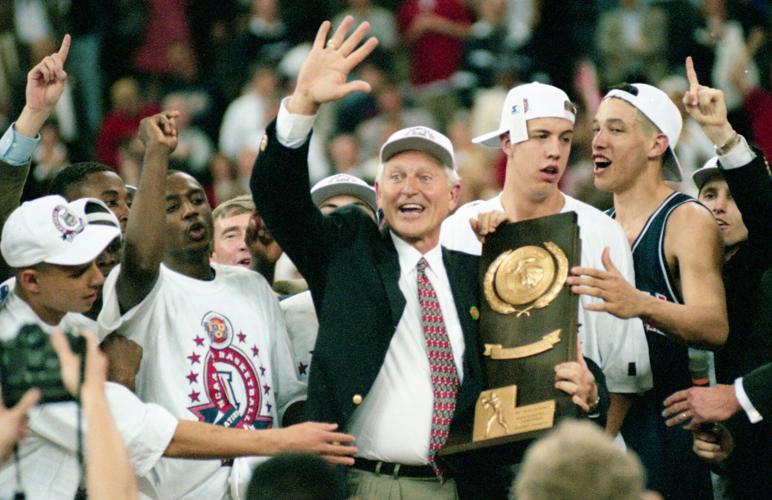
University of Arizona basketball coach Lute Olson holds the Division I NCAA Championship trophy after his team defeated Kentucky to win it all on March 31, 1997.
Lute Olson documentary to premiere on Friday
The world premiere of “Lute,” a documentary about Lute Olson’s 25 year coaching career at Arizona, will be held Friday at 5:30 p.m. at the UA’s Centennial Hall. Former Wildcats point guard Jason Terry is the executive producer of the film. He is expected to be joined at the premier by ex-Wildcats Richard Jefferson, A.J. Bramlett, Reggie Geary and Pete Williams, among others. Olson’s long-time assistant coach Jim Rosborough will also attend the premiere, which will be concluded before Friday’s Red-Blue Game at 7:30 p.m. Tickets are available for $30.
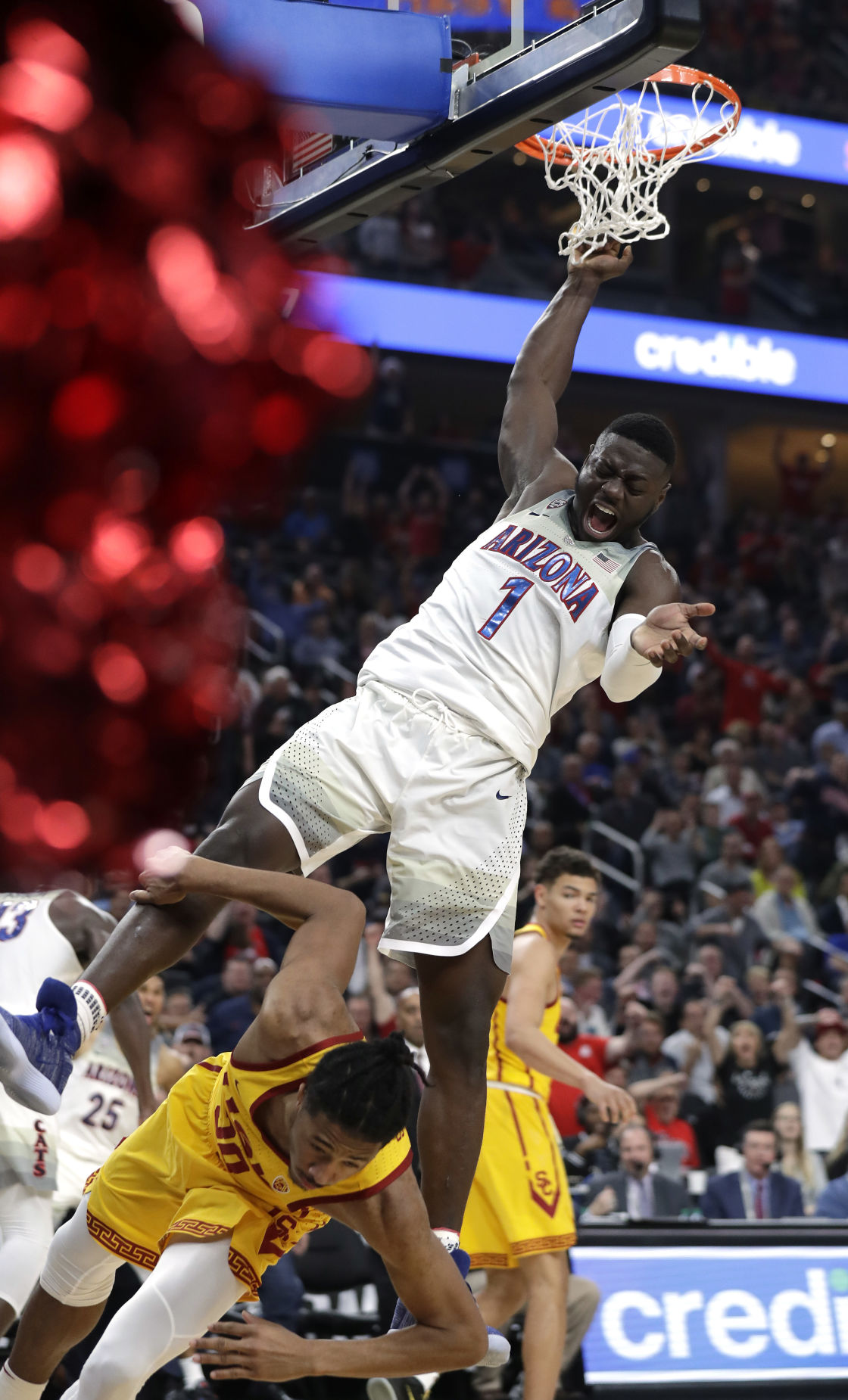
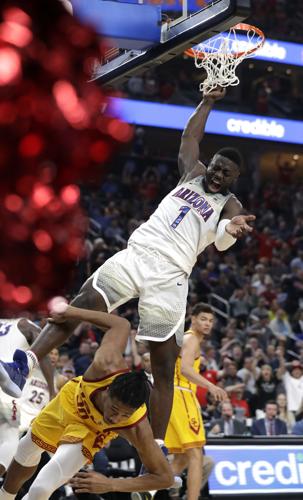
Arizona's Rawle Alkins dunks over Southern California's Elijah Stewart during the second half of an NCAA college basketball game for the Pac-12 men's tournament championship Saturday, March 10, 2018, in Las Vegas. Arizona won 75-61.
Ex-Wildcat Rawle Alkins headed to Utah
The Utah Jazz last week acquired the rights to former Arizona guard Rawle Alkins, who played last season for Ludwigsburg in the German EuroLeague. Alkins averaged 10.2 points per game in the German league. The Jazz gave the Toronto Raptors a second-round draft pick for Alkins, who is not yet listed on Utah’s training camp roster, which includes ex-Wildcats Lauri Markkanen and Stanley Johnson, new to the Jazz this season. Alkins played in 10 games for the Chicago Bulls, scoring 37 points, in 2019.

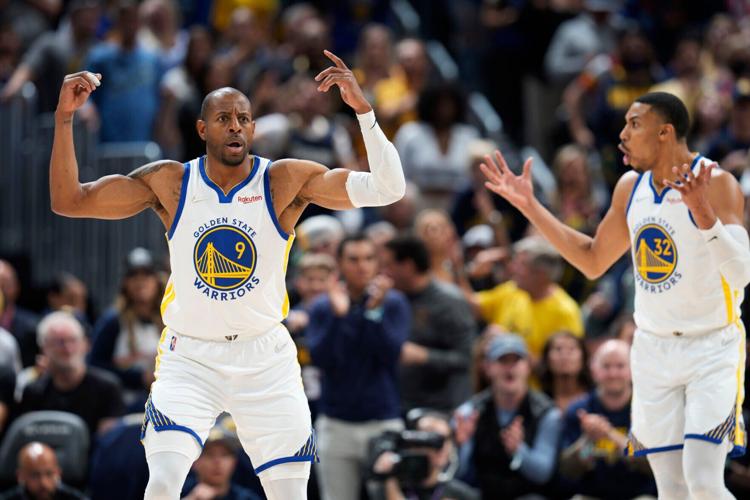
Golden State Warriors forwards Andre Iguodala, left, and Otto Porter Jr. react after Porter was called for a foul during the second half of Game 3 in a playoff series against Denver.
Iggy remains Wildcats' income king
Andre Iguodala’s decision to return for a 19th NBA season, with a salary of $2.6 million, makes him by far the highest-paid ex-Wildcat to play in the NBA. His 2022-23 salary will raise his NBA income to $192.4 million. That puts Iguodala ahead of Richard Jefferson’s $116 million; Jason Terry’s $108 million; and Mike Bibby’s $107 million. Denver Nuggets forward Aaron Gordon has been paid $94 million so far in his NBA career and is due a guaranteed $85 million through 2026. If any ex-Wildcat is to pass Iguodala as the highest-paid, it will likely be Phoenix’s Deandre Ayton, who has already been paid $40.1 million and is due $132 million over the next four years.

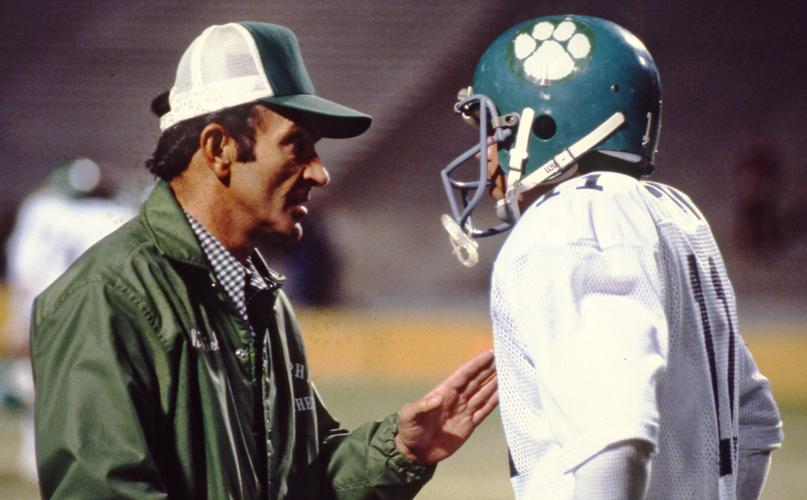
Amphi High School coach Vern Friedli talks to quarterback Sam Molina during the state semifinal at ASU in 1979.
Amphi legends to return
It has been five years since 36-year Amphitheater High School football coach Vern Friedli died, but his legacy remains active. Three pillars of Amphi’s football program — linebacker Riki Ellison and running backs Jon Volpe and Michael Bates — plan to attend both Friday’s homecoming game against Pueblo and a post-game alumni party. Ellison, a three-time Super Bowl linebacker for the San Francisco 49ers, will fly in from Virginia to help honor his high school coach. Friedli’s widow, Sharon, an Amphi grad, has helped to arrange the alumni reunion.
Sabino grad makes Yankees-Dodgers doc
Sabino High and UA grad Fred Christenson, one of the top sports film producers in America since he became ESPN’s vice president of development and acquisition in the 1990s, spent much of the last four years working on the creation of “Yankees-Dodgers: An Uncivil War,” that will debut on ESPN Tuesday at 6 p.m. It’s a documentary about the epic Yankees-Dodgers World Series of 1977 and 1978, starring Reggie Jackson, among others. Christenson, who now works independently for his own firm, Film 45, based in Los Angeles, was the force behind ESPN’s two-part documentary on Arizona’s 2002 football season under John Mackovic. As recently as 2015, Christenson did a similar behind-the-scenes documentary with Gonzaga’s basketball team, which included Arizona coach Tommy Lloyd.

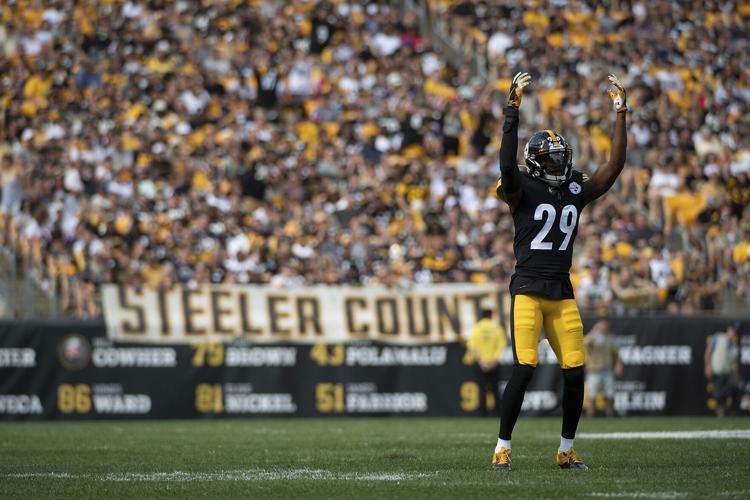
Pittsburgh Steelers cornerback Levi Wallace attempts to pump up the crowd in the second half of their Sept. 18 game against New England.
Levi Wallace a steal by Pittsburgh
Tucson High grad Levi Wallace left the Buffalo Bills last winter and signed as a free agent with the Pittsburgh Steelers. Through three games, Wallace, an undrafted backup cornerback, has played 54% of the Steelers’ defensive snaps. A year ago in Buffalo he played 92% of the defensive plays and was never below 76% in four seasons. The Steelers are paying Wallace $4 million this season and again next year. Not bad for a former walk-on at Alabama who became a starter for the Crimson Tide’s 2018 national championship team.

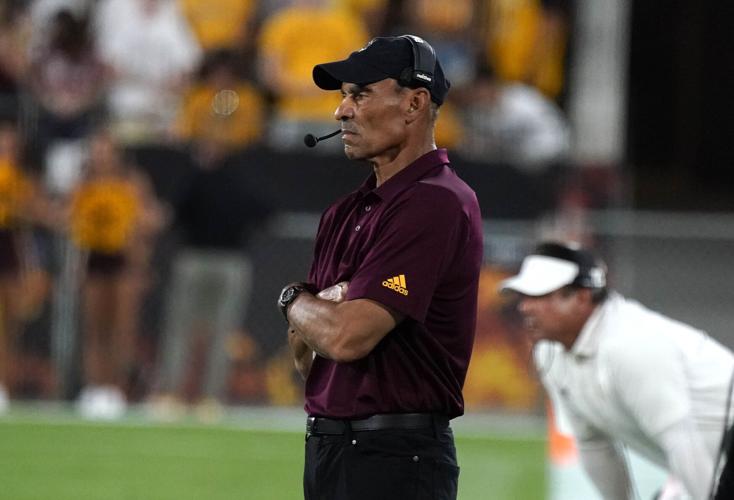
Arizona State head coach Herm Edwards watches his team against Eastern Michigan last weke.
My two cents: Devils' disaster the fault of president, AD
I think the bungled departure of ASU football coach Herm Edwards reflects more on president Michael Crow and athletic director Ray Anderson than on Edwards’ ability, or lack thereof, as a head coach.
Their “I’m-smarter-than-you” approach has again failed.
During an extended crisis period at rival Arizona — a time the Wildcats fired Sean Miller and Kevin Sumlin and replaced six head coaches — the Sun Devils didn’t make up any ground on their in-state rivals. In fact, they’ve lost ground.
Arizona now is in better shape than ASU in football, men’s and women’s basketball and baseball, the four most high-profile sports.
Does a Sun Devils fan really want Crow and Anderson making the selection on ASU’s next football coach?
Crow was the most visible supporter of the Pac-12 Networks and former commissioner Larry Scott. He kept Edwards during a 15-month period while the ASU football program has been stained by an NCAA investigation. Rather than spend millions to re-do the antiquated Desert Financial Arena that burdens basketball coach Bobby Hurley, ASU chose to spend tens of millions to build a hockey arena, of all things.
Since Frank Kush left the ASU football program in 1980, the Sun Devils have hired eight football coaches. Only one — John Cooper, who went 8-4, 10-1 and 7-4-1 in the mid-1980s before leaving for Ohio State — left without either getting fired or forced out.
No wonder ASU has been referred to as a “sleeping giant” for the last 40 years. You can almost hear snores all the way from Tempe.

