



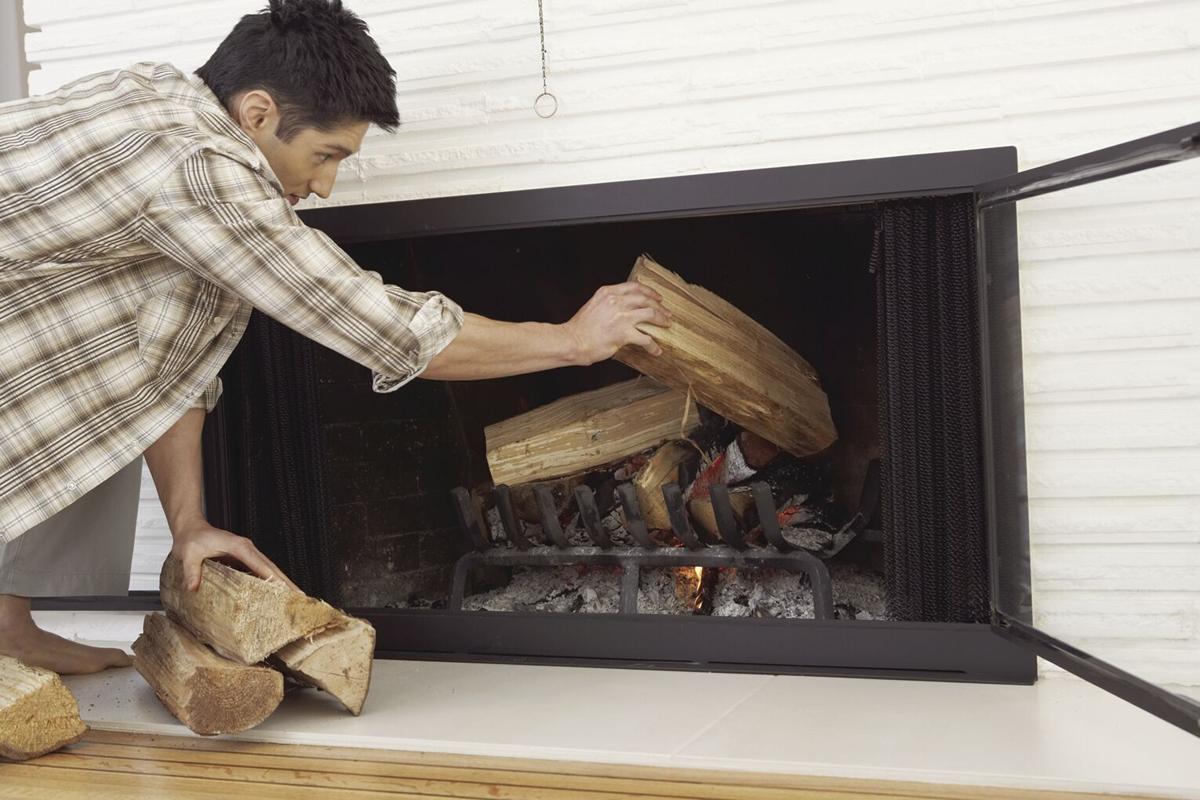
Question: What time of year should I have my fireplace professionally cleaned?
Answer: Although we are in the prime time of summer, this is the time to think about the condition of your fireplace. Because the fireplace is generally unused in the summer, the time is now to clean, inspect and repair it. Maintenance now will save you from scrambling to get it done when the first night dips below 60 degrees.
To help us navigate this topic, Becky Derendal with Arizona Chimney and Air Ducts, a Rosie on the House certified partner, walks us through why and how to keep our fireplaces and chimneys in a safe, working condition.
If you like the crackle of a fire in your home, periodically cleaning the chimney is necessary. Depending on the wood species you typically burn, you may need to clean more often. Wood with a high resin content, such as pinion or pine, will coat your chimney with a by-product called creosote.
Derendal says small particles of this flammable by-product gather along the chimney’s lining and are the leading cause of chimney fires. Chimney fires can spread outside the chimney wall and lead to potentially catastrophic damage.
Inspection and cleaning of the chimney depends on the frequency of use, the type of wood burned, and the chimney’s age. She suggests that after you burn a quarter of a cord of high resin wood or half a cord of a drier species, inspect the chimney.
There are several items to look for when cleaning.
After cleaning, inspect the lining for cracks or gaps. Cracks are more likely with older masonry flues. Repairing cracks can help prevent a fire from leaking into your home.
Make sure the damper is working properly.
Is the chimney cap secure? Unsecured or damaged caps can create entry points for rain and wildlife.
Is the spark arrestor properly installed? This is required in most areas of our state and is critical to prevent burning embers from causing fires on our and our neighbors’ properties.
Q: Why should I have my home’s ducts professionally cleaned?
A: We use our heating and cooling systems nearly all year long. Just keeping up with changing the filters will not ensure the air we breathe is as clean as possible. Healthy, clean air is important, especially for those with breathing issues. You can determine whether your ducts need cleaning by looking inside the register. If you see dust or debris, you might need a cleaning. You would be amazed at how dirty your ducts can become.
Derendal tells us that a thorough duct cleaning should include:
Vacuuming the entire duct system.
A visual inspection. Verify there are no breaks in the ductwork. Make sure the insulation is intact.
Clean the compartment that houses the filters because filters do not catch everything.
Make sure the coil is not left uncleaned.
Vacuum and spot clean the air supply registers.
Wherever air flows needs to be clean so you can breathe healthy air.
You may also consider applying an anti-bacterial sanitizer. Derendal recommends this to ensure a healthy duct system. The process uses a fog-like medium drawn through the ductwork and sanitizes all the surfaces touched by air. The process is safe for people and pets and provides assurance.
Our homes today are airtight and energy-efficient which traps pollutants and contaminants inside. This lowers the quality of the air we breathe. Contaminants build up over time in your air system which circulates each time your system turns on. Contaminants may include bacteria, pollen, skin flakes, fungi, hair, dust mites, viruses, textile fibers and many others. To maintain acceptable indoor air quality, it is recommended to clean your ducts every six to 10 years depending on your situation.
Q: Why and how do I clean the dryer vent?
A: We are told this is the easiest vent to clean and one of the few we actually clean. We use our dryers a lot. Depending on the size of your family, it may be used almost every day.
Cleaning the lint filter is important, typically with every load. However, the lint filter doesn’t catch everything. Fine particles, such as pet hair, pass through and gather on the inside wall of the vent ducting. This is made possible due to the humidity level in the duct. That water vapor has to go somewhere. The fine particles are held in place by the humid air. When the dryer is not in use, the humidity dries, leaving those particles to form a crusty, irregular surface. When you use the dryer again, more humidity and particles build up. Over time, this build-up can get nasty.
Another problem is that dryers get hot, sometimes very hot. Unless you have a smart dryer that detects an overly hot system (an indicator light will come on), your dryer vent can catch fire. Like chimney fires, these fires can spread into your home.
How often you should clean this duct also depends on usage. If you’re drying pool towels every day or just a couple loads of laundry a week, we suggest you never go more than three years between cleanings.
These are parts of our homes we rarely see or interact with. They do play an important part in the comfort levels of our lives.
Tucson Water: How to Detect Leaks

