


Reporter David Wichner's Fave Five
From the Reporters' and photographers' favorite works of 2019 series
-
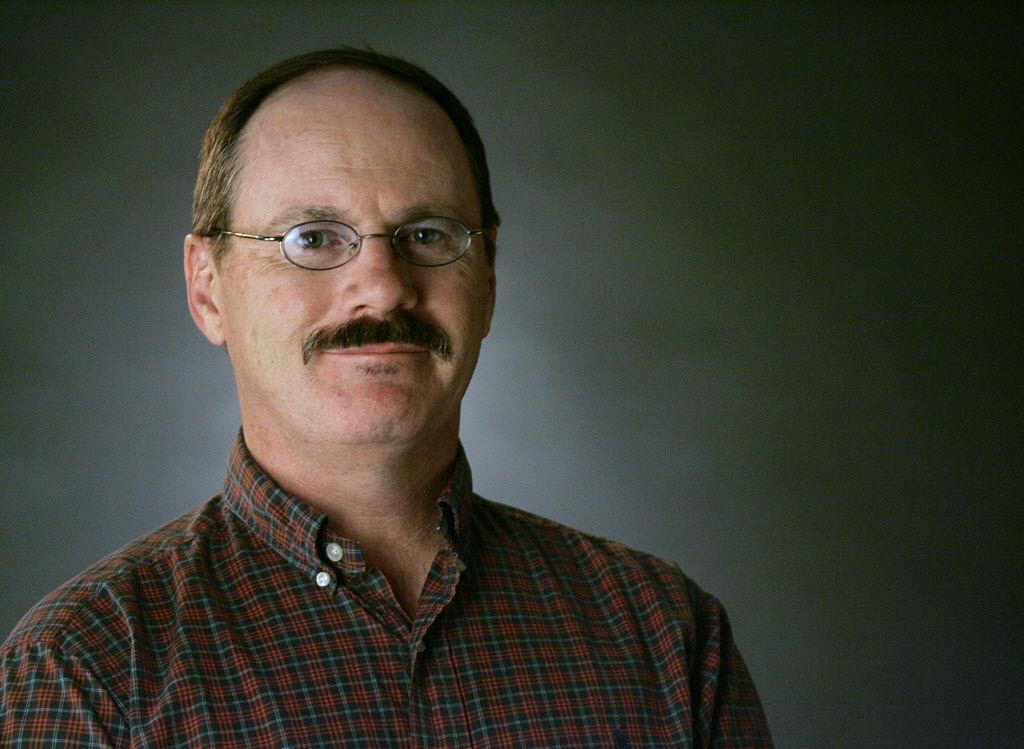
David Wichner
Reporter
- Updated

 |
We are sharing Arizona Daily Star reporters' and photographers' favorite work from 2019.
Reporter David Wichner covers business and technology for the Arizona Daily Star. Here are his favorites of 2019.
Driven to distraction: Store changeovers have some Tucsonans searching for better gas
UpdatedI liked this story because it shows how corporate ownership changes can affect people, and I was pleased to give consumers some important info about the fuel they put in their cars.
─ David Wichner

This station at 7085 E. Broadway was recently converted to a Speedway store. Marathon acquired the station’s former owner, Texas-based Andeavor, in a $23.3 billion deal last year.
Foothills resident Barbara Temkin had an unwelcome surprise recently when she saw the Shell gas station where she faithfully filled up on North Campbell Avenue was being converted to a Speedway convenience store.
Later, she learned that Speedway gas doesn’t meet the same industry standard Shell fuels do.
“First, it was the shock of the change without any warning, and then my mechanic has specifically recommended Shell for my car, so it was a substitution of a much lesser quality gasoline that was really annoying,” said Temkin, a psychologist who has lived in Tucson since 1977.
Another Foothills resident, Susan Hotchkiss, was dismayed to see the Shell station and Giant convenience store on East Sunrise Drive at North Kolb Road suddenly converted to a Speedway store.
“It’s going to change my driving habits, because I’m going to have to get gas sooner, before I get close to empty,” the retired Air Force major said.
Many motorists across Tucson and Arizona who loyally buy Shell or Chevron gas now must drive further to fill up.
About 30 local convenience stores that sold those major brands recently were converted to Speedways as the result of last year’s $23 billion acquisition of gas refining and retailing giant Andeavor by Ohio-based Marathon Petroleum, parent of Speedway Stores.
Shell gas is still available at seven standalone stations in the Tucson metro area — though only one appears to be north of Speedway — and Chevron still is sold at about a dozen local stations.
But it’s about more than just brand loyalty.
Shell and Chevron sell so-called Top Tier Detergent Gas — an industry certification that it contains a detergent package that keeps engines cleaner and is recommended by General Motors, Ford and other carmakers.
Temkin said she’s been using Shell gas for years, since a mechanic advised it after her 18-year-old European coupe developed expensive damage he blamed on bad gas.
“My mechanic had to drain the gas tank and clean my engine — that’s why I’m so touchy about gasoline,” she said, adding that after much searching she found a Chevron station just off her frequent route down North Campbell.
Hotchkiss started buying non-brand gas about five years ago when she bought a Volkswagen Golf GTI, trying to save some money since the car required higher-priced premium gas.
After a year, the GTI developed some performance issues her mechanic linked to lower-quality gas and at his urging, she’s been using Shell gas ever since.
“I learned some lessons then, and now I know about Top Tier gas,” Hotchkiss said.
Speedway, a subsidiary of Ohio-based refiner Marathon Petroleum Corp., is completing the process of converting 91 convenience stores in Arizona to its brand after Marathon acquired their former owner, Texas-based Andeavor.
The changeover to Speedway includes 29 stores in Tucson and several more in Marana, Sahuarita and Oro Valley, mainly Giant convenience stores that sold Shell gas and two Chevron locations.
Marathon’s deal for Andeavor also included ARCO, whose gas is sold at AM/PM convenience stores operated by BP America.
The Tucson area’s nine ARCO stations so far have been unaffected by the merger changeover, and Marathon’s CEO has said the company intends to keep the brand among its operations in the West and Mexico.
Shell, Chevron and ARCO are among 52 gas brands that are certified as “Top Tier Detergent Gasoline” by an industry group that mandates a standard level of detergent additives known to reduce performance-robbing engine deposits.
Other Top Tier gas retailers in the Tucson area include QuikTrip, Valero and Costco Wholesale.
Circle K — a local convenience-store market leader with more than 100 stores with gas pumps in the greater Tucson area — does not sell Top Tier gas at its unbranded locations, though it is piloting a new Circle K branded gas with special additives touted to boost mileage in Florida and elsewhere.
Though Marathon-branded gas is Top Tier, the private-brand gas sold at Arizona Speedway stores is not.
“At this time, Speedway does not offer Top Tier fuel,” company spokeswoman Marna Berlekamp said in an email response.
“In the retail fuel industry, there are a variety of independent certifications retailers may acquire,” she said. “Speedway and all of its grades of fuel are compliant with all local, state and federal regulations. Rest assured that Speedway’s priority is to consistently offer quality fuels at competitive prices, without sacrificing standards.”
The Tucson area lost some other Top Tier gas stations in 2017 when Circle K completed its acquisition of CST Brands’ Corner Stores, which locally sold Top Tier Diamond Shamrock fuels.
Texas-based Empire Petroleum, another non-Top Tier retailer, also acquired a half-dozen local Corner Stores and has converted them to its Fast Market store brand. Circle K spokeswoman Donna Humphrey said the company has no current plans to add Top Tier or its “Miles” mileage-boosting gas to its offerings in Arizona.
Top Tier gas was introduced in 2004 by General Motors, BMW and other automakers in the belief that federal fuel-quality standards were not sufficient, and it is recommended by many car experts for its engine-cleaning properties.
Ten top automakers now recommend Top Tier gas, besides GM and BMW, including Fiat Chrysler, Ford, Honda, Toyota, Volkswagen, Mercedes-Benz, Audi and truckmaker Navistar. The organization added a Top Tier program for diesel fuel in 2017.
AAA began recommending Top Tier gas in 2016 after conducting a study that showed that Top Tier gas leaves left 19 times fewer engine deposits than gas that meets the federal standard for fuel quality.
During extended engine testing, AAA also found Top Tier gas reduced intake valve deposits by 45 to 72% over a 5,000-mile interval.
Analyzing prices over a yearlong period, AAA also found that Top Tier gas cost an average of 3 cents more per gallon than non-Top Tier gas. Consumer Reports also has recommended that motorists use Top Tier gas at least most of the time, based on AAA’s study.
“We felt they made a pretty compelling case with their testing,” said Jeff Bartlett, deputy editor of Consumer Reports. “We would encourage people to buy Top Tier gas when they can but understanding, as people travel or have different time events, they may not be able to do it all the time. But if they do it most of the time, the detergent effects would seem to promise better engine operation and reliability.”
Automakers also recommend higher-octane “premium” gas for certain higher performance vehicles, confusing the issue for consumers, but that is unrelated to the Top Tier requirements, Bartlett said.
Top Tier suppliers must meet the detergent additive standards across all their fuel octane grades, so consumers can shop by brand, he noted.
Many mechanics also recommend Top Tier gas.
Rick Furrier, general manager of the longtime Tucson auto-repair chain Jack Furrier Tire & Auto Care, said using Top Tier gas can help prevent carbon buildup in engines that can diminish performance and lead to costly repairs down the road.
“The highest quality of fuel people can buy, that’s better in the long run, too,” Furrier said. “Buying Top Tier fuel is always recommended.”
Furrier — who admitted that he often fuels up his Chevy truck with non-Top Tier fuel because of his hectic schedule — said that motorists who can’t always buy Top Tier gas can keep engine gunk at bay by periodically adding a fuel treatment like Chevron’s Techron or Seafoam.
Using cleaner-burning fuel is especially important with cars and trucks that use direct fuel injection, a newer fuel-delivery technology that increases efficiency but is prone to carbon deposit buildup, he said.
Introduced in the mid-1990s, the use of so-called Gasoline Direct Injection, or GDI, has ramped up in recent years, to more than 51% of new car models in 2018, according to the U.S. Department of Energy.
Yet only about one-third of gas stations in the U.S. offer Top Tier fuel, according to the Top Tier organization.
While Top Tier has its advantages, all motor fuels sold in Arizona must comply with minimum federal standards for fuel quality.
Gasoline and other fuels are tested by the state Department of Agriculture’s Weights and Measures Services Division, using test procedures set by ASTM International, an industry standards group formerly known as American Society for Testing and Materials, said Michelle Wilson, associate director for the division.
The state agency tests for factors such as octane levels, ethanol, sulfur and aromatics such as benzene to meet federal fuel quality and emissions standards, Wilson said.
Weights and Measures regulates about 2,000 gas stations across the state and inspects gas pumps periodically and in response to consumer complaints, which mainly involve calibration of the dispensing equipment, she said.
In fiscal 2018, the agency conducted nearly 20,000 gas pump tests in fiscal 2018 while analyzing 535 fuel samples, department documents show.
Tucson Tech: Ventana Medical Systems founder tells the rest of the story in new book
UpdatedI thought I knew the story behind the founding Ventana Medical Systems, but had no idea the founder’s interesting background as the son of a spy and the long road to success he ralts in his memoir.
─ David Wichner

Dr. Thomas Grogan, 74, founder of Ventana Medical Systems, says writing a book has “been a great experience. The amazing part of writing a memoir is you relive what happened.” Grogan retired from the University of Arizona about nine years ago.
If you’ve been in Tucson long, you may have heard the story of how Ventana Medical Systems was founded here more than 30 years ago by a University of Arizona pathologist who invented an automated instrument to deliver fast diagnostics for cancer.
And you may have also heard what seemed to be the end of the story: How Ventana grew into a multi-billion-dollar public company and was acquired by Swiss drug giant Roche for $3.4 billion in 2008.
Now, company founder and UA professor emeritus Dr. Thomas Grogan has penned the rest of the story.
Grogan’s new book, “Chasing the Invisible: A Doctor’s Quest to Abolish the Last Unseen Cancer Cell” is a remarkable story, a loving memoir with elements of a spy thriller, a medical whodunit and a compelling business story.
It also has an intriguing cast of characters, including Grogan’s own mother, former Libyan strongman Moammar Gadhafi, an Inuit woman, intrepid scientists and Wall Street money men.
Grogan, 74, who retired from the UA about nine years ago and stepped down in 2017 from active duty at what is now Roche Tissue Diagnostics, said he may have learned as much about himself as he did about book publishing during the writing process.
“It’s been a great experience. The amazing part of writing a memoir is you relive what happened,” Grogan said. “And my story is one part personal, one part diagnostic medicine, one part technology, one part entrepreneurship and one part big pharma and Roche.”
But getting the book published wasn’t easy, said Grogan, who noted that his work was rejected by a dozen traditional publishers.
He finally reached a deal with Virginia-based Koehler Books to print the book under a co-publishing deal.
The initial critique from Koehler’s editor was decidedly mixed.
“The editor said, ‘Okay, it’s interesting, it’s well-written — but it’s a lousy memoir because you don’t talk about yourself,’” Grogan said.
At one point in his draft, the editor demanded Grogan explain a passage noting that he had grown up “living in dangerous places in dangerous times.”
“Finally I admitted to him, if I tell that part of the story I have to say something I was raised in the family to never talk about — that my father was a CIA officer in the Middle East and Africa,” Grogan said.
With his mother’s blessing, Grogan detailed his family’s life on the Mediterranean island of Cyprus in the early 1950s, when Cypriots rebelled against the last vestiges of British rule as Greece and Turkey began fighting for control.
Grogan recounted how his mother fearlessly drove the family car through an angry mob of Cypriots to deliver him and his brother to a Christmas pageant rehearsal at church.
“There’s this whole episode where we’re attacked by a mob, and my mom says, Get down! And hits the accelerator,” he said.
Grogan’s book starts with a scene about five years ago, when his 90-year-old mother asks him for advice after doctors discovered a cancerous tumor in her skull they believed may have been a recurrence of earlier breast cancer and suggested she consider hospice care.
She decided to get further tests and instead of metastatic breast cancer, the tumor was identified as a large B-cell lymphoma.
“Well, I don’t see giving up yet,” she says. “After all, they haven’t done a biopsy and we don’t know the nature of the beast yet.”
After testing with Ventana instruments and treatment with a Roche drug, Grogan’s mother recovered and remains disease-free today, Grogan said.
Grogan relates his inspiring meeting with a Libyan doctor who treated Gadhafi’s sister and later won funding for Ventana instruments from late dictator.
He also tells the story of how during a fishing trip to Alaska he met a native Inuit woman with cancer.
Grogan helped her understand the importance of testing to get the right treatment, and after her successful treatment, the need to keep the “invisible” disease from recurring — using the analogy of how mosquitoes return every summer.
The book also describes Ventana’s diagnostic technology in detail, but in terms most laymen can understand.
Grogan’s story of how he started Ventana seems to parallel his own life, overcoming obstacles, fighting the unseen, never giving up.
He relates how, after filing for a business license to start Ventana in 1985, a UA lawyer told him he could already be a felon because state law prohibited state employees from forming private businesses while on the state payroll.
That law was changed to accommodate Ventana and has led to the formation of countless faculty startups.
Grogan details how he was rejected by 35 investor groups before finding investors to bankroll Ventana’s development, how the company went public and at one point losses had piled up to nearly $50 million, and how convincing the famed Cleveland Clinic to adopt the company’s instruments helped the company break into the market.
He details how Roche’s advances were initially viewed with skepticism but what began as a hostile takeover put the company on a path to global acceptance as a standard of cancer diagnostics.
Despite his editor’s best efforts to get Grogan to talk about himself, he spends much of the book praising the efforts of colleagues, including his UA pathology department head, the late Dr. Jack Layton, for encouraging his work; key investor John Patience for his unwavering support; and his UA lab team and fellow pathologists for their hands-on work to develop and perfect the game-changing diagnostics.
Grogan does acknowledge he has one talent.
“I had my own talents, but my success had to do with the ability to create alliances,” Grogan, said, describing how he lured top talent with the promise of transforming medicine.
“The reason to read this is, there’s something to learn about global medicine, something to learn about how it is that this hidden world is really something that’s actionable,” he said.
“Because it’s like the story I tell about the Inuit woman — there’s a strength you gain when you know what you’re dealing with.”
New Raytheon chief focused on keeping up with emerging threats
UpdatedThe first lengthy interview given by Raytheon Missile Systems’ new president, who is no stranger to the Old Pueblo.
─ David Wichner

Wes Kremer became president of Raytheon Missile Systems on March 30. It’s a homecoming of sorts as Kremer joined Raytheon in Tucson in 2003.
Much has changed at Raytheon Missile Systems — and in Tucson — since Wes Kremer left the local operation in 2015 to head up Raytheon’s defense radar and electronics business in Massachusetts.
One thing that hasn’t changed is the need for the world’s biggest missile maker to keep up with emerging global threats.
It’s a challenge Kremer is ready to take on, as he returns to take the helm at Missile Systems.
Kremer became president of Raytheon Missile Systems on March 30, replacing the retiring Taylor Lawrence.
It was a homecoming of sorts for Kremer, 54, an electrical engineer and former Air Force weapons officer who joined Raytheon in Tucson in 2003 as director of missile system programs.
In 2006, he joined Raytheon Space and Airborne Systems as general manager of the advanced products center in Dallas, before returning to Missile Systems in Tucson in 2008 as director of systems engineering.
Kremer was named director of Raytheon’s Standard Missile-3 program in 2010 and in 2011 became a vice president for air and missile defense. He was promoted to president of the radar unit, Raytheon Integrated Defense Systems in Tewksbury, Massachusetts, in June 2015.
The Star caught up with Kremer recently for his first local media interview.
“It’s an incredible honor to be selected as the president of a business, and now to have the opportunity to be president of two businesses,” Kremer said. “Both of these are critical aspects of Raytheon, and I’m super excited to be back here in Tucson.”
It’s a homecoming for Kremer’s family as well.
“Both of my kids graduated from high school here, they call Tucson home, and my daughter graduated from the University of Arizona a year ago, so Tucson definitely holds a special place for us,” he said.
Though Kremer collaborated closely with Lawrence and Missile Systems during his time in Tewksbury, he was impressed when he got here amid a hiring and building boom.
Raytheon announced in 2016 that it would significantly expand its main campus at Tucson International Airport and add at least 1,900 jobs over a decade, enabled partly by a series of land swaps with the airport to create additional buffer zones around the airport plant.
“I feel incredibly fortunate to come back here to such a strong and thriving organization, and it’s amazing to see the amount of change that’s happened in the last four years,” Kremer said, adding the company is well on its way toward adding 2,000 employees and has opened five new buildings in the last 18 months.
Raytheon Missile Systems has about 12,500 employees at several locations in Tucson and another 4,500 at sites including the Navajo Nation, Texas and Kentucky.

Raytheon Missile Systems has about 12,500 employees at several locations in Tucson and another 4,500 at sites across the country.
USING RAYTHEON MISSILES
Kremer grew up near Yellowstone National Park in Montana and got a degree in electrical engineering in 1988 through the Air Force Reserve Officers Training Corps program at Montana State University.
After graduation, he qualified as a weapon systems officer on the F-111 Aardvark, a two-seat fighter-bomber, and served 11 years in the Air Force as a weapon systems officer, flying the F-111 and F-15 in more than 90 combat sorties in Iraq and Bosnia.
“I’m somebody who actually got to use Raytheon products,” Kremer said.
Raytheon makes many of the front-line weapons used by the Air Force, including Sidewinder air-combat missiles and Paveway guided-bomb kits.
Based in the United Kingdom during his combat duty, Kremer returned to Langley Air Force Base in Virginia to work in the Air Combat Command’s program requirements section. He left the service in 1999.
Kremer, who earned an MBA in technology management from the City University of Seattle while in the Air Force, spent about three years as vice president of a software company serving the pharmaceutical industry before being hired by Raytheon.
As head of Raytheon’s Standard Missile-3 programs, Kremer helped develop new and more capable versions of the ballistic missile interceptor, which was spun off from the decades-old Standard Missile-2 ship-defense system.
The operational versions of the SM-3 are already deployed on ships and a land site in Romania as part of a missile-defense shield for Europe.
The Pentagon has been pouring money into development of more capable missile-defense systems, as North Korea and Iran test long-range ballistic missiles and Russia and China develop hypersonic missiles that are extremely difficult to intercept.
“Not only are we a technology driven company, but at the end of the day, a lot of our programs are threat-driven,” Kremer said. “You see that ballistic missiles and hypersonic threats, you see those proliferating, and with that, it brings the demand for more capable systems.”
Case in point: The newest version of the SM-3, the SM-3 Block IIA, which recently finished testing and is awaiting a decision to begin production.
“It’s a significantly upgraded version of SM-3, co-developed and co-produced with Japan, and it significantly increases the range and velocity and allows it to take on longer-range and more advanced threats,” Kremer said.
Asked about skeptics who say missile-defense systems won’t work against real, sophisticated threats, Kremer said he’s confident though much work remains to be done.
“Absolutely. The threat is real, and I think we do have very realistic testing of our products,” he said. “I feel very confident that the products we have today are capable of defending the threats we have today, and we are developing future capabilities to continue to match the evolution of the threat.”
HYPERSONICS AND LASERS
Meanwhile, Raytheon is demonstrating hypersonic missile concepts. In March, the company was awarded a $63.3 million contract by the Defense Advanced Research Projects Agency to develop a “tactical boost glide” system that uses a rocket to reach hypersonic speeds of Mach 5-plus and separates to glide to its target.
Another new system is the Naval Strike Missile, an air-defense weapon developed by Norway-based Kongsberg Defence and adapted for new missions in a joint effort with Raytheon, Kremer noted.
That missile is planned to be mounted on the Navy’s new Littoral Combat Ships, and a version called the Joint Strike Missile is being fitted on the F-35 Joint Strike Fighter.
For the Army, Raytheon has been testing laser and high-powered microwave weapons for ground-based air defense against drones, along with a new, long-range tactical missile.
Raytheon Missile Systems also continues to update its legacy weapon systems and produce them for the U.S. and its allies.
Raytheon last year began a multiyear effort to re-certify and upgrade the Navy’s Tomahawk cruise missile, which also has been adapted to hit moving naval targets.
Raytheon got into the small military drone business in 2015 with its acquisition of Tucson-based Sensintel Inc., which makes a small drone called the Coyote that is used by the Army.
Together with higher sales, those new and expanding programs are driving the $500 million building boom at Missile Systems’ airport plant.
The new programs require up-front investment or further development of technology, Kremer said.
“So much of this lab space and data center is for high-powered computing, it’s where we do a lot of advanced modeling of the concepts,” Kremer said.
Kremer said he plans to continue to work closely with the University of Arizona — which is finalizing installation of a new hypersonic wind tunnel — both for research and to tap into top engineering talent.
Kremer said he plans to meet with UA President Robert Robbins and engage government leaders to advocate for increased support for education.
“We try and promote science, technology, engineering and math – the STEM curricula – so we’ll continue and I’ll continue to work with Gov. Ducey and other leaders in the state to push for education,” he said. “We think that’s an important part of the future here, to put a focus on education and also infrastructure.”
Kremer said Downtown Tucson’s revival and things like The Loop bike path have helped Raytheon’s employee recruitment and retention.
“We’re very happy, we’ve been able to attract very good talent, not only from what we get from the UA and Arizona State University, but from all across the country we’ve been able to get very qualified individuals to move to Tucson,” he said.
Kremer said his overarching goal is to make sure Raytheon can answer a call from the Pentagon for more rapid development and fielding of new weapon systems.
“My vision is to take the innovative technologies and leverage the existing programs and focus on going faster, being more efficient, so we can deliver capabilities not only to the United States but to our allies around the world faster,” he said.

Raytheon Missiles & Defense is the Tucson region’s biggest private employer with about 13,000 local employees at its sprawling complex.
Asarco agrees to pay workers millions in disputed copper-price bonuses, union says
UpdatedAfter following this court case for years I was happy to report the bonuses would be paid.
─ David Wichner

Asarco must pay $10 million plus interest to about 750 current and former employees hired after June 2011, at four Arizona locations and one in Texas.
Tucson-based copper producer Asarco LLC has agreed to pay union workers some $10 million in disputed copper price bonuses and will make an initial payment Nov. 6, the United Steelworkers union said Thursday.
Asarco had fought payment of the bonuses to about 750 current and former employees hired after mid-2011, since an arbitrator ruled the company must pay them in 2014.
After losing several appeals, Asarco was forced to pay the bonuses when the U.S. Supreme Court in early October decided not to review an appellate decision upholding payment of the bonuses.
"I'm delighted they're going to pay it — it's been long overdue and the members deserve it," said Manny Armenta, subdistrict director for the United Steelworkers.
Asarco did not immediately respond to a request for comment.
The first round of bonus payments to workers hired on or after July 1, 2011 will be made Nov. 6, company lawyers said in a letter to lawyers for the United Steelworkers and seven other unions representing about 2,000 Asarco hourly employees in Arizona and Texas.
The initial payments will include all bonuses owed for the third quarter of 2011 through the first quarter of 2015, the Steelworkers said.
All current and former employees who are owed bonuses for those quarters should receive a bonus payment, plus a separate check for interest, on Nov. 6.
Current employees will receive their payments through direct deposit or by paper check, whichever method by which they are normally paid, the union said.
Former employees will receive paper checks sent to their last known addresses, the Steelworkers said, urging former employees to contact their unions to update their addresses.
Interest will be calculated from March 3, 2016, the date of the federal district court’s original judgment enforcing the arbitrator’s decision, through the date of payment.
Asarco also owes bonuses for most of 2015, but the amounts owed and the individuals who are eligible for payments, have not yet been calculated, the Steelworkers said.
The company and unions have agreed to work in good faith to determine the amounts owed for 2015, which also will include accrued interest.
Asarco resumed paying the bonuses to current eligible workers in December 2015, Armenta said.
Those employees were dropped from the company pension plan and later denied bonuses after negotiation of a contract extension in 2011.
But the union said it believed the workers would be eligible for the bonus regardless of their pension eligibility, and an arbitrator found the provision was left out of the agreement by mistake and ordered payment.
The quarterly bonuses were to be paid when the average price of copper reached $1.60 per pound.
After losing twice at the district court level, Asarco appealed but was found liable for the bonuses by the Ninth Circuit Court of Appeals in separate rulings in 2018 and January 2019.
The U.S. Supreme Court on Oct. 8 declined to review the case, exhausting Asarco's options to avoid paying the bonuses.
Meanwhile, the Steelworkers, the Teamsters and the other unions representing Asarco production and maintenance workers remain on strike after walking off the job Oct. 13, though new contract talks are planned for Nov. 14.
Asarco operates the Mission Mine in Sahuarita south of Tucson, the Silver Bell Mine in Marana, and the Ray Mine and Hayden smelter in Central Arizona, as well as a refinery in Amarillo, Texas.
The Asarco production and maintenance workers have been working without a new contract since their last contract expired in November 2018, and they have had no wage increases since 2009.
The Steelworkers say Asarco’s final, four-year contract proposal includes no wage increase for nearly two-thirds of workers, freezes the existing pension plan, and more than doubles the out-of-pocket contribution individual workers now pay for health care.
About 85% of Asarco’s hourly workers are union members.
ACC rejects massive increases in Ajo utility rates
UpdatedAfter months of wrangling with regulators, residents of Ajo were given several years to absorb major increases in power, water and sewer bills.
─ David Wichner

Signs around town reflect the feelings of some about a significant rate hike shot down Wednesday by state regulators.
Residents of the small community of Ajo won’t face massive increases in their utility rates — at least for now.
On Wednesday, state regulators rejected major rate increases requested by an Ajo utility owned by mining giant Freeport McMoRan Inc. after pleas from customers that the rate hikes are unjust and would pose a serious financial hardship on the community’s many poor and elderly residents.
Under a modified proposal before the Arizona Corporation Commission, about 950 water, sewer and electric customers of Ajo Improvement Co. would have seen their water rates rise 206%, their sewer rates increase 334% and their electric rates jump 95%, all over a seven-year phase-in period.
The proposed order by a commission administrative judge had cut Ajo Improvement’s original request for increases of up to 500% and extended a five-year phase-in period proposed by the utility.
But that didn’t sway enough commission members.
Commissioners Andy Tobin, Boyd Dunn and Sandra Kennedy voted against the proposed order, with member Justin Olson and Chairman Bob Burns voting for it.
Now, the company must persuade the commission to reconsider its decision or file a new rate case.
Tobin, who attended the commission’s open meeting via teleconference from Ajo, said the increases were too much for ratepayers to bear and faulted Freeport and its predecessor, Phelps Dodge Corp., for letting the utility systems fall into disrepair and then delaying requests for new rates for more than a decade.
“This burden is not reasonable. It pretends the rate increases will not affect the community, and this should never have been prolonged beyond the closure of the mine (in 1983).”
The commission rejected Tobin’s amendment to extend the rate increase phase-in period to 25 years, before voting down the proposed rate order.
“No one can believe this rate case is in standing with this commission’s long history of protecting the ratepayer,” Tobin said.
Michael Patten, an attorney representing Ajo Improvement Co., noted that the company had made a number of concessions in its rate request to mitigate the impact of the rate increases.
After a series of hearings, a Corporation Commission administrative law judge issued a recommended order in early April that lowered the increases and stretched the phase-in period for the new rates over seven years instead of five.
The company agreed to the longer phase-in and said it was seeking only to cover its costs under a set overall operating profit margin, rather than earning a return on its infrastructure investment, forgoing $7.6 million in revenues over seven years.
“Ajo (Improvement Co.) has proposed what I believe are unprecedented mitigation measures,” Michael Patten, an attorney representing the utility, told the Corporation Commission. “I would argue that it’s a fair balance, and at seven years from now, the rates will barely be covering Ajo’s operating expenses.”
Scores of Ajo residents who traveled to Phoenix on Tuesday for the first day of the commission’s monthly open meeting or attended a teleconference in Ajo said the rate increases would devastate the community.
Robert Sorrels, an Ajo resident who formally intervened in the rate case, told the commission during debate on Tuesday that the proposed rate hikes would have forced some older Ajo residents on fixed incomes to choose between buying medication and food or paying their utility bills.
“Ajo is one of the three poorest towns in Arizona,” said Sorrels, 69, a photographer and former college math teacher and dean who moved to Ajo about eight years ago. “You’re talking about a community that doesn’t have much but the grit and will to survive.”
He noted that 15 percent of Ajo residents live on less than $15,000 a year and the average age of residents is 12 years older than the state average.
“If you push these rates through, some of our oldest will die,” Sorrels said.
Pima County officials opposed the rate increases on behalf of Ajo residents, arguing that Freeport and should be responsible for the infrastructure costs because the mining company neglected the utility systems for decades.
Commissioner Justin Olson said he didn’t support forcing Ajo Improvement and Freeport to bear the cost of the system improvements because he considered it an unconstitutional confiscation of private property, citing crisis-torn Venezuela as a failed experiment in socialism.
“We are not authorized to take the property of this corporation and give it to the residents of Ajo,” Olson said. “I cannot compel them to continue to subsidize rates.”
“This isn’t Venezuela. This is a monopoly here; there’s no capitalism. The people have no choice here,” Tobin responded. “They want to pay the bill; they just need more time.”
Ajo Improvement filed in December 2017 for new rates that would over five years triple the average home customer’s water bill, double the typical electric bill and more than quadruple the average sewer bill.
The utility, which was formed by Freeport predecessor Phelps Dodge Corp., said it needed to recover some $48 million in system improvements it funded over the last decade and noted that its customers have been paying much lower rates than neighboring utilities because of Freeport’s subsidy of rates.
Sorrels and other Ajo residents said community members have worked hard to revive the town after most of the town’s residents lost their jobs and moved after the closure of the adjacent New Cornelia Mine in 1983.
The community renovated the historic Curley School and reopened it as an artisan residence in 2007 as a centerpiece of economic development, but the utility rate increases threatens that progress, some residents said.
Bo Johnson, executive director of the Ajo District Chamber of Commerce and a fifth-generation Ajo native, said the prospect of huge utility rate hikes already have begun chilling demand for real estate.
“After 35 years of crawling back and finding a new identity for ourselves, this rate hike would put a halt to that progress,” Johnson said.
David Wichner
Reporter
In this Series
Reporters' and photographers' favorite works of 2019
1
Updated article
Photographer Josh Galemore's Fave Five
2
Updated collection
Cartoonist David Fitzsimmons' Fave Five
3


