


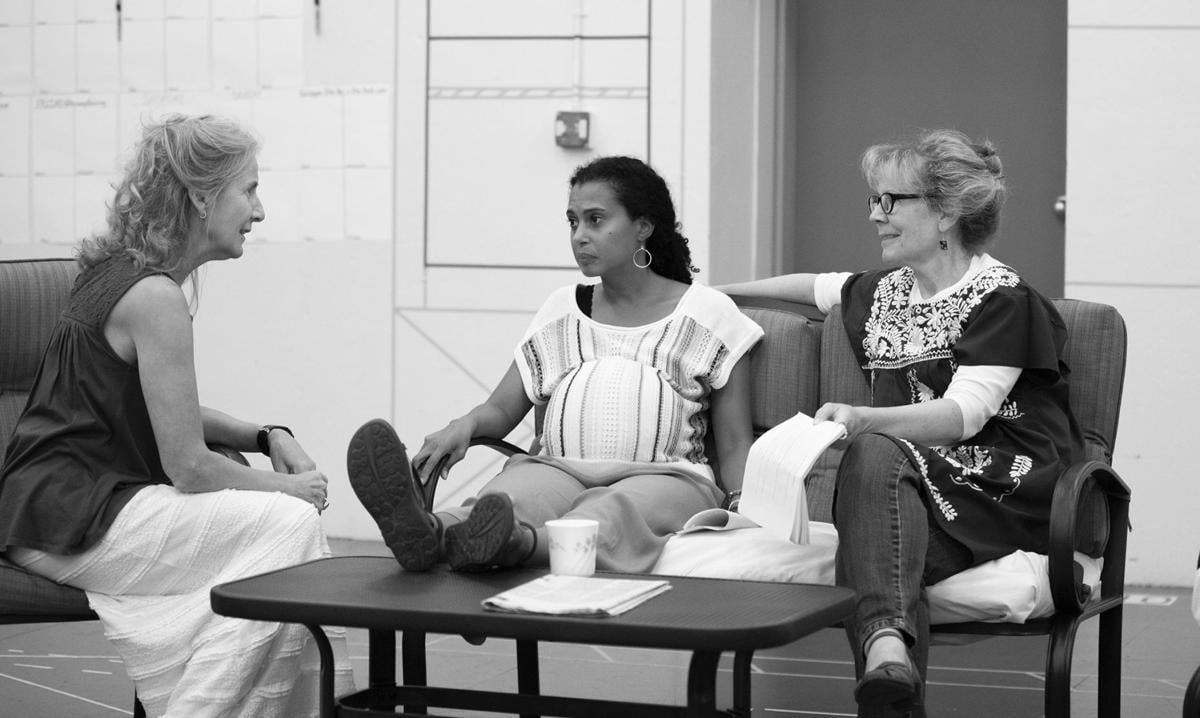
If it weren’t for a playground bully, Karen Zacarias may have never become a playwright.
She and her family had just moved from Mexico to Boston, where her father was attending graduate school. She was 10.
“We were immigrants and this boy said some unkind things to me,” said Zacarias, whose comedy, “Native Gardens,” opens Arizona Theatre Company’s season.
“He called me a spic. I went cold, my hands started sweating. All the way home I thought of these great comebacks, so I wrote them down. Then I started wondering about why he was like that. He became this character with a back story.”
Zacarias’ attempt to understand that boy was a defining moment for her.
“I think that in all of my plays there’s a moment of conflict and what you can see from the other side. It’s a culmination of what happened many, many years ago,” she said.
“Native Gardens,” which premiered at the Cincinnati Playhouse in 2016, is making the rounds around the country this season — 14 theater companies are producing it this season, including ATC.
Though called a comedy, the heart of the play is about class and culture conflicts.
It centers on two couples, neighbors, in an upscale Washington, D.C., neighborhood.
Pablo Del Valle, a young attorney, and his pregnant wife, Tania, have just bought a home next to Virginia and Frank Butley, a patrician couple with a love for English gardens. Things simmer over the Del Valle’s native garden, which the Butley’s think looks pretty lousy next to theirs, a question about a property line, and a barbecue the Del Valles are planning on the same weekend the garden club is set to judge the Butley’s garden.
Shortly after Zacarias received the commission for the play from Cincinnati Playhouse, she and some of her friends were discussing conflicts between neighbors.
“I started thinking there is something poetic and profane and absurd about that,” she says.
She wanted to take these two well-meaning couples and look at the evolution, the reasoning and the emotions behind a conflict.
Zacarias did not start out thinking one couple was right, the other wrong. And she doesn’t want audiences to, either.
“What I hope is the audience changes alliances as the play progresses,” she says. “And hopefully, at the end, the one you judge is yourself.”
While there are laughs, the play deals with heavy issues, from racism to agism to classism.
Yet, “it is not an ugly play,” she says.
“There are some hard things that come up, but I think it’s a play that reminds us of the humanity of people involved.”
Theater is especially adept at building tolerance and fostering understanding and empathy, Zacarias says.
“It plays a very big role in giving voice to the voiceless and bringing out a different perspective.”
It can also build community, she adds.
“Theater is the medium we most need now,” she said. “One person’s laughter can affect everyone in a room. It’s something vibrant, a reminder that we are all in this together. That can be very comforting and revive us. We need theater more than we have in a long time.”

