


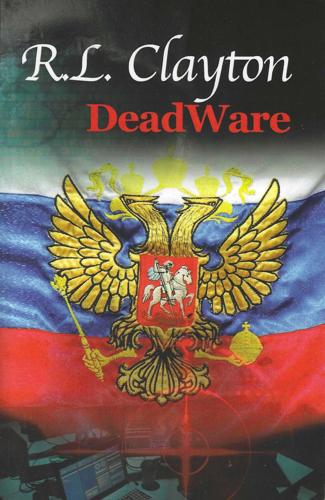

“DeadWare” by R.L. Clayton. Independently published. 421 pages. $17.99; $3.99 e-book.
Sniper par excellence Kiki Russell and interrogator sans peer Dr. Nick Sabino are back in this seventh “Dead” techno-thriller by Tucsonan R.L. Clayton. This time the husband and wife are hired by an anonymous private U.S. consortium to take out Russian cyber criminals targeting American businesses. And “take out,” they do — through explosions, slit throats, shots through the head or chest, and one particularly heinous Sarin attack. When Russia immediately blames the U.S. government, and usual international suspects Iran and Israel grab the opportunity to nuclear-rattle and threaten the world, greater forces than Kiki and Nick might need to step in.
Clayton’s settings here are well drawn, his action is fast-paced and sustained, but he adds elements that add nuance to this thriller: For one, he gives us an intelligent Russian detective adversary you rather respect. For another, he explores the ethical, psychological toll that being a sniper par excellence and an interrogator sans peer can take on human psyches. They’re nice complicating touches.
— Christine Wald-Hopkins
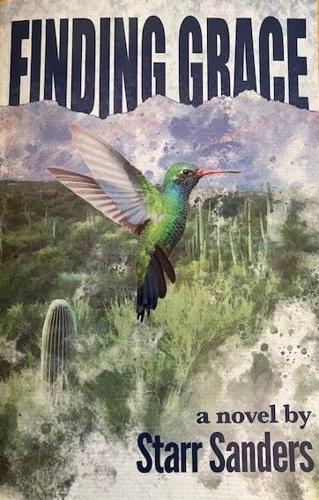
“Finding Grace” by Starr Sanders. Independently published. 200 pages. $12.95 paperback; also available on Kindle.
To anyone who wonders why someone would suffer the indignities of being a public school teacher — lousy pay, public disrespect, political targeting — but still love teaching, this teacher-reviewer says check out Grace in Tucsonan Starr Sanders’s fourth novel, “Finding Grace.”
A smart, irreverent, retired Minneapolis English and history teacher, Grace decides to load up a U-Haul and drive across country to start life afresh in San Diego. She does this over the objections of her family. And she does it harboring the secret that macular degeneration is destroying her eyesight. When the inevitable occurs, and her cloudy vision forces her off the highway, she meets Frieda, a smart, irreverent, young college student harboring her own secrets. Frieda needs a ride to Tucson. Grace needs a driver. So they agree to Thelma-and-Louise it as far as Tucson. Come to find out, Tucson suits Grace. It’s where the teacher in her emerges. It’s also where the teacher learns lessons of her own.
Sanders enriches what is essentially a family-secrets story with contemporary social concerns. She humanizes homelessness, immigration and LGBTQ issues, highlighting Tucson programs addressing them. She does it with snappy dialogue and attitude. And, yes, as novelist Sanders was once a popular high school teacher in her own right, she knows of which she writes.
— Christine Wald-Hopkins
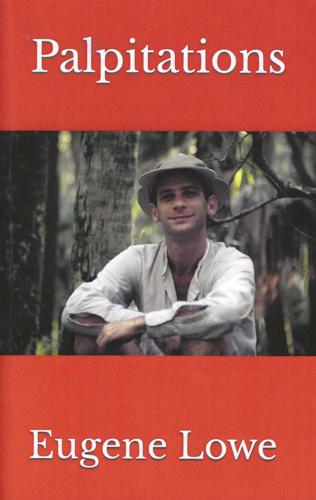
“Palpitations” by Eugene Lowe. Independently published. 144 pages. $10.
The Eugene Lowe we saw in his two memoirs — “Jiggling: A Gradual Release” (2019) and “My Army Vacation & Other Struggles” (2021) — was a bright, restless, risk-taking, troubled, unconventional romantic. Add to that list “imaginative,” and you have the Eugene Lowe reflected in this collection of his poetry and prose poems.
Describing “Palpitations” as “a rhythmic collection from a metaphorical arrhythmic heart; …words with a variable beat,” Lowe includes pieces written from 1976, at age 21, through 2022, when he was 67. They’re varied in form, sometimes arcane, sometimes in clear narrative, sometimes so mythological you need to Google, sometimes so personal you can’t quite get ‘em, at times a bit concupiscent, but always creatively nimble. They offer insight into the writer’s maturing … and aging.
— Christine Wald-Hopkins
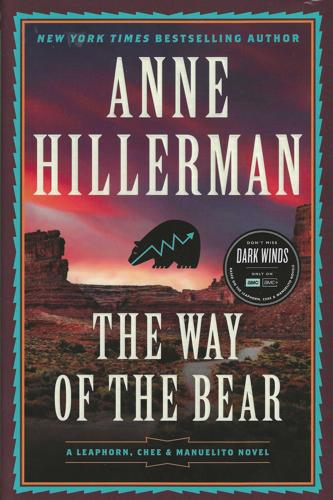
“The Way of the Bear” by Anne Hillerman. HarperCollins. 272 pages. $30 hardcover. Also available as an e-book.
The setting in this new mystery by Anne Hillerman — Bears Ears National Monument — is as significant a presence as fan-favorites Bernadette Manuelito and Jim Chee. The monument is a “treasure trove for fossils,” muses paleontologist character Chapman Dulles (hiding out from a killer, but still awed by the setting.) It’s like “a great library, not of books, but of bones, teeth, scales and claws preserved in stone, an archive of animals and plants ... alive during the Paleozoic era.”
Husband and wife Navajo Tribal Police Officers Chee and Manuelito have come to the national monument so Chee can make a PR call on paleontologist Dulles. Newly promoted to lieutenant, Chee’s been tasked with representing the department. Manuelito, who was not promoted to detective and is questioning herself, is encouraged by Chee to join him for a restorative trip. In no time, though, she’s shot at and nearly run down in the Valley of the Gods, and two men show up dead. There are fortunes and reputations to be made in collecting and selling ancient artifacts, it seems, and discovering and publishing original findings, is potentially lethal. Manuelito and Chee are soon involved.
Anne Hillerman is hitting her novelist’s stride in this book. That she can thread subtle political and scientific/historical/ecological observations through an engaging story is a testament to her deepening contribution to the Tony and Anne Hillerman legacy.
— Christine Wald-Hopkins
“The Bennets: Providence & Perception” by K.C. Cowan. Meryton Press. 236 pages. $15.20; Kindle $5.99.
K.C. Cowan draws back the draperies of Longbourn House for a look at how the Bennet family has fared in this sequel to Jane Austen’s much-beloved “Pride and Prejudice.” The action picks up a few years after Austen’s novel concluded; the two eldest sisters are securely ensconced in their happily-ever-after, and the focus of the narrative has shifted to characters with unresolved love lives, and others whose paths have taken surprising turns.
Mary, the “unseen Bennet girl” — plain, ignored, and socially awkward — gets a star turn here, and Austen’s readers will be interested in the transformative possibilities that await when she steps out from the large shadow cast by her more marriageable sisters. Likewise, Mr. Bennet, the long-suffering father of five daughters, demonstrates that he is not too old a dog to learn new tricks. It isn’t that the author takes liberties with their personas; rather, she allows them, in a satisfying way, to develop more fully while remaining within Austen’s original parameters.
And that’s the fun of this lively Austen fan fiction. Familiar players have the same familiar foibles, but they’re enhanced. In Cowan’s capable hands, virtue is rewarded, hubris gets its comeuppance, and just desserts are on the menu. Love still conquers all. Austen fans will be delighted.
K.C. Cowan, a former news reporter and host of an arts program on Oregon Public Television, now divides her time between Portland, Oregon, and Tucson. She has authored several books, including a fantasy series.
— Helene Woodhams
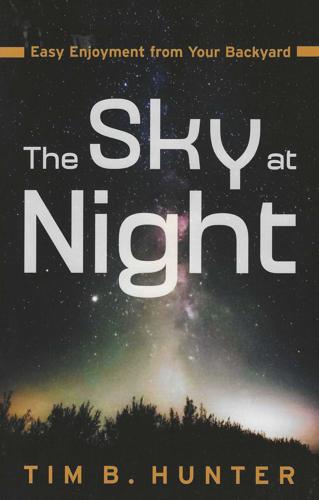
“The Sky at Night: Easy Enjoyment from Your Backyard” by Tim B. Hunter. University of Arizona Press. 208 pages. $22.95; Kindle $19.37.
Tim Hunter’s byline will be familiar to readers of the Arizona Daily Star, where his weekly column, “Sky Spy,” has been enlightening Southern Arizonans about all things astronomical since 2007. With this excellent book, Hunter has collected insights, information and observations from more than 750 columns and produced a highly readable reference that will be a boon to amateur astronomers and, indeed, to anyone who’s ever looked up at the sky and wondered.
Hunter began star-gazing at a tender age, and he’s an erudite guide to the galaxy. By profession, he’s a radiologist, a gig that back-burnered his hobby until a move to the University of Arizona’s Department of Radiology exposed him to Tucson’s famously starry skies, rekindling his interest.
His book is a font of celestial knowledge, thoughtfully arranged into subject areas, illustrated and indexed. The moon, planets, stars and constellations each get a chapter filled with how-tos for identification, important terminology, useful aids and resources for observation, and fascinating facts (enjoy the Big Dipper now: due to the movement of the stars, in a few thousand years it will be gone). Astronomical happenings, seasonal night sky events and notable figures are all grist for Hunter’s mill, and any questions you may have, from meteor showers to the length of a day on Jupiter, he’s likely answered. In fact, he devotes a chapter to his experiences, writing a weekly column in which he addresses the subjects he’s asked about most often.
The joy of this book is its accessibility, in the sense of “science for the rest of us.” Hunter never talks over the reader’s head and focuses primarily on “naked eye” observations — no fancy or expensive equipment needed. Just head outside, have a seat, and look up — chances are you’ll see something intriguing, and Hunter wants you to know all about it.
— Helene Woodhams
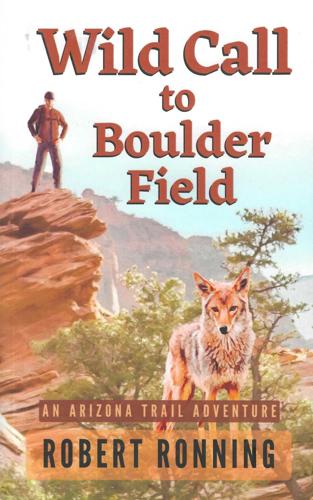
“Wild Call to Boulder Field: An Arizona Trail Adventure” by Robert Ronning. Desert Paws Books. 351 pages. $11.99; Kindle $4.99.
Park Ranger Wade Conrad, with his well-deserved reputation as a “wildlife whisperer,” is finely attuned to the call of the wild. But Wade has a short fuse when it comes to people — a boneheaded species he avoids — and prefers the company of his golden retriever, Abby. When she goes missing, and his anger management issues boil over, he heads out on the Arizona Trail, seeking the balm of wilderness.
But peace is elusive when he finds himself rescuing a rambunctious West Highland terrier — not the best companion for the trail, but one that brings out the protective dog-lover in him. Less welcome is the appearance of trail biker Jesse Hayduke, a wannabe activist prone to anxiety attacks. The mismatched trio soon discover they are unwitting participants in a deadly cat-and-mouse game with a mysterious but frighteningly vocal predator, setting the stage for a life-changing ordeal with implications that border on the mythical.
Robert Ronning offers a savvy, fast-paced narrative, informed by his strong convictions about animal rights and wilderness protection in the spirit of Edward Abbey (who gets a sly wink from the author in the form of aptly-named characters). Ronning, whose background is in theater, taught performance literature at City University of New York and directed off-Broadway plays. He now lives in Tucson and devotes his time to lost dog rescue and to writing about wildlife and conservation.
— Helene Woodhams

