


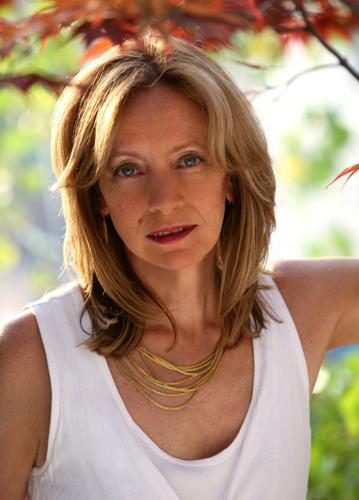

Leonard Bernstein’s daughter Jamie is joining the Tucson Symphony Orchestra this weekend to perform the narrator role in her father’s “Kaddish” Symphony.
But if you’ve heard the piece before, you might be a little confused. Bernstein, the oldest of the composer’s three children, won’t be reciting the text her father wrote in his 1963 symphony.
“The very first line of his narration is ‘Oh my father’ and he is addressing God. But I can’t speak those words without it being altogether embarrassing and weird, right?” Bernstein said during a phone call from New York City last week. “I can’t bear the idea of spending a second with the audience wondering what father I’m referring to. That’s too embarrassing.”
Bernstein penned her own narration for the work, which has never been performed by the TSO in its nearly 90-year history; it’s one of the cornerstones of the Tucson Desert Song Festival “Bernstein At 100,” now through Feb. 4.
Leonard Bernstein’s narration is an argument with God, questioning why he hasn’t kept his promise with mankind: “Lord God of Hosts, I call You to account! / You let this happen, Lord of Hosts! / You with Your manna, Your pillar of fire! / You ask for faith, where is Your own?” Jamie Bernstein’s is an argument with her father, asking why he didn’t follow his heart and write the music that was in his soul.
“I wrote another layer to the argument,” she explained. “My dad’s narration is an argument with his spiritual creator; my argument is with my biological creator. In my narration I take my father to task for making his music so complicated and why doesn’t he just write that tune that we all know he wants to write.”
Bernstein dedicated his 1963 “Kaddish” Symphony to John F. Kennedy and performed it for the first time weeks after the president’s assassination on Nov. 22, 1963. His daughter says the world then — still on edge from the Cuban Missile Crisis of 1962, the uncertain tempers as a result of the Cold War with the Soviet Union and the increasing unpopularity of the Vietnam War — mirrors the world today with the nuclear tensions between the United States and North Korea and terrorism around the world.
“It’s one of the many reasons why this symphony kind of speaks to us in this very urgent and relevant way,” she said, recalling a performance with the New York Philharmonic in November featuring Jeremy Irons as the narrator.
“The audience response was unprecedented. It was like everybody related to this symphony in a way that had never happened before,” she said. “All of a sudden there were reviews and standing ovations. Suddenly it was a work that really spoke to everyone’s emotions about the world right now because we all are going through such a tough time. Suddenly this somewhat neglected symphony of my dad’s is speaking to all of us on this very emotional level. … It’s very exciting. This symphony is having a new life so I’m very excited to bring it to Tucson.”
During our conversation, Bernstein also talked about her father and the way the world first reacted to his music.
Misunderstood and unappreciated: Bernstein composed classical music at a time when his contemporaries were stuck on atonal music. “If you didn’t write in that way, you were not taken seriously in the halls of academe. My dad would not give up on writing tonal music. That was what came out of him. Sometimes he would write 12-tone music, but not exclusively. And as a result his music was never accepted by the so-called serious musicians who were kind of the tastemakers in the halls of academe. He never got a Pulitzer Prize and all these things that he didn’t quite qualify for at the time.”
Then the world changed: The world of so-called serious musicians “eventually got over itself and got out of that 12-tone straightjacket. And these days, composers write in all kinds of styles and there’s no rule about which one you’re supposed to use, so everybody is quite used to mixing up different styles. And because of that now my dad’s music sounds amazing to contemporary ears. It sounds really modern and it really speaks to us.”
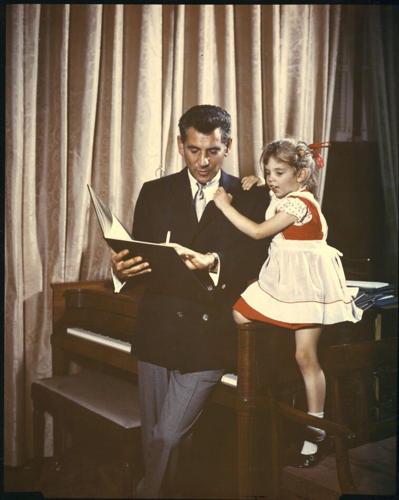
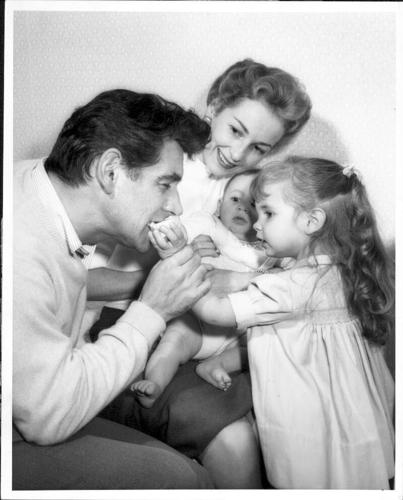
Dad was dad: Bernstein will release a memoir of her father this summer. “My dad was a wonderful father and he was very warm as you might guess from the way he conducted and the way he spoke to children on television. He was just a completely accessible and exuberant person. He was wonderful to have as a dad. He also was a compulsive teacher so he was always telling us things and explaining things and imparting information and sharing his own excitement about all the subjects he loved.”

