


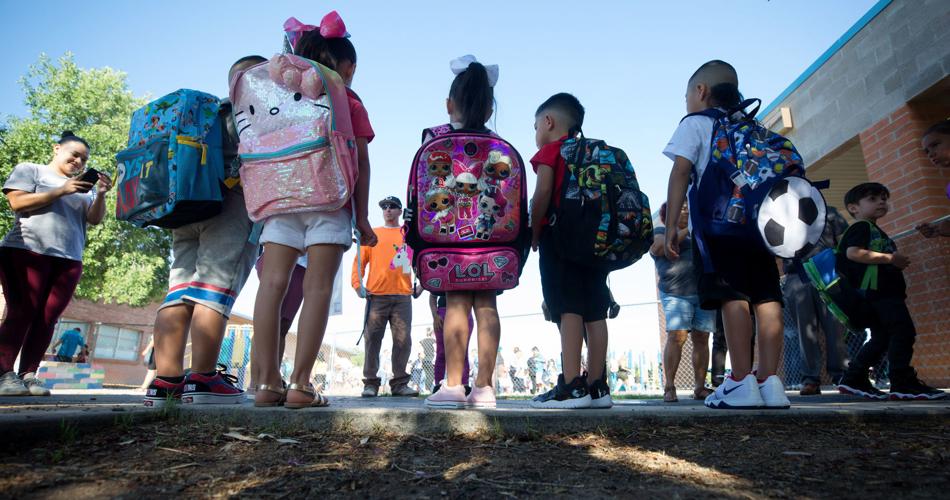



The Tucson Unified School District says it has lost 270 students in the first 15 days of the school year.
Part 6: Neighborhoods and schools
What you'll see in this issue
🏘️ A breakdown of Tucson's six regions, surrounding towns and suburbs.
✏️ There are nine major school districts in the Tucson area.
📚 Arizona has open enrollment and a charter school system, which means kids don't have to attend their neighborhood school.
👇 Keep scrolling for a more in-depth look at Tucson's neighborhoods and schools.
Part 6: Neighborhoods and schools
Like anywhere, your experience in Tucson will vary depending on where you choose to live.
But may we urge you: No matter where you put down roots, please explore the other parts of the city. As you have seen by now, there is so much to take in — even if that means you have to drive from the east side to the northwest side. And we know. It can take forever.
Tucson has no crosstown freeway. Luckily, Tucson is no Phoenix, and in my experience, 45 minutes, give or take, is about the maximum amount of time you'll need to get to most places. Of course, there are exceptions.
🏘️ Neighborhoods
#ThisIsTucson divides Tucson up into six regions — central/midtown, northwest, Catalina Foothills, south, east and west. As you can see, we're real creative. And no, these are not exact. We know our definitions have crossover.
#ThisIsTucson's map of the city
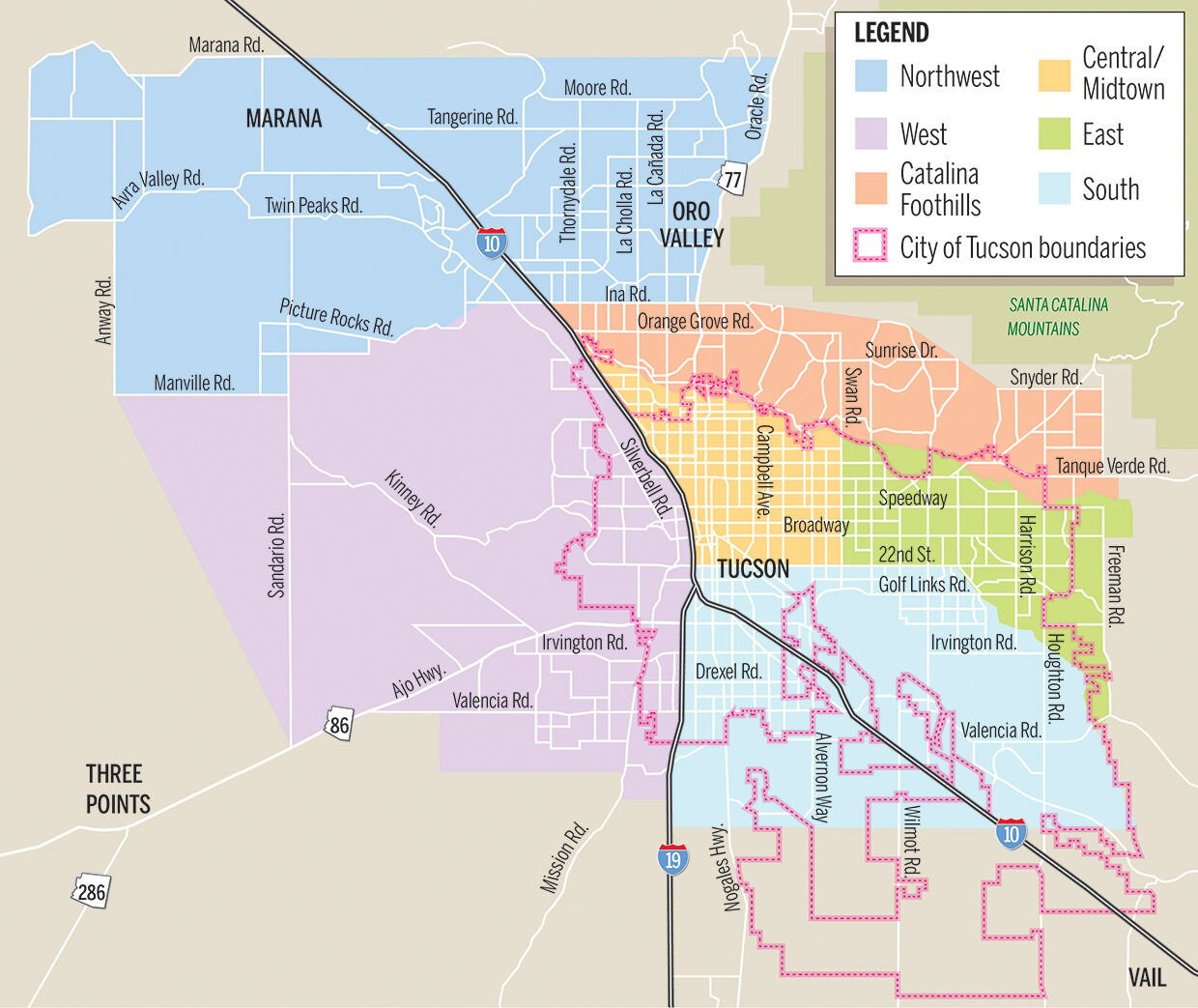
We consider central or midtown to be east of Interstate 10, west of Swan Road, south of River Road and north of 22nd Street. This is the area of Tucson that includes the downtown and university districts along with many of the city's historic neighborhoods. Many of Tucson's historic neighborhoods tell stories. There's Winterhaven, designed to emulate the Midwest with its green lawns, holiday light displays and curving streets. There's Barrio Viejo in downtown, with its iconic adobes, colorful art and packed history. And then there's Sam Hughes, a charming historic neighborhood across the street from the University of Arizona.
When we say "Northwest" we mean anywhere north of Ina Road, including the towns of Oro Valley and Marana. It's suburbia galore up there, but there is also access to desert vistas and recreation in the nearby Catalina State Park to the north. Catalina Foothills is an area at (you guessed it) the base of the Catalina Mountains that stretches to Sabino Canyon in the east.
"South" means south of 22nd Street. This is where you'll find the city of South Tucson, completely surrounded by Tucson, and South Fourth Avenue, which, following revitalization efforts downtown, began to see its own surge in development + amazing food. Farther south (and we mean way farther south) you encounter the communities of Sahuarita and then Vail to the east. Both have popular suburbs, especially if a commute to Tucson doesn't bother you.
"East" takes us east of Swan Road, where more suburbs sprawl. East-siders have easy access to Mount Lemmon, and, if you head farther east, Saguaro National Park East. Southeast Tucson is also the location of Davis-Monthan Air Force Base.
And finally, if you follow the setting sun west, you'll end up west of Interstate 10. On the west side, you'll find more open spaces, Saguaro National Park West, the Arizona-Sonora Desert Museum and the growing Mercado San Agustin shopping district.
Each area has its own vibe, so if you're looking to move, go exploring. You can also go to tucsonaz.gov/police/statistics to look at a Tucson crime map.

Invest in your future.
Let your savings earn for you. Open a Money Market Account to start saving for life’s next milestone or invest in your future with a Certificate Account (CD) that offers a fixed rate of return with no market risk. Hughes is here to help you every step of the way to meet your goals. Get started today.
✏️ Local school districts
There are nine major school districts in the Tucson area, and the largest is Tucson Unified School District, or TUSD, with more than 80 schools, says the Arizona Daily Star's former education reporter Danyelle Khmara.
District and charter schools in Arizona are given A-F letter grades each year. School report cards and grades are based on a number of factors that include year-to-year academic growth, high school graduation rates and scores on statewide assessments, among others, Khmara says. You can look up Arizona School Report Cards and compare schools and districts by visiting azreportcards.azed.gov.
She says the grades are good to consider but only as part of a larger picture that might include school visits and conversations with other parents. Facebook groups exist for each district and can be a handy place to get insight from other parents.
Khmara says the economic levels of families in the schools can affect how a school scores, as districts and schools with higher numbers of low-income families have to devote resources to both a student's basic needs and education.
But districts are diverse. TUSD, for example has a large population of low-income students and students with special needs, along with a middle and high school for high-achieving students. University High School, for example, often ranks nationally among best high schools (students also have to take a placement test to enroll).
And because individual school leaders in TUSD have significant power, how the school is doing can come down to the principal. That's why school visits are so important.
Sunnyside Unified School District, for example, has high poverty levels, but it also has a robust CTE (Career and Technical Education) program and provided personal laptops for every fourth- to 12th-grade student even before the pandemic.
Khmara says Catalina Foothills, Vail and Tanque Verde districts have some of the highest-rated schools in the area and are also in more affluent parts of the community. Vail, in particular, is known for its special education program, which includes children with special needs in grade-level classes.
Amphitheater Unified School District is another large district and has a school dedicated specifically to promote independence when possible for students with special needs. And Flowing Wells, another smaller district with a higher percentage of students from low-income families, also has schools that score higher on the state grading system.
📚 Options other than your neighborhood school
In Tucson, your kids don't have to attend your neighborhood district school. Because we have the option of open enrollment, you can apply to another public school that has classroom space, Khmara says. Open enrollment usually begins toward the end of the calendar year, so that's something to watch.
Beyond homeschooling and private school options, Pima County also has about 90 charter schools. These are public schools that receive state funding but are not part of a school district. Charter schools often have smaller class sizes and might have a special focus such as STEM. Khmara says they don't typically have transportation and some of the other services school districts provide.
Because finding a school to fit your family's needs can be an education in and of itself, talk to other parents, visit the school, and check out the school's report card.
And that's the bell. Class dismissed.
More to learn
- How to find your people if you're new to Tucson (or just want to make friends)
- Child care is expensive for many families. Here's how officials and organizations hope to help

In your next email: We're reaching the end of your #HowToTucson course. Discover more resources and ways you can stay connected with Tucson in your last email.

