


On a scrub-covered patch of open desert, a mile off the road that connects Ajo to Sonoyta west of Tucson, there is a line of 13 wooden crosses honoring the 13 Salvadoran migrants who died there in July of 1980.
Dora Rodriguez knew them all. She was with them. She might have become Cross 14 if rescuers hadn’t arrived when they did, and they are an important part of a poignant yet powerful memoir she released last month.
Few of us have more important stories to tell — this one earned front-page headlines all over the world — but “Dora: A Daughter of Unforgiving Terrain” is notably short … and often sweet.
Just 146 pages in length, the story begins with Rodriguez’s childhood in Santa Ana, El Salvador. Raised by a self-educated mom who did laundry work for a local hospital, Dora never imagined life beyond Santa Ana.

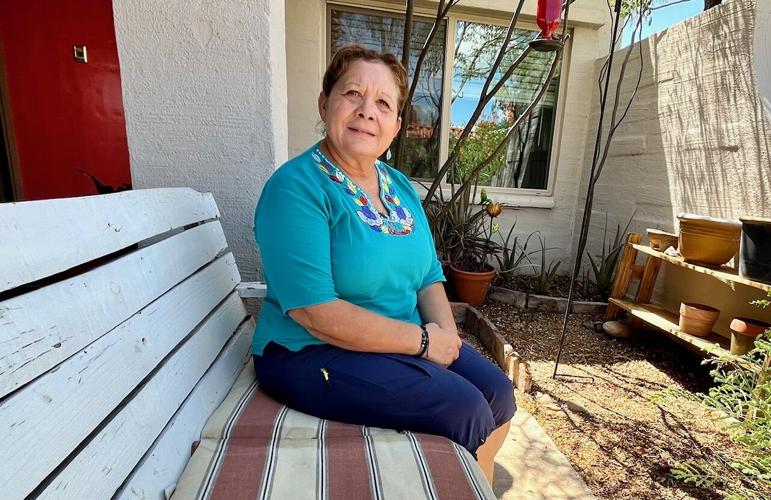
Dora Rodriguez, author of “Dora: A Daughter of Unforgiving Terrain.”
“I never thought or even dreamed I’d go anywhere else,” Rodriguez said. “Honestly, I didn’t know other places existed. We didn’t have a TV, we didn’t read many books outside of school. The only people I saw from other countries were soccer players and Mormon missionaries. I liked the Mormons. They gave us candy.”
She recounts the early days of the Salvadoran civil war, when friends began to disappear, and why she began looking north.
Rodriguez describes her three attempts to reach an aunt and uncle living in Los Angeles … the four desperate days in the desert with 25 other Salvadorians after being abandoned by their guides … then being found, near death, under a small palo verde tree in the Organ Pipe Cactus preserve of southwestern Arizona.
“I just remember dreaming that I was going somewhere under a dark, deep-blue sky and being totally at peace,” Rodriguez recalls. “When I woke up, I was in the arms of a man yelling ‘Don’t die on me!’”
Hers has been a remarkable journey, but Rodriguez recounts it softly, simply, as if speaking to a friend over coffee.

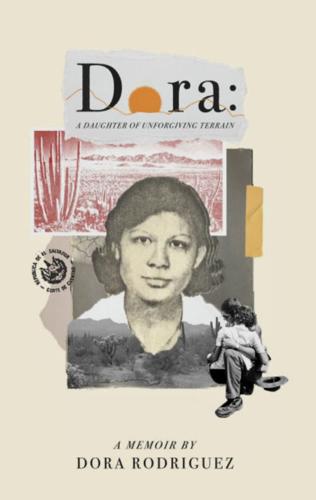
“I wanted my book to be short, honest, and something that would sound like me,” she recalls. “I asked a friend, Abbey Carpenter, to help me write it. My daughter Anna was the editor. My son Trever designed the cover. It’s my story, I guess, but it’s our book.”
Rodriguez remembers seven drafts and more than a few sleepless nights.
“I hadn’t had nightmares in years, but when I started getting my thoughts together for the book, trying to remember it all, I began waking up at midnight some nights to remember some more.”
The inspiration to author a book, to “say something,” emerged slowly at first, then suddenly.
After retiring as a foster care licensing specialist 10 years ago, Rodriguez became a full-time volunteer, providing humanitarian aid to migrants along the border.
In 2016, she organized “Salvavision,” a new nonprofit that helped asylum-seekers and recent deportees find medical assistance, legal assistance and help paying the rent.
The “suddenly” came three years later, when searchers found the spot in the desert where she had been rescued nearly 40 years earlier.
“When I got there, I knew it was the place,” Rodriguez said. “With my eyes open I could see everything that had developed there. I could see the clothes scattered everywhere, I could see the bloated bodies and hear the crying, the desperation, the screaming. I just lost it.”
Together, these experiences convinced Rodriguez she needed to tell her story, their story, a story played out by millions of Central American migrants in the 45 years since.
“I wanted people to see who we really are,” she said. “Not just the people who were with me, but the people who came after we did. I don’t want to be treated as a refugee, an immigrant, an illegal. I just want to be treated as a person, like anyone else.”
Sometimes forgotten in Rodriguez’s narrative is the fact she never made it to Los Angeles, the destination that had lured her northward so long ago. After spending a week in an Ajo hospital, she and the other survivors were moved to the Pima County Jail on 29th Street here in Tucson.
“I’m not sure I’d ever heard of Tucson until they brought us here,” Rodriguez confessed. “The government had decided to charge the smugglers, and they wanted us here to testify.”
A local radio station raised enough money to post bail for all 13 survivors. Local churches, most notably the Southside Presbyterian Church, found families to take each of them in.
“The day we got out of jail was the day I fell in love with Tucson,” Rodriguez said. “The parking lot was filled with people who wanted to help us. They didn’t know me, they didn’t know any of us, but they were there to take us home.”
Rodriguez, then 19, was welcomed into the home of Martha and Rigoberto Sanchez, where she stayed for her first year in the U.S.
“Eventually, when the trial was over and we could leave, I didn’t want to, Rodriguez said. “Tucson was my home. The love and hospitality I’ve found here have shaped my life in ways I could never imagine.”
She is still here today, working harder than ever to help those strangers she knows so well.
“I think I’m busier than I’ve ever been,” Rodriguez said. “My phone starts ringing at 6 a.m. How can I not give back? I was able to go from someone who was saved from the desert to being someone who saves others from the desert, and I try to do that every day.”
Footnotes
— The University of Arizona Poetry Center has reopened after six weeks of renovation to its central patio. It will be open Tuesdays through Fridays for the next two weeks, then Tuesdays through Saturdays beginning Aug. 25.
— The month-long Sealey Challenge, when participants read a book of poetry every day in August, is very much on. For reading lists and other information, visit www.thesealeychallenge.com.
— The University of Arizona Campus Store and bookstore will resume regular hours on Monday, Aug. 18.

