


To suggest that Mary Pastrana was born to be a librarian might be stretching a point some, but it wouldn’t be off by much.
As a young girl growing up in a Spanish-speaking home in Santa Ana, California, she learned to read English by using materials from the local library. Soon, she was playing librarian at home with a discarded set of encyclopedias. And today?
Yep, Pastrana is the community engagement manager of Latinx services for the Pima County Public Library, now paying forward the gifts she received as a kid in Southern California.
“I owe a lot to the Berenstain Bears,” she said last week, laughing. “When I was 4, I think, I checked out a ‘read-along’ kit that came with a cassette tape and a book … one of the Berenstains. It really helped me, because I could hear the words as I was reading them. After I read one book a few times, I’d have my mom take me back to the library to get a few more.”

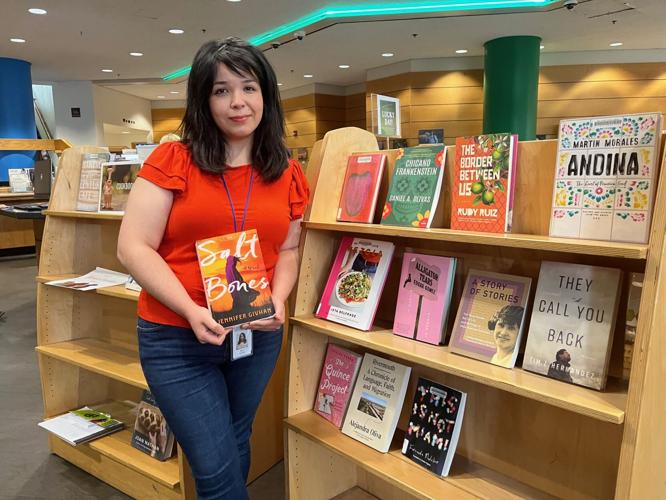
Mary Pastrana, the community engagement manager for Latinx Service at the Pima County Public Library.
Soon, Pastrana was checking out books without needing a cassette, and on a path that would eventually bring her to our library in May — just in time to start planning for Mes de la Cultura, Hispanic Heritage Month, which begins Monday, Sept. 15.
The theme of this year’s celebration is “History, Heritage, Hope,” and organizations throughout Southern Arizona will be staging events honoring the achievements Latinos have made and the influences they have had on life in the United States.
All 27 of the library’s branches will mark the occasion in their own way, and the library itself is helping several local groups stage major events. Bookending the month will be the Mexican Consulate’s “El Grito” celebration Sept. 15 at the Linda Ronstadt Music Hall and Tucson Meet Yourself Oct. 18-19 downtown.
Hispanic outreach and inclusion have been central to the library’s mission for more than 50 years, when the Spanish Services Committee was formed to ensure that Latinos had equal access to all services and resources there.

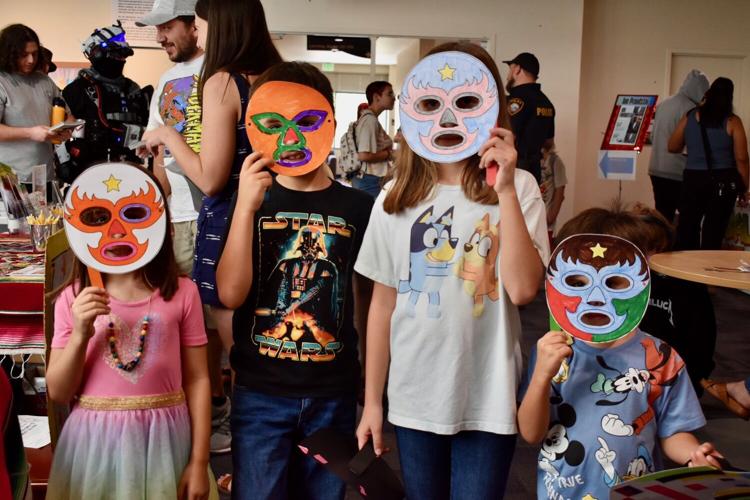
Children made lucha libra masks at the library’s Mega Mania event this summer.
Not coincidentally, Professor Arnulfo Trejo — a University of Arizona librarian — was at the same time launching a movement that would become REFORMA, a national organization promoting access and encouraging Hispanic students to pursue careers in libraries.
Tucson became the epicenter of library accessibility, and that influence is still evident today. Translations of legal documents and research materials are readily available. Spanish-language books can be found in all formats throughout the collection, and Spanish-speaking librarians work at most local branches.
“A lot of what we do is out in the community,” Pastrana said. “We’re not just asking people to come to us, but when they do? We want them to feel welcome, and to know we’ll do everything we can to help them find what they’re looking for.”
At the heart of this work is the old Spanish Services Committee — now known as the Nuestras Raíces Committee — a team of 60 librarians from throughout the library system.
Pastrana chairs the group, which is aptly named. Nuestras Raíces translates to “Our Roots,” and these roots flower in hundreds of beautiful ways, many of which can be seen on the team’s webpage: library.pima.gov/nuestras-raices-landing/.
A page outlining library services in Spanish can be reached by visiting library.pima.gov/espanol/.
Then there are all those books!
“Our Nuestras Raíces Committee supports the Collection Development people by requesting culturally relevant titles, both in English and Spanish, by Latin American authors and about Latin American communities,” Pastrana said. “We’re always updating our book lists and promoting new work we think people will want to know about.”
In some ways, Nuestras Raíces even lit a trail for the Tucson Festival of Books.
In 2003, local librarians Elena Gutierrez and Anna Sanchez began organizing a Mexican-American celebration that would include Hispanic literature, music, film, food and art.
Modeled after the Border Book Festival in Las Cruces, “Nuestras Raíces” would include readings and workshops in the downtown library, Latino movies at the Screening Room theater on Congress Street, and an all-day mercado Saturday at Jácome Plaza.
Luis Alberto Urrea, who had just released “The Devil’s Highway,” was the first featured author, and the event drew thousands of Tucsonans downtown March 5-7, 2004.
Five years later, the library folded its celebration into the first Tucson Festival of Books, and the Nuestras Raíces Stage has been an important venue there ever since.
“We like to think of our work as spreading ‘library joy,’ sharing our pride in our language, our culture and our heritage,” Pastrana said. “For someone like me, who grew up speaking Spanish and playing library in her room, this is a pretty great place to be.”
Footnotes
- Yissel Salafsky, chief executive officer at Make Way for Books the last 2½ years, has decided to step down Oct. 31. The announcement came last week from board president Anne McLain. A search for Salafsky’s replacement will begin soon.
- Friends of the Kirk Bear Canyon Library recently donated a total of $52,500 to 22 public school libraries to help with the purchase of new books, supplies and needed equipment. The donations were made possible by customers of Hughes Federal Credit Union, who earmarked their new-membership fees for the library. With other programs, friends of the east-side library have given more than 2,700 new books to young people this year.
- Tucson novelist Sarah T. Dubb is this semester’s Writer in Residence at the Pima County Public Library. Writers may schedule personal sessions, and she will lead three public workshops, the first on Sept. 20 at 10:30 a.m. at the Quincie Douglas Branch. To learn more, visit library.pima.gov/writer/. Dubb’s second romance novel, “Honey Bee Mine,” will be released in February.

