

Looking around your home and thinking you would like a change, but then you look at your budget?
We have some thoughts for you that won’t break the bank. Our ideas go beyond simply painting walls a different color, although that is always a worthwhile option. We want to look at ways we can frame the components of our home differently to add accent and style to the fabric of our house, home, castle or cabin.
Basic trim work
Most of our homes have some basic level of trim work. Whether it is the base moldings at the junction of the walls and the floor, walls and ceilings, or around our doors and windows, swapping the standard blah for something more WOW can really transform your style. Trimwork has many profiles, sizes and shapes to choose from.
Hopefully this will pique your curiosity into the wide world of molding design possibilities.
Base trim
Standard base trim used in most builder homes is either 2¼” or 3” tall baseboard. There are two basic styles.
- Streamline. A smooth trim that tapers from the floor to the top in a continuous surface.
- Colonial. This style has horizontal fluting or folds in the surface adding some minimal texture to the trim’s surface.
Change these baseboards out for a deeper or taller trim board, such as a 1” x 3” base or even a 1” x 6” base for larger rooms, and add other pieces to enhance the connection between the wall and the floor.
Traditionally trim has been made from wood, but there are also several trim styles that have a sculpted profile manufactured from composite materials. They can save time and money over the old-fashioned adding on of different pieces to develop molding profiles.
Base trim sets a stylistic tone for any room. Consider it as a frame for your furniture.
Ceiling trim
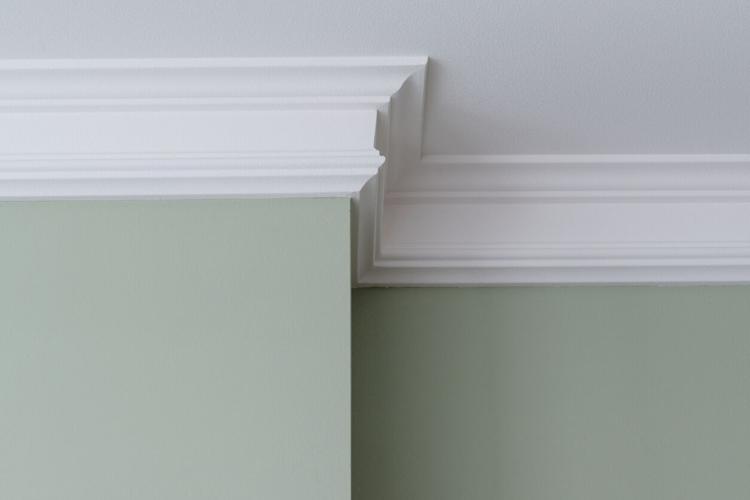
Ceiling molding, referred to as crown molding, is installed where the ceiling and the wall meet. Crown molding serves several functions — adding interest to the room, hiding any drywall flaws and providing a decorative flair. This type of molding is popular in traditional architecture and is available in many styles and materials.

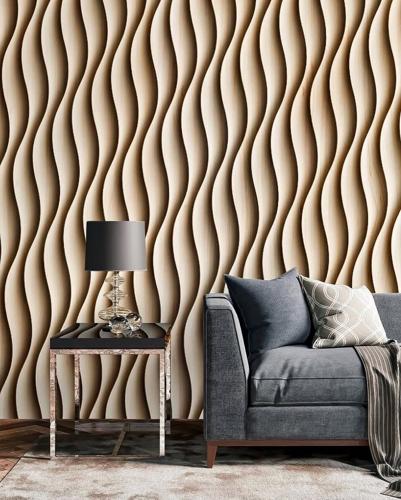
ABOVE: Rosie Right designer Roshelle Horn says crown molding done well is an art form. BELOW: Art for Everyday creative wood panels create a one-of-a-kind wall.
Door trim
There are two parts and three sides to door trim. The head, or the top of the door, and the two jambs. Those are on either side of the door frame. Doors are portals from one space to another. Think about how you would like to frame that portal.
- As with other molding options, you will need to choose from the hundreds of profiles and designs available.
- Door jamb trim and base trim often reflect a similar pattern in classical applications. This means the two can have similar patterns that complement each other or even be identical.
- Consider trim work on a passageway that may not even have a door. Look at it as an opportunity to frame a piece of art or sculpture that is in the next room.
Window trim
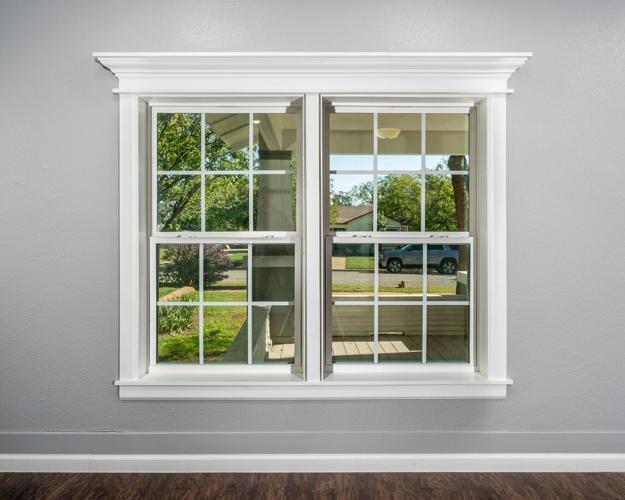
We talked about a door being a passage or portal of sorts. Well, our windows give us the opportunity to frame the outside view.

Topping a window with a molding adds bulk and beauty to the window.
- As with door frames being complementary to base trim, window moldings follow as well.
- Windows that do not go all the way to the floor have a sill at the bottom. This gives you an opportunity to create a shelf. Depending on the depth of the sill, you might be able to use this surface to further decorate your home.
Installation
If you have carpentry skills and know how to cut simple miters, you can undertake the installation of trim yourself. Rochelle Horn, designer at Rosie on the House, says the key to crown molding and trim is the installation, as it is an art form.
These links can help you through the steps to refresh your memory on cutting and installing moldings:
rosieonthehouse.com/diy/what-advice-do-you-have-for-installing-baseboard/
rosieonthehouse.com/diy/how-do-i-install-crown-moulding/
Special accents for walls and doors
There are companies like Art for Everyday that take molding and accents to the next level. Their products are only available to interior designers, architects and cabinet shops. Their products come unfinished and can be custom-finished.

Art for Everyday creative wood panels create a one-of-a-kind wall.
Their sculpted wall is a great alternative to a traditional painted wall. Consider a sculpted panel section to add interest and provide an elegant backdrop for other artwork or your furniture. Wood is always a warm addition to any space.
Doors and cabinets can be enhanced with custom sculpture pieces.
Other ideas
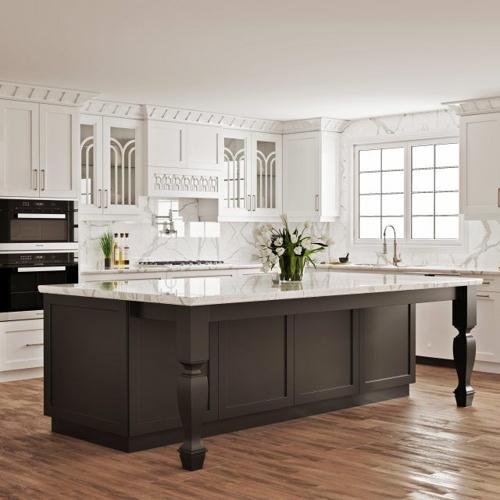
Other products to look for include corbels to use under a countertop or pair with decorative shelving, decorative legs for the end of countertops, molding for the top of cabinets, wood insets for glass doors and more.

Distinctive wood legs create an inviting look for this countertop.
If you are feeling inspired to make architectural components a DIY project and want to find some interesting retail products, check online at places like Architectural Depot or Osbourne Wood, at your local full-service hardware store, or wood shop.
The top stories from Sunday's Home+Life section in the Arizona Daily Star.

