



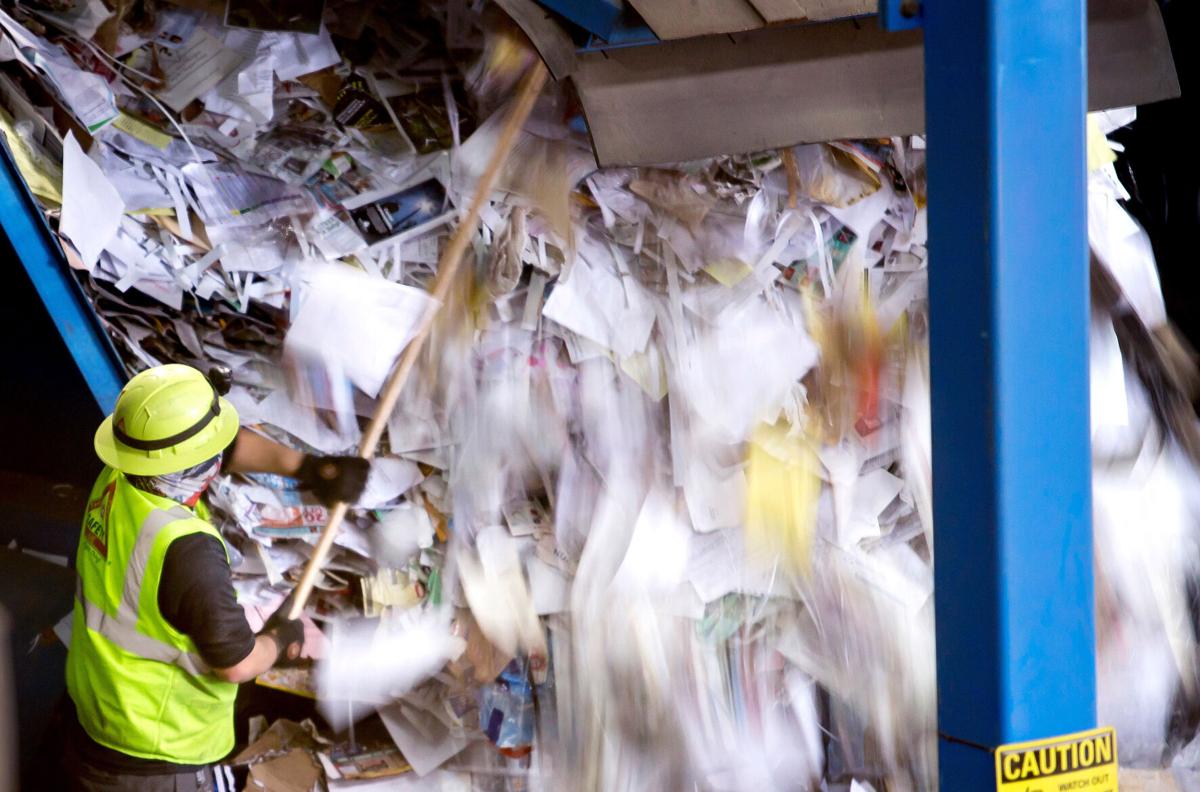
Question: Is it known how much of the materials we put in our curbside bins gets recycled or ends up in the landfill?
Answer: Yes, it is known. Before I get into that, let’s cover some terminology that may be helpful when talking about recycling.
Recycled material: All recyclables sold by MRFs to end markets. This also includes material captured through state deposit return systems (known as “bottle bills”).
MRF: Materials recovery facilities (“recycling plants”)
Film and flexible material: A flexible packaging material that is lightweight, portable and not as rigid and hard as regular packaging films.
The Recycling Partnership reports in its 2024 report, “Based on a new methodology that tracks the fate of materials in the system, including material from single-family and multi-family homes, and includes film and flexible material, 21% of recyclable material is being recycled. Out of the 79% of lost material, 76% is lost at the household level and not collected, underscoring the importance of recycling access and household engagement.”
That’s pretty significant. You can read their full report and view the many helpful charts and other graphics at tucne.ws/1p9v.
There are two ways to look at recycling participation:
Program participation: The percentage of households with access that use their available recycling service.
Overall participation: The percentage of all households that participate in recycling.
Arizona is among the top states of households with access to recycling who do recycle at 67%.
Q: Does China still take our recyclables?
A: In 2018, China banned 24 types of recyclables as part of its Operation National Sword policy. A 2020 study based on recycling in Arizona found that profits for every municipality surveyed had sunk dramatically. For example, in just two years, Sierra Vista’s annual revenue from recycling decreased by $32,000, a 75% drop from previous years.
One of the major non-recyclable culprits is packaging plastic. Data on packaging recyclability is limited, but the available information indicates that less than half of plastic packaging is recyclable.
The policy ended importing plastic waste with a contamination level above 0.05%. Before the policy, China imported the vast majority of recyclables from North America and Europe for two decades. The upside of this practice of buying recyclables was it brought raw materials for the growing industrial capacity of China. The downside was they received too much contaminated recyclables, causing environmental concerns such as air and water pollution.
This ban could be why much of the United States’ recyclables end up in landfills today. Nearly 15,000 tons of mixed paper and roughly 7,500 tons of glass containers are filling landfills.
So, what does that mean?
When recyclables are buried in landfills, they decompose with other waste materials. This process can take several years. During this time, the recyclable materials release methane gas. Recycling is an important way to reduce the amount of waste that ends up in landfills and to reduce greenhouse gas emissions. Recycling conserves natural resources, reduces pollution, and saves energy.
Q: I have heard the term “end markets” when it comes to recycling. What does that mean?
A: End markets are the market for the recycled materials to become something else.
For the residential recycling system to operate effectively, there must be market demand for the commodities it produces. For an item to be considered recyclable, it must have a viable path to becoming something else, such as clothing, containers or packaging material, for example.
One of the most powerful drivers of end markets is demand from companies who have pledged to use more recycled material in their packaging. Policy changes and consumer expectations for sustainable packaging choices are compelling reasons for companies to accelerate their demand for recycled raw materials for all packaging types.
Recycling facilities or MRFs face the challenge of low prices relative to processing costs as they sell their commodity to the market. Most privately owned MRFs now charge processing fees to community recycling programs, which not only face capital-intensive costs but incur these processing fees, which are usually passed on to the consumer.
Q: What will it take for us to maximize residential recycling?
A: The 2023 Knowledge Report from The Center for Sustainable Behavior & Impact details how to accelerate recycling best practices. Two of the key questions asked were:
“What does it take for people to recycle well every chance they get?”
“How can we best address the intention-action gap?”
As reported, eight in 10 Americans report that recycling is worth the effort. Yet, over half of household recyclables end up in trash bins instead of recycling bins, creating economic and environmental costs.
They also state there are five requirements of an effective residential recycling system:
All packaging should be recyclable.
All U.S. households need access to recycling.
Households need to engage in recycling.
Recycling facilities should be able to process 95% of the recyclable material they receive into saleable commodities.
End markets for recyclable materials should be sufficient so recycling facilities can sell their commodities.
To ignite changes in recycling behavior, Recycling Partnership suggests these changes:
Systemic communications.
Build people’s confidence in recycling outcomes.
Tailor engagement and outreach to different audiences.
Design recycling systems with behavior in mind.
Q: What is e-waste?
A: E-waste includes all electronic devices and electronic parts discarded, such as computers, keyboards, remote controls, wires, video game systems, toner cartridges, stereos, tablets, chargers, microwaves, electric cookers and heaters.
We have become increasingly dependent on electric devices and tend to upgrade each time there is a new version. When old devices end up in a landfill or unsafe scrapyard, they become e-waste.
There are 25 certified e-waste recycling companies in Arizona, according to Sustainable Electronics Recycling International. Visit sustainableelectronics.org to find ones near you.
Participation matters
If you can participate in a recycling program, take full advantage of it, and educate yourself on what can be recycled and how they should be placed in the bin. If your home is not part of a regular recycling pick-up program, take small steps, collect what you can and deliver it to nearby public recycling centers.
Spearheaded by Tucson City Councilman Steve Kozachik, the glass reuse project has led to local businesses incorporating the recycled material into their manufacturing processes and even items sold on shelves. Video by Riley Brown. Music credit: Olexy via Pixabay.

