



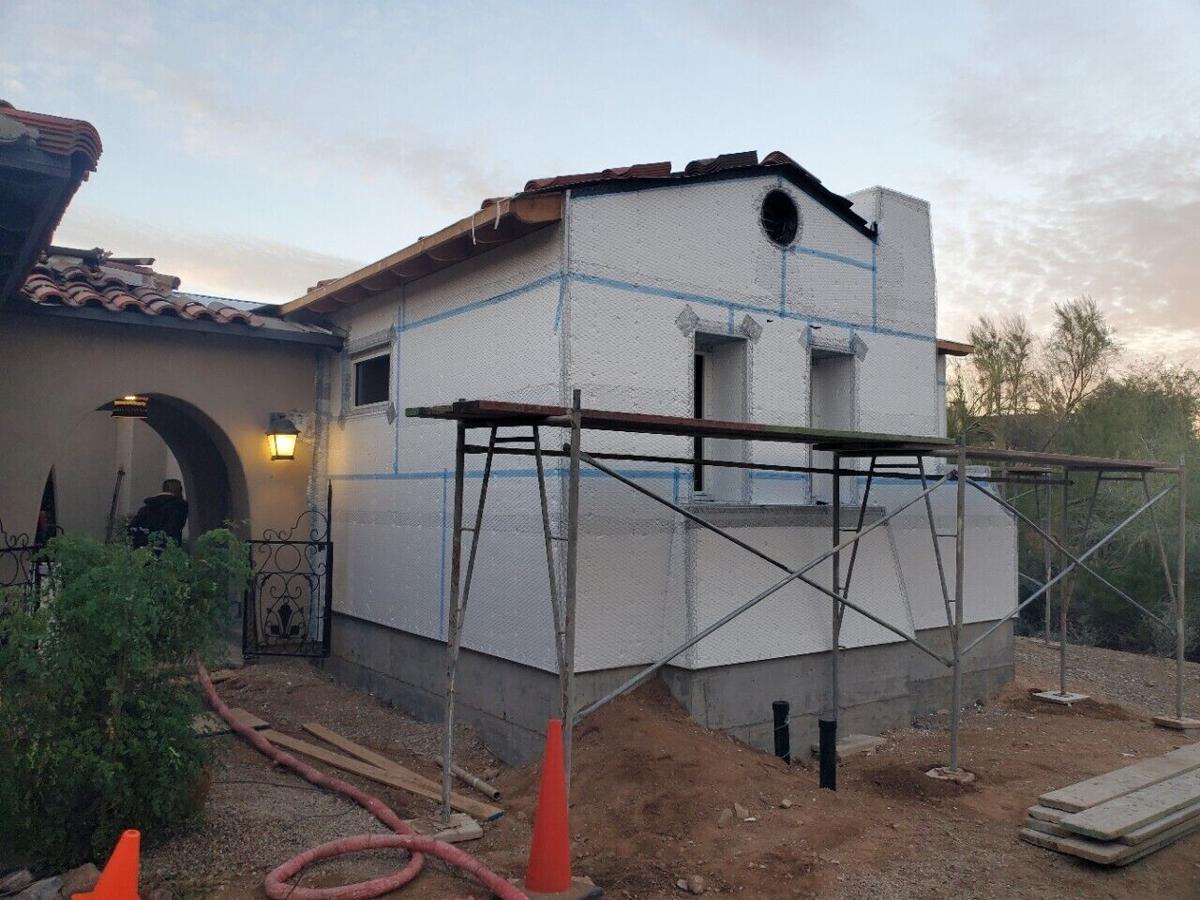
Question: What is a an ADU?
Answer: ADU stands for accessory dwelling units. It is the legislative term for casitas, guest houses, mother-in-law suites, studios and pool houses. They are small additional buildings on the same property as the main single-family house, often as an addition to or alongside a single-family home. They are typically located in the side yard or backyard and traditionally used as extra living space for family members, guests or as an income property. Other uses include studios, offices, entertainment spaces or workshops.
Early casitas appeared in Spanish and Mexican architecture as separate dwellings for extended family or staff. They were later embraced in the Southwest for their cultural ties and indoor/outdoor living.
Alex Pajic, design and sales consultant with Rosie Right Design Build Remodel, a Rosie on the House certified partner, tells us the most common characteristics of a casita in Arizona include:
One- or two-room units
A small kitchen and bathroom
About 400 to 700 square feet of living space
Mostly designed to match the look of the existing home
An entrance separate from the main house and/or patio
Cooling and heating by using a mini-split unit
The flexibility to be used as a guest house, home office, gym, yoga studio or art studio.
Q: Why have the construction of casitas become so popular?
A: The surge in popularity can be attributed to changing family dynamics and flexible living demands. Pajic says they are a hot feature in luxury homes on larger lots but will become more prevalent on smaller lots.
According to the Department of Housing, Arizona is 270,000 housing units short of current demand. Many cities believe ADUs would help with demand and housing affordability.
The demand for casitas has gone up in recent years. The younger boomers and Gen Xers, also known as the “sandwich generation,” are building guest houses for their parents, adult kids and sometimes both. There are several factors contributing to their popularity:
Flexibility in usage: Casitas can be utilized in various ways to offer homeowners the freedom to adapt the space to their specific needs.
Caring for aging parents: For the younger boomers and Gen Xers, having their parents living in place on the same property has multiple benefits. It can be cost-effective, but most importantly, living on the same property prevents older adults from being isolated and gives their children a sense of comfort knowing their parents are only feet away and safe. Not being in the same house gives everyone privacy and the aging parents some independence.
This is something that a Rosie on the House staffer and her family are considering. Though her mom is still very independent, the time may come when she needs a little help but wants to maintain her privacy. They are discussing options now so her mom can have input and not be rushed into deciding in a time-sensitive situation.
Space for young adult children: Cost, availability and higher mortgage rates have made buying a home out of reach for many young adults. Therefore, many parents build a casita so their kids can “move out.” Casitas provide an ideal solution, allowing young adults to live independently while still close to home.
Hosting guests: Regularly hosting out-of-town family or friends for extended periods can get cramped. A casita gives everyone their space.
Rental income: Homes near universities and smaller colleges often have students seeking housing. Rosie on the House certified partner Joelle Kahn, a realtor with Tierra Antigua Realty in Tucson, notes that she sees many homes with casitas. “They are used as rental income. Especially in the central parts of town, they are rented out to university students.”
Casitas are also popular where short-term rentals are allowed when there are huge events in town, such as the Super Bowl, World Series, concerts and the Gem & Mineral Show.
Addressing space limitations: For homeowners whose principal residence lacks space, a casita offers an additional area for storage, hobbies or relaxation.
Considerations before building a casita
Regardless of the reason, adding a casita to your property requires a proper design, thorough planning and a cost-benefit analysis. There are many issues to consider, as Pajic explains.
Purpose: As discussed earlier, it is important to identify the purpose in advance, as it has implications on design, planning and the actual construction. Will it be used as a guest house, rental unit, man-cave or she-shed, arts and crafts studio, garage/shop, pool house or something else?
Is the property zoned for it? Because every city and town has its own rules, you must check with them regarding their zoning laws, regulations and permitting for a second dwelling on a property. You must check with them before you consult an architect or buy a single nail.
Will your HOA allow it? Even if you are zoned for the addition, check with your HOA regarding their restrictions and guidelines.
Is it worth the investment? It depends on how much you use it, rent it out and how long you plan to own the property. You may not get a full return on your investment when you sell.
Rental use: If you intend to build a rental unit, you must be sure it is allowed. For example, in Phoenix, a casita can be legally rented but not as a short-term vacation rental.
Construction restrictions and requirements: Remember, the devil is in the details. In any remodeling or building project, there are thousands of details to manage. To get started, consider your community’s restrictions.
Apart from the building cost per square foot, additional considerations include:
Sewer access and sewer line diameter
Water service may need to be enlarged to appropriately service the casita
The electrical service panel may need to be upsized or an additional panel installed, which Pajic recommends
Depending on the lot’s configuration, excavation and potential hard dig need to be considered
Varying by city, sprinklers may be required for fire suppression
Permitting: Casitas must be properly permitted with grading and drainage plans and the usual structural and building plans. HOA permits, and even considerations of the natural open space, possible flood zone constraints, or easements on the property may impact the feasibility of a casita. A design professional can help you navigate these issues. Often, a call to your municipality’s building department will provide upfront information regarding what’s allowed before you even meet with a builder or contractor.
Design: The exterior design can vary to match the house or be distinctly different. Orientation of the windows, doors and overhangs is important. If possible, avoid direct sun exposure and overheating of the interiors especially if the casita is not used regularly. Interior spaces can range from utilitarian to luxurious, depending on the needs and the budget.
Landscaping: What will the landscape surrounding the casita consist of? An additional point of entry? An additional path leading up to the casita? Will the exterior areas of the casita be secluded or open outdoor patio areas? Will there be adequate parking for a long-term resident or a rental?
Schedule: Will the casita be prefabricated, built off a pre-approved floor plan or a conventional build?
Modular homes can be an option, especially when lot size and setbacks are limited. Permits and regulations pertain to modular homes, as well. Rosie on the House certified partner Urban Shed Concepts has a wide variety of sizes and styles available. Homeowners would still need to hire a licensed and bonded contractor to make the interior finishes.
Regardless of the reasons for building a casita, perform your due diligence. Neglecting to do so could cost you thousands to hundreds of thousands of dollars.
Watch now: Tucson City Council discusses ways to make casitas more affordable during a one-year review of the secondary homes' implementation. Video courtesy of city of Tucson.

