


Bruce Springsteen isn't the only one with something to say about the state of the country these days.
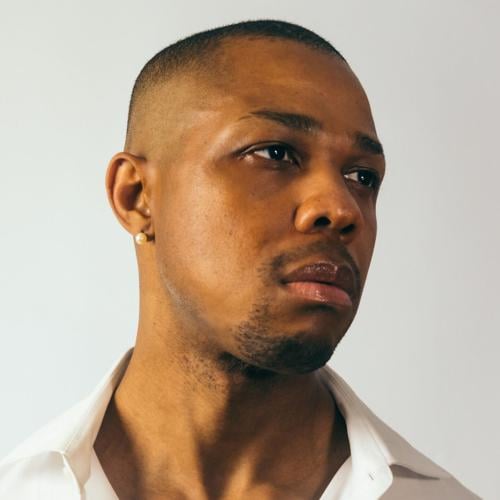
Bass-baritone Davóne Tines and the early music ensemble Ruckus added their voices with the premiere last week of their new collaboration "What is Your Hand in This?", a concert that asks the question: Can this fragile American experiment hold?
"We wanted to find something that could engender empathy within audiences," Tines said the day after he and Ruckus premiered the concert on Jan. 28 with Washington Performing Arts in Washington, D.C. "Realizing that in a time of national struggle or confusion or conflict, it's really necessary for people to understand other people's perspectives and where they're coming from."
Tines and Ruckus bring the show to Arizona Early Music on Sunday, Feb. 8, as they hopscotch from the East to West Coasts, including a stop last weekend at Carnegie Hall. Sunday's performance is part of the Tucson Desert Song Festival.

Davóne Tines joins Ruckus for an Arizona Early Music concert Sunday, Feb. 8, as part of the 2026 Tucson Desert Song Festival.
"What is Your Hand in This?" commemorates America's 250th anniversary through songs that both celebrate and question America's identity.
The concert was conceived over two years by Tines, composer and arranger Douglas Balliett, and Clay Zeller-Townson, the multi-instrumentalist founder of the Baroque ensemble.
Tines said Balliett and Zeller-Townson did a deep dive into the history of Revolutionary War-era songs that tried to define America's identity and songs from 18th and 19th-century abolitionists that questioned that identity.
"Over the span of America's complex and interesting life, people have continued to question America through music," Tines said. "We're part of a long lineage of people who have questioned the powers that be, questioned the status of things and utilize their musical voices to speak to things that perhaps other ways of addressing conflict can't."
The program features works written by former enslaved people, including "The Rays of Liberty," penned sometime in the early 1800s by Sawney Freeman, one of the country's earliest published Black composers; and Joshua McCarter Simpson's "To the White People of America," a stinging indictment of white Americans who supported or tolerated slavery.

Arizona Early Music Executive Director Dominic Giardino says the Feb. 8 Tucson Desert Song Festival concert with Ruckus and singer Davóne Tines is unlike anything the group has ever presented.
George W. Clark's abolitionist song "What Mean Ye?" calling out the cruelty and injustice of slavery balances founding father John Dickinson's assertion in "Liberty Song" that America's identity is tied to freedom, even as he kept as many as 50 slaves.
Tines and Balliett teamed up on the arrangement of Earl Robinson's "The House I Live In," which champions racial, religious and social tolerance; and the Tines-penned title song "What is My Hand in This," one of four original works on the program.
This is the first time that Tines, whose critically-acclaimed career intersects opera and concert stages, and Ruckus, which San Francisco Classical Voice famously described as “the world's only period-instrument rock band,” have collaborated.
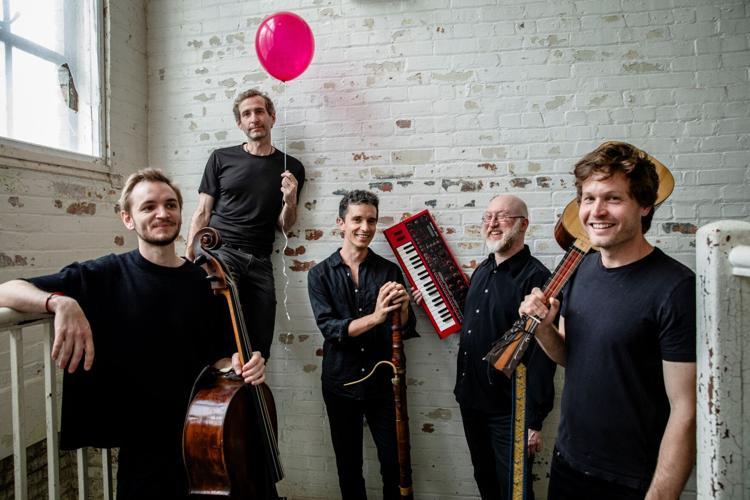
Zeller-Townson said Ruckus, whose members are historically informed in performing music from the 17th and 18th centuries, is essentially a continuo, a Baroque rhythm section that mirrors other genres.
"It's keys, it's bass, it's guitar, it's also bassoon and cello, and this rhythm section identity is, I think, what leads people to call us a rock band," he said, noting that the group also draws inspiration from "various corners of roots music."
The program also includes Handel's Allegro from Concerto Grosso in D minor "that kind of helps us bring people into the (18th century) sonically," Tines said, and Sam Cooke's 1964 indelible anthem "A Change is Gonna Come," that lands us back in the present.
This is one of the most unique programs Arizona Early Music has presented in its 44 years, and one that Executive Director Dominic Giardino said his audience has embraced.
"This is by far the best-selling concert we've had this season," he said, noting that he was initially concerned that "it was going to be a bit of a risk for our audience" given the program's deviation from the "sort of bread and butter programs we usually present."
"You're going to see a synthesizer in conversation with Baroque violins and Baroque violas. You're going to see an electric bass playing in conjunction with a Baroque guitar and the repertoire that we will be experiencing, I mean, spans essentially 300 years of music and ... it's definitely not a Handel, Bach and Vivaldi concert," Giardino said. "It's a real exploration of how America's musical history has always embraced, or at least has always been characterized by, music of dissent and protest."
Sunday's concert begins at 3 p.m. at Grace St. Paul’s Episcopal Church, 2331 E. Adams St. Tickets are $36.05 through azearlymusic.org.

