


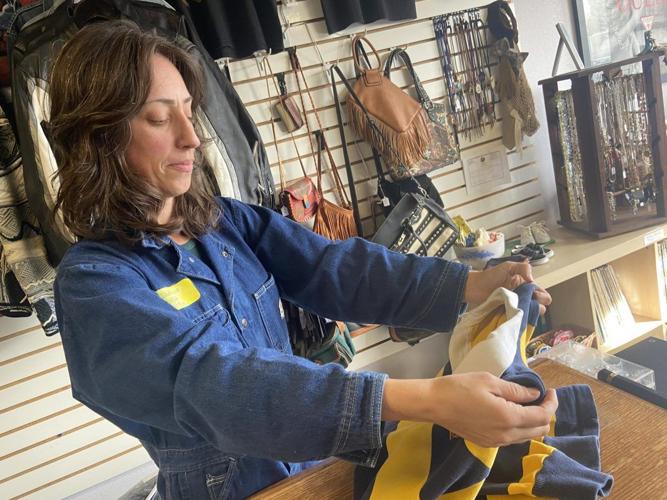
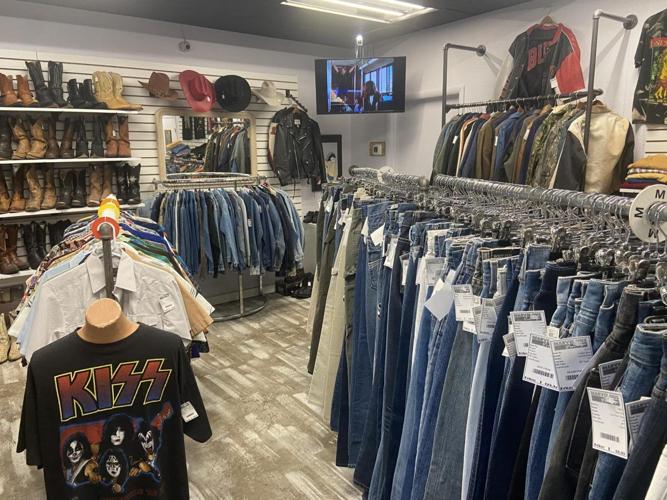
Clothing racks packed with denim jeans, graphic T-shirts and jackets ranging from workwear to genuine leather fill Michelle Albanese’s storefront on Speedway Boulevard.
Albanese said her shop, Marvelous Vintage at 2901 E. Speedway Blvd., represents her vision of a future where buying secondhand outpaces new clothing production.
This vision is very different from the current state of fashion: Approximately 92 million tons of textile waste is produced each year, consisting of discarded clothing and fabric scraps, according to the World Wildlife Fund.
Marvelous Vintage is Albanese’s contribution to making fashion more sustainable. Her commitment to reusing quality clothes drives her to create a unique vintage experience for her Tucson customers, she said.
Marvelous Vintage reflects some of the community’s response to fast fashion, which refers to cheap, trendy clothing mass-produced by big-name retailers. Albanese said that one of her biggest goals is to encourage consumers to stray away from buying fast fashion and instead buy secondhand to help keep clothes out of the landfill.
“We can bring old clothes here, and show them at their best,” Albanese said. “We can convince them that they don’t need to buy new clothes.”
The impact of fast fashion
Textile recycling remains an overlooked issue locally, according to 2021 data from the City of Tucson’s Zero Waste Roadmap. Only 4% of materials that were disposed of in the city-owned Los Reales Landfill were diverted for recycling, composting or other purposes. Textiles were not among the diverted materials.
In the case of Los Reales, a limited budget and staff make recycling a challenge and low on its list of priorities, said Kevin Greene, a member of Sustainable Tucson’s Zero Waste Working Group.
“Their whole focus is on, ‘what do we do with this stuff after it’s created?’ That’s how they’re geared to think,” Greene said. “They’re not thinking about upstream, because that would require resources.”
This contributes to textile waste in the United States and leaves landfills, like Los Reales, facing more textiles to manage as the fast fashion industry continues to increase its production.
This increase in production is due, in part, to a lack of federal support for companies to make better ethical decisions, said Angie Liljequist, a fashion industry science and technology professor at the University of Arizona. Consumers must educate themselves on fast fashion’s environmental impact and should seek more sustainable alternatives, she said.
“A lot of people just don’t feel like they have the time or the resources to understand the implications of their purchases as much as they should,” she said.
What Tucson is doing
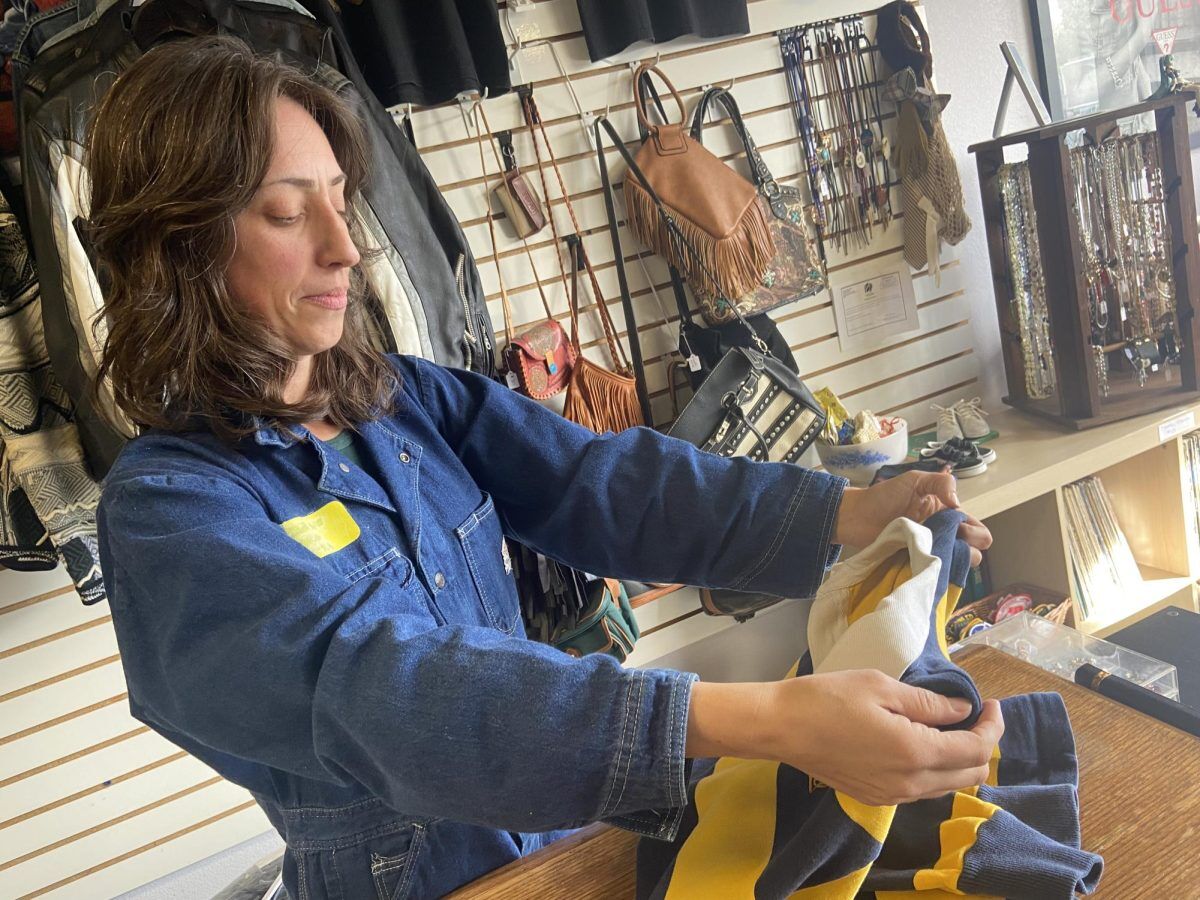
Albanese and her husband, Mark Albanese, opened Marvelous Vintage in 2021 with the goal to promote sustainable fashion in a way that was different from thrift stores like Goodwill. They seek out their inventory and handpick every item that is sold in the store.
If certain clothing items are damaged but still salvageable, her husband will repair them or repurpose them entirely, ensuring that the materials do not end up in a landfill. By presenting secondhand clothing in a favorable light, Albanese said she hopes to show consumers that brand new clothes are not a necessity.

Denim, jackets and T-shirts fill the racks at Marvelous Vintage. Albanese and her husband travel the country to handpick each item sold in the store. Tucson, Ariz., Sep. 10, 2025.
“We don’t need to make new clothes. There are enough clothes in the world to last six or seven generations,” Albanese said, referring to a statistic provided by the British Fashion Council.
Lena Gomez has a similar philosophy as co-owner of 3G Vintage.
“Sometimes things just need a little love, a little cleaning up, a little repurposing,” Gomez said. “We take those things and give them that little bit of extra love and pass them on to somebody who can use them, which then keeps them out of the landfills.”
Gomez and her wife, Audrey Gomez, opened 3G Vintage in 2021 in Phoenix before moving to a Tucson location at 640 N. Stone Ave. last year. Much like Albanese, Gomez hopes that their store can influence people to buy vintage and do their part in reducing textile waste.
Learning to care for things we own
Store owners like Albanese and Gomez are not the only members of the Tucson community responding to the environmental impact of fast fashion. Regina Dante runs a sewing program called Crafting Resilience that teaches community members the art of sewing, equipping them with the skills to repair and make their own clothes.
Dante began Crafting Resilience last year after realizing she could use her sewing skills to help make the craft more accessible to others. She hosts workshops and classes around Tucson, alongside her friend Go Loga Shaw.
For Loga Shaw, joining Crafting Resilience served as their way to fight back against fast fashion. They said that teaching people the skills to care for their own clothes will prevent them from resorting to buying fast fashion products.
“Learning to care for the things that we own is really important, and learning how to repair the things that we own is really important,” Loga Shaw said. “Otherwise, that turnover rate is just going to keep going.”
Dante said that sewing can make an impact on fashion waste in small but meaningful ways if education becomes more accessible. Crafting Resilience aims to teach simple sewing skills to help prevent people from throwing their clothes away and ultimately ending up in a landfill.
The future of fashion
Greene said that while individual community members can make an impact on clothing waste locally, large companies remain the ones responsible for large amounts of textile waste. If these retailers are not held accountable for their impact on the environment and contribution to global waste, they will remain unmotivated to make change.
Greene, who worked 20 years for the Illinois Environmental Protection Agency, said that implementing laws and regulations for fast fashion retailers should be a primary goal in reducing textile waste.
“We need a law that basically spells out what their responsibilities are over time, with penalties if they don’t meet their performance requirements,” Greene said.
In the meantime, shopping at a vintage store is a great way to help keep clothes out of the landfill. Liljequist said that a mindset change is imminent as younger generations are becoming more open to buying clothes secondhand and are straying away from fast fashion.
The consumption habits of younger generations reflect this change, as approximately 40% of the clothes in the average Gen Z’s closet are secondhand, according to data by GlobalData, a retail analytics firm based in London.
“I think we really could drive consumers toward that secondhand consumption,” Liljequist said. “I think that’s the best way forward for any of us.”
Arizona Sonoran News is a news service of the University of Arizona School of Journalism.



