

For five decades, the Invisible Theatre (IT) has distinguished itself with visibly vibrant, distinctive, live performances.
Supporters will mark that milestone — and celebrate the journey — with a 50th Anniversary “Good as Gold” Star-Studded Retro-Spectacular Cabaret on Saturday and Sunday, Oct. 30 and 31 at Berger Performing Arts Center, 1200 W. Speedway.
“Invisible Theatre’s name actually comes from the invisible energy that flows between performers and the audience: That makes the magic of theatre. When we don’t have that collective wave of energy that the audience brings to performers, then we miss something that touches us deep in our souls,” said Susan “Suz” Claassen, managing artistic director of the theatre.
Claassen and her colleagues kept the magic alive during the global pandemic through creativity and ingenuity, coordinating a plan with the Arizona Department of Health Services to implement social distancing in the audience, on stage and behind the scenes. They added a specialized ionizer to the theatre HVAC system at 1400 N. First Ave. and re-opened to limited audiences in June 2020.
Limited “boutique” seating will also be in place for the 50th Anniversary at the Berger Performing Arts Theatre.
The celebration will headline a Who’s Who of local and international performers, including Claassen, former Tucson Councilwoman Molly “Mols” McKasson; Randy “Cher” Roberts, the “Crown Prince” of NY Cabaret; Crystal Stark of “America’s Got Talent” fame; and many others who have helped the intimate theatre attain iconic status.
Begun as a small collective of actors at the Odd Fellow’s Hall downtown, IT shared space with a ballet company, an Afro-Cuban dance company, Arizona Opera, Tim Fuller Photography Studio, and other artistic endeavors. The space was “the closest thing to an east coast loft.”
“It was a hotbed of creativity that was just vibrating with ideas and energy. The arts were blooming there and I knew I had found my home,” said Claassen, a transplant from New Jersey via Denver.
In 1977, the theatre acquired its own space at the old Pioneer Laundry building; that environment offered opportunity for artistic growth and change for women and people of color.
“It was an artistically fabulous year and an economically disastrous year, so many men went on to other things and left the women in charge. The opportunities that Invisible Theatre offered to women were unheard of then: Very few women were producers or playwrights or artistic directors who made artistic decisions. This was before gender parity, but it was something we focused on naturally and have carried forward,” Claassen said.
Social equity is at the core of IT philosophy: The theatre has been at the forefront of change over the years with productions such as the 1977 adaptation of “Ancient Ooze and All that Moves,” which addressed evolution; and the 1998 production of “Kindertransport,” a portrayal of Jewish children transported out of Germany during World War II. Other significant productions include “The Exonerated,” a docudrama/play in 2006 about prisoners who were later exonerated; and more recently, “Gloria — A Life,” an interpretation of Gloria Steinem’s life and the feminist movement.
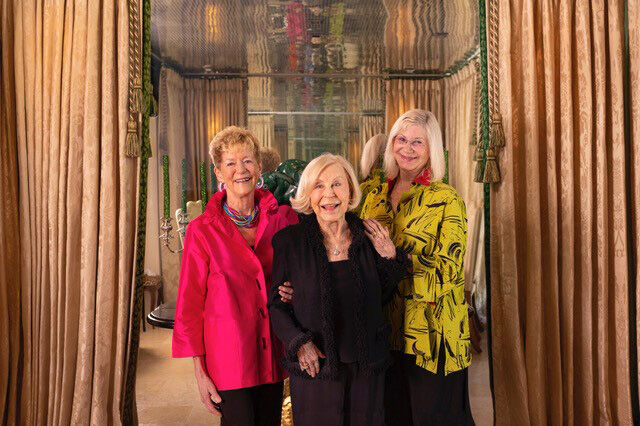
“We like to say that while some of our productions cause controversy, they are markers of change. We think theatre is about the exchange of ideas and diversity, where people can come together to experience things as community. When selecting plays we look for a modicum of hope. If we don’t have that, then why do it?” Claassen said.Ultimately, Claassen views the upcoming retrospective as an ideal tribute to the 1,500 artists who have contributed to 1,000+ IT performances. It is also an opportunity to honor three “Golden Angels” who have supported IT with time, talent and treasure: Dr. Bella Eibensteiner; Elizabeth B. Smith; and Mary Ann Stubbs.

