



Charlene Kampfe didn’t need her lifelong studies of rehabilitation counseling and aging to know that pet ownership is good for people of any age — and especially those in their later years.
She had her rescued dog, Buddy, to teach her much of what she needed to know.
Kampfe, 70, is a University of Arizona professor emeritus whose recently published book, “Counseling Older People, Opportunities and Challenges,” includes several pages on pet therapy.
As she wrote her drafts, and endured the editing process, Kampfe said Buddy was always nearby. He wanted attention, he needed a walk and so he kept Kampfe laughing, and moving.
Exercise and improved mood are among the leading reasons why a dog can help a person stay healthy and active as they age.
Here are some other benefits of pet ownership that Kampfe pointed out during an interview at her West Side home last week:
- Many older people have sensory deprivation, and pets help stimulate the senses.
- Dogs can help push people to exercise.
- Pets can make people laugh.
- Being responsible for an animal can boost feelings of self worth. “A lot of times, responsibilities are taken away from older people and others are making decisions for them,” Kampfe said. “It can be dehumanizing, even if it’s done in a loving way.”
- Pets can help reduce feelings of loneliness and isolation.
- Dogs can help older people feel, and stay, safer. “Many elderly people suffer from hearing loss and the dog is the first to know if someone is coming to the door,” she said.
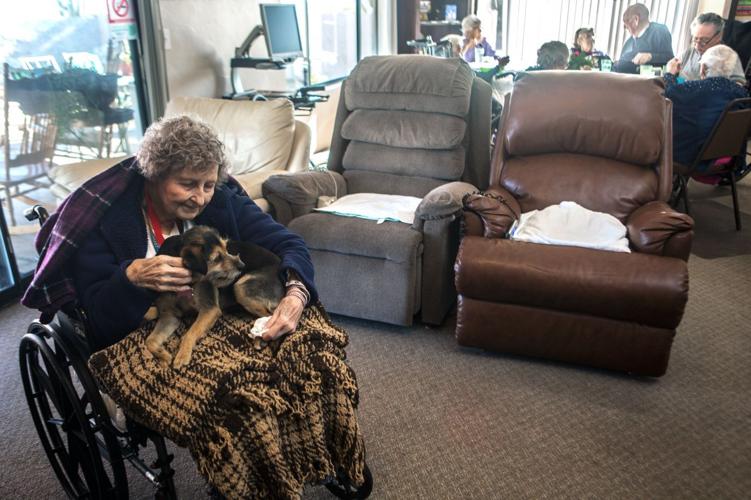
Not far from Kampfe’s home is an assisted-living facility that takes pet therapy seriously.
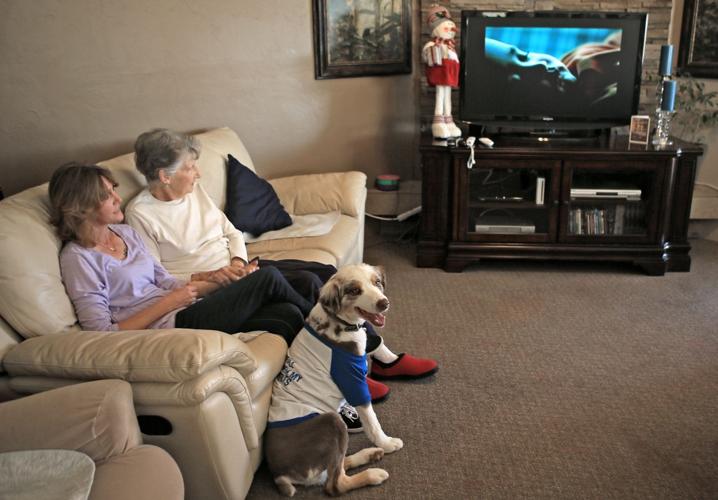
Aguilera Assisted Living Home, 4740 W. Via Aguilera, includes not only 10 seniors, but also two canine residents.
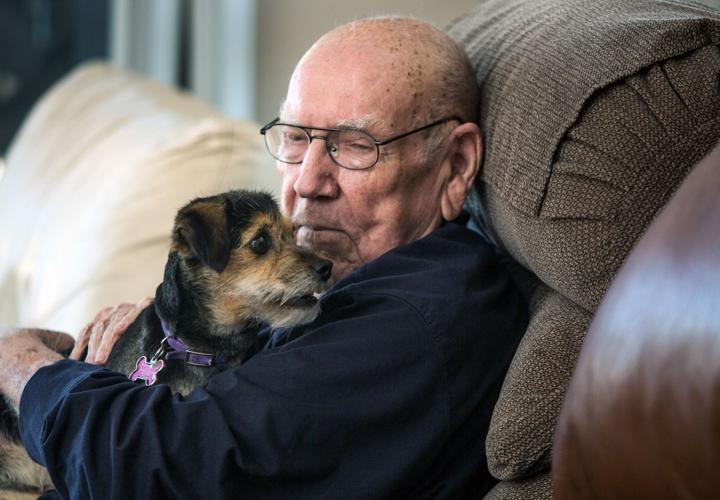
Lady Molly is a wire-haired terrier who was rescued from a Fry’s parking lot about two years ago.
Lady Molly has not only provided the residents with an animal to care for, she’s also proven to be a good assistant to the caregivers there.
When a resident fell one night on the way to a restroom, Lady Molly barked and barked to get the attention of the night shift caregiver, who was cleaning up in the kitchen.
“I was told that she kept barking and looking from the caregiver to the woman,” said Annette Apodaca Medina, a registered nurse and owner of the home, which has been open since 1999.
“There’s always been a dog here,” Medina said. “It used to be a poodle named Cuddles. He was there 15 years until he passed.”
The newest canine is an Australian shepherd named Gambit, who is three years old. Medina said the male residents tend to enjoy the bigger dog, while the women like the smaller terrier.
“He’s very active and very hyper, but when he got around the elderly people, he did really well and he didn’t jump on them,” Medina said.
She said she sees a lot of benefits to having animal companions.
“It’s comforting to them just to be able to touch them and pet them,” she said.
The residents agree.
“I think they’re just great,” said Emogene Davis, 95. “They enjoy one another so much. They play and play and just have more fun together.”
Davis grew up with five brothers, four sisters and, she said, plenty of dogs.
“They made sure we all knew how to take care of them,” she said.
Fellow resident Marilea Goetz, 88, said the dogs she had “were good friends to me for all those years.”
“I think it keeps you healthy, yes. They always bring a smile,” she said, “They take your mind off of the bad stuff while you’re petting them.”
Kampfe said the studies she’s followed show animals not only reduce stress, they also offer a boost to the immune system.
“One study showed people who have pets have 30 percent fewer doctor visits,” she said. Several studies show just touching an animal can raise levels of serotonin, dopamine and oxytocin, which are three brain chemicals that help us feel calmer and more relaxed.
“Even watching fish can reduce tension.”

