




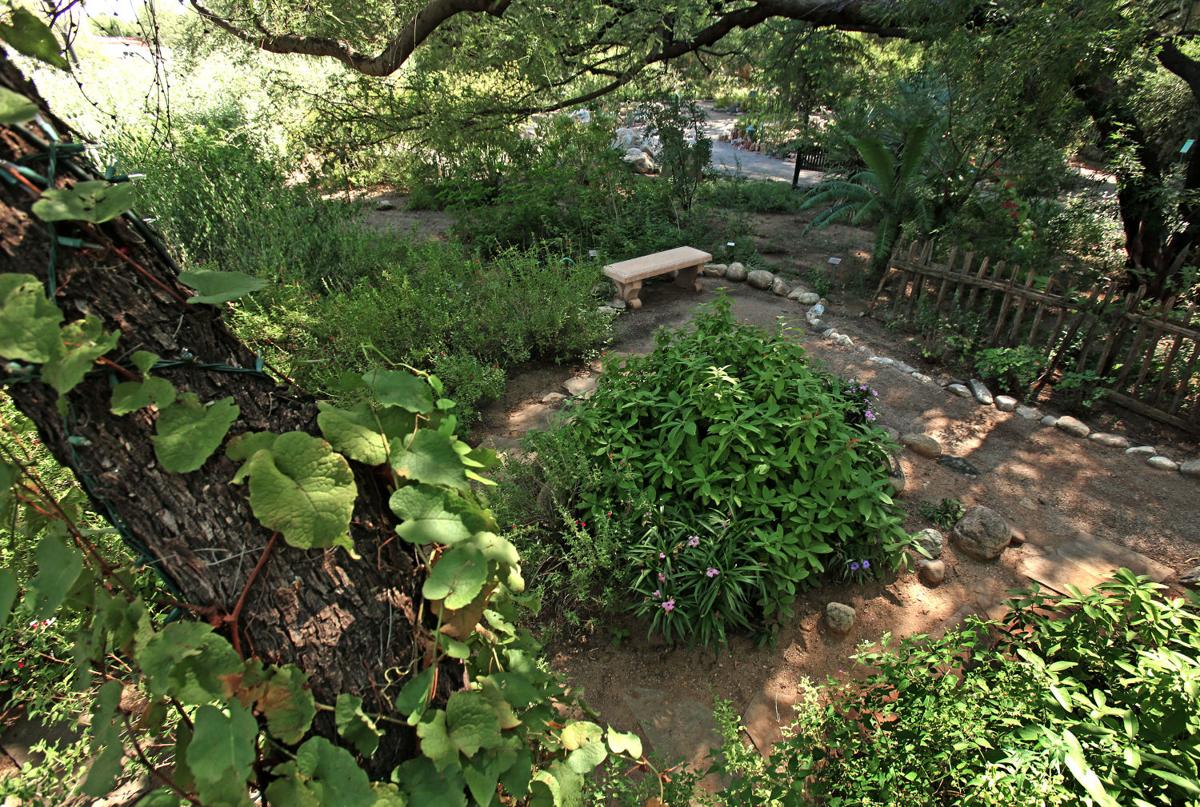
Droughts, floods, storms, fire — we’ve had our share of unpredictable weather in the past few years.
According to climate scientists, we can expect more extreme weather events as the planet heats up. More violent and unpredictable rainfall as well as increased heat and fire risk are coming our way. In addition, we are facing restrictions on the use of Colorado river water which supplies part of our water. With all this going on can we still enjoy our gardens?
Some people may feel somewhat guilty about having plants around when we’re short on water in the West. But plants provide unique benefits (which scientists call ecosystem services) that we can’t get any other way. If landscape plants are chosen properly, they provide these services very efficiently, and help reduce energy usage while protecting our properties from a variety of extreme events.
For example, planting a shade tree can make it 25 F cooler under the tree in an urban environment. The tree also reduces the air temperature around it by 9 F. A tree also helps to manage excess water falling on a property by slowing down the rainfall with its leaves and branches, soaking up excess water with its roots, and helping to create better soil underneath its canopy (which leads to better moisture retention in the soil).
Appropriately placed trees around your house can reduce cooling bills by up to 50%. They can also serve as windbreaks, protecting your house and reducing heating bills. In addition, trees can reduce air pollution. All of these services are provided to us for free, if we choose the appropriate trees.
Here are some suggestions on how to make your garden work for you in an uncertain future:
Design elements
- Increase shade in your yard. This is best done by planting native trees in well-chosen places. Shading your air conditioner, for example, can improve its efficiency by 10%. The Department of Energy has some helpful tips on where to plant. In general, you want to shade the western and southern aspects of your house and yard, as well as any hardscape areas (like your driveway) to minimize reflected heat.
- Collect rainwater and grey water. If you can, hook up your yard’s water supply to the City of Tucson’s reclaimed water system. This way you are not using any of our precious drinking water to grow your plants.
- Water your plants with drip irrigation, which is 95% efficient.
- Use water-permeable hardscapes and have more soil. This will both reduce reflected heat and will help absorb larger quantities of rainfall in severe storms. For example, rather than using concrete in your driveway, you can use permeable paving (like bricks) or gravel. This will reduce runoff from large storms. Soil, particularly when it’s naturally mulched by plant debris from shrubs and trees, is also a great way to store the water on your property and it has the additional benefit of cooling down the air around it.
- Help out the wildlife by planting native plants for food and shelter and providing water for animals. Why is this important? Our ecosystem is a series of interdependent relationships. If you don’t have insects and small reptiles, you don’t have larger animals, and you also lose the support for growing our needed plants (like food producing plants). It may not seem like small wildlife is that important, but they are actually the critical base of the food chain which sustains all of us, and they will need all of the help they can get in the upcoming years.
Plant selection
- Plant drought-tolerant native plants, particularly ones that require years to grow such as trees and large shrubs. Once established, which takes about two years, they will thrive on their own without any additional water from you. Native plants are the key here, because they are the best adapted for our climate and provide a variety of additional ecosystem services for wildlife. They are simply the best bang for your water buck.
- Plant trees that have deep roots. This makes them more likely to survive large, intense storms. Most of our native trees meet this requirement, including mesquites, ironwood, desert willow and palo verde. There is a caveat, however — you must water them properly as they’re getting established, so that the roots they develop are not shallow. This means watering them to a depth of 36 inches with each irrigation. You can test the depth of watering with a soil moisture gauge — a 48-inch-long piece of rebar you push into the soil after watering. You will encounter resistance when you reach dry soil. My article on tree planting will give you some helpful details. I also highly recommend the free classes provided by the Pima County Master Gardeners on trees, irrigation and other topics.
Above all, be ready to adapt. If there are plants in your yard that do not provide these functions, or that require a lot of water, you will likely need to get rid of them at some point — or they will die on their own as temperatures heat up and our water use is curtailed. Similarly, you may need to get rid of some hardscaping around your house to reduce reflected heat. If you start planning now, your garden will be much better prepared for extreme weather.

