



After they have their bags checked by security and their tickets scanned at the door, the 2,289 people expected to attend comedian Ali Wong’s sold out concert Saturday night will have one more hoop to jump through at Tucson Music Hall.
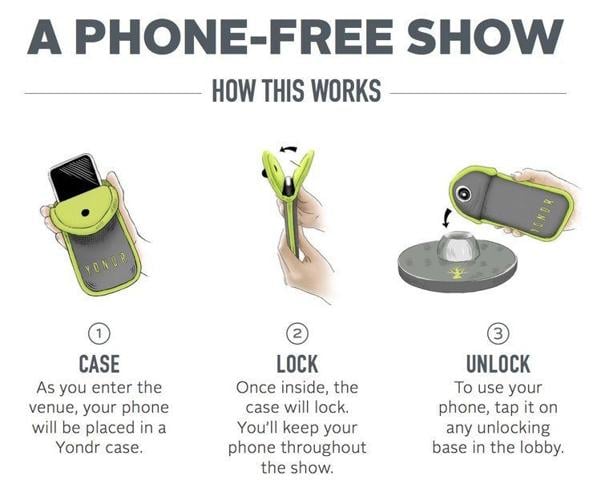
For the first time ever, they will be told to put their digital devices — cellphones and smart watches — in a locked bag the size of an eyeglass case, where they will remain until the last laugh and final bow.
The Wong show will be the first-ever, device-free concert in Tucson, and it may be the start of a trend that’s already taken hold nationwide.
Audience members will be asked to put their digital devices in a Yondr bag that will seal much like the security tags attached to clothing at department stores.
Once locked in the case, you can keep your phone with you, but you won’t be able to use it until you leave the hall and unlock the bag.
This will prevent anyone from videotaping or photographing the concert and will let audience members “live in the moment,” said Kate Breck Calhoun, Tucson Convention Center director of sales and marketing.
“How many times have you been to a show where someone spends half the time filming it?” she said. “This will enhance the experience in the moment.”
It also will protect the artist’s work from being exploited on social media, she said.
The Yondr bag requirement was not the Convention Center’s idea; it was a requirement of Wong, one of many artists today who are banning cell phones and digital devices from their shows.
Singer-songwriter Jack White led the way when he banned devices from his tour last year and brought in Yondr, the five-year-old California company that produces the pouches, to ensure that everyone at his concerts complies. Other artists who use Yondr include Alicia Keys, the Lumineers, Dave Chappelle, Guns ‘N Roses, Chris Rock and Kevin Hart.
In fact, the Yondr pouches were supposed to be introduced in Tucson at Hart’s November show at Tucson Music Hall, but Calhoun said they weren’t able to get the bags in time.
Instead, there were 30 additional security guards roaming the hall in search of people filming the performance.
Calhoun said use of the Yondr bags isn’t limited to the Convention Center’s smallest venues. She said they also could be used for Tucson Arena shows.
The procedure would be done in conjunction with the arena’s other security checks before people enter the venue.
But Rialto Theatre Executive Director Curtis McCrary said he hopes Yondr bags don’t become commonplace in Tucson.
“I think there will be a backlash if this is something that people will experience at every show and concert they go to,” he said. “It’s disruptive. People live their lives on their devices.”
A 2015 survey by ticket-seller Ticketfly backs that up. It found that 31 percent of 18- to 34-year-olds use their phones during half of an event or longer. The survey also found that 66 percent of those surveyed also used their phones to pay for food, alcohol or concert souvenirs once inside the venue.
McCrary said he has gone to one concert where phones were banned — Wong’s Phoenix show in January — and the process was fairly seamless. And he admitted employing the Yondr bags is less onerous on a venue than having to patrol the audience for cellphones if an artist demands it. That happened to the Rialto at Wednesday’s Neko Case concert; Case has a strict no photo policy and insisted that the Rialto enforce it.
“Nothing happened, but there’s a possibility of creating conflict,” McCrary said. “It puts the onus on us. The patron is inevitably not going to be upset with the artist. They’re going to be mad at us.”
McCrary said he worries that one more layer of security will create one more excuse for people not to attend a concert.
“Honestly I hope it doesn’t become widespread,” he said, adding that he sees the logic of using Yondr bags for comedy shows but not for rock concerts. “Concerts by their nature are raucous and loud. The idea that there’s this intolerable distraction if you’re talking about a rock show, come on. Nobody cares.”

