



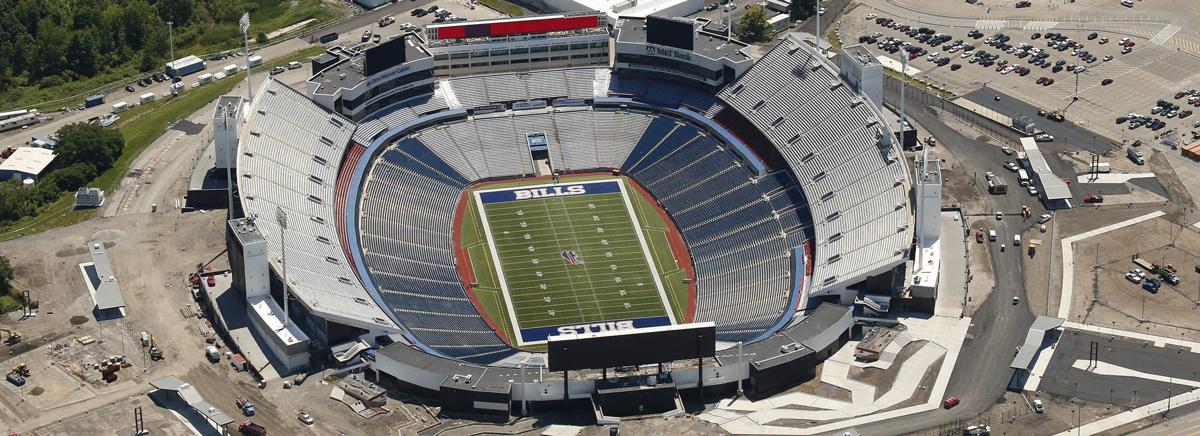
The public speakers who weighed in on three recent public hearings regarding the Buffalo Bills stadium lease negotiations touched on everything from construction costs to the merits of a dome.
And although it's unlikely their opinions will have an impact on a final decision, one message came through loud and clear from the majority of speakers who offered their input during the Erie County Legislature's hearings last week.
They want a new Bills stadium in the City of Buffalo.
"They aren't the Orchard Park Bills," said more than one speaker.
Of the 83 speakers who attended the three virtual hearings last week, the clear majority said the need to build a new stadium creates an opportunity to fix a failure of urban planning when the Bills moved out from the city to Orchard Park following the 1972 season.
Many pointed out that the current stadium has been no great economic boon for Orchard Park but it could be a game changer for Buffalo, the only major Rust Belt city with no downtown stadium. Similar comments were echoed at an earlier stadium hearing held by the Buffalo Common Council.
"We want to put our city on the map," speaker Mary Harris said.
Several speakers said they would be willing to bear a higher tax burden if it meant that Buffalo could benefit directly from the stadium being built downtown. They also downplayed issues related to tailgating access by saying that there is plenty of area parking and that more could be developed if everyone made the downtown stadium a priority.

Tuesday's hearing represented a rare opportunity for the community to publicly take a stand on a process that has been mostly behind-the-scenes, aside from consultant reports and occasional statements by the governor, Erie County executive or Pegula representatives.
"Don’t tell me about parking," said speaker Andre Robinson. "I’m tired of hearing about parking when I literally go to 1 Bills Drive, and you have people parking on people’s lawns."
Many of those advocating for a city stadium recommended the Perry Street housing project site and urged the public officials at the negotiating table to insist on a downtown site, preferably building a site that is covered and could be used year-round as a multipurpose facility for other major events.
A city stadium could also spark more work opportunities for city residents, youth sports investment and job training opportunities, city stadium advocates said.
"We have to look at the stadium as for more than just football," said Carmen Thompson.
Speakers at a similar public hearing previously held by the Buffalo Common Council explored many of the same build-in-Buffalo themes.
Not everyone was a proponent of moving the stadium, though. Some Bills fans pointed to the additional costs associated with property acquisition and infrastructure issues of the city location, the unique tailgate experience and ease of access at the current Orchard Park site.

Replies from readers have been pouring in. Here are some of them.
"It would take 10 years to resolve all the legal, environmental and logistical ramifications," said Dan Kochmanski, an engineer, regarding a city location. "It is simply too costly."
Aside from location, a number of public speakers said the next stadium should be covered, or have a retractable roof, regardless of where it is built. The need for public transportation to and from the stadium was also mentioned as a major need.
And a few mentioned other priorities, like the importance of a non-relocation agreement in the stadium lease deal; the idea of offering a greater financial incentive for a downtown location than the Orchard Park location; securing a community benefit agreement to ensure the Bills give back to the community as part of a final agreement; and concern about the cost of Bills tickets once the new stadium is built.
Speaker Thomas Cappelletti said Bills fans enjoy the lowest average ticket price in the NFL, but if the Bills start requiring fans to pay for personal seat licenses for the privilege of buying season tickets and reduce the overall number of seats in the stadium, many fans will be priced out of seeing games.
"I just fear that the taxpayers are going to foot a large bill for this, and then we’re going to foot another large bill when we go to buy tickets through these PSLs," he said.
Finally, still others said they didn't believe a new stadium was necessary at all, and that it would be best for the current stadium to simply be renovated, instead of laying the burden on taxpayers, though that prospect seems highly unlikely. Some couched their new stadium opposition as opposition to helping the wealthy Pegula family line their own pockets when there are other greater community needs.
"We don't need an expensive vanity project," speaker Lynda Schneekloth said.

"I think the Bills are very set on Orchard Park," Higgins said in his first extended comments on the stadium issue.
So will these public speakers have any sway in stadium negotiations? It's hard to know, but their influence may be limited.
Based on comments and presentations the Bills leadership team has made to community leaders, the Pegulas appear to clearly favor an Orchard Park site. The Bills also conducted their own extensive, private survey regarding a future stadium. Those responses are likely to carry far more weight with the team owners than a public hearing of less than 100 people over three days.
County Executive Mark Poloncarz has said no location has been decided for the next Bills stadium but that Buffalo city leaders have no say in the matter since they aren't contributing a penny toward the new stadium's construction. The Erie County Legislature, which held last week's public hearings, gets a vote on the final draft lease deal, but the governing body is unlikely to stand in the way of a deal that secures the Bills' long-term future.

