



They sound like characters from a new Marvel movie, but these “Planetary Defenders” are real-life scientists in Tucson and elsewhere who are working to save the world from a major asteroid impact.
NASA debuted an original documentary on Wednesday that highlights three local researchers at the center of the global effort to track and possibly deflect dangerous space rocks.
The 75-minute film features research scientist and observer Cassandra Lejoly from the University of Arizona’s Spacewatch program, operations engineer David Rankin from the U of A-based Catalina Sky Survey, and Vishnu Reddy, a professor at the university’s Lunar and Planetary Laboratory and manager of the International Asteroid Warning Network.

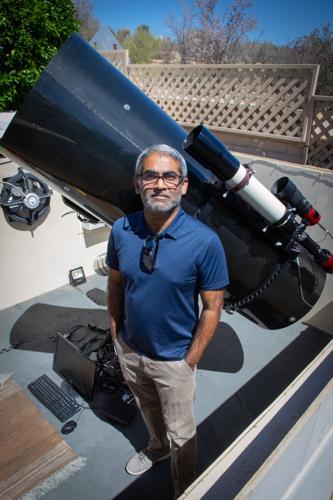
University of Arizona professor Vishnu Reddy, shown here with his backyard telescope in northwest Tucson, is one of three local scientists featured in a new NASA documentary about efforts to track potentially dangerous asteroids.
Lejoly says she’s not some superhero in a cape pushing an asteroid away, but her work can make a difference.
“I really like that I am protecting the planet,” she says in the documentary. “In some ways, my little contribution might not help just myself, but someone in the future, and I think it’s very important to do that.”
Spacewatch uses two telescopes on Kitt Peak to conduct the longest-running active astronomical survey of its kind. The effort is credited with the discovery of, among other things, more than 179,000 minor planets in our solar system since 1980.
The NASA-funded Catalina Sky Survey, meanwhile, is one of the world’s leading asteroid hunting operations, with observers posted nightly at telescopes on Mount Lemmon and Mount Bigelow north of Tucson. More than 44% of all the near-Earth asteroids identified over the past 30 years were found by the survey.

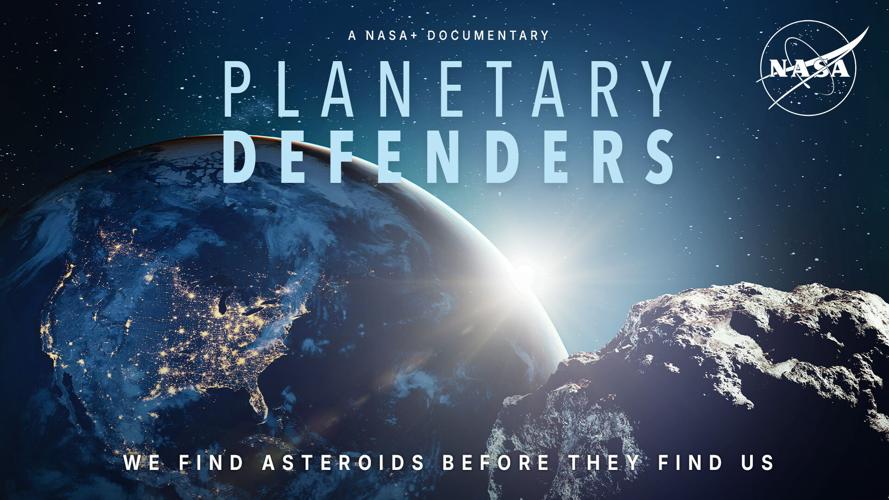
“Planetary Defenders” is a NASA documentary about near-Earth asteroids and the scientists who track them, including three Tucson-based researchers.
In 2016, NASA established the Planetary Defense Coordination Office as part of a mandate from Congress to catalogue at least 90% of the estimated population of near-Earth objects that are at least 450 feet across, some of which are classified as potentially hazardous asteroids.
One such asteroid about the size of a 10-story building made headlines earlier this year when initial calculations showed a tiny chance of it hitting the Earth in 2032. Scientists have since ruled out the possibility of a collision with the space rock, which was discovered late last year and designated as “2024 YR4.” But there remains a small but increasing chance — now 3.8%, up from 1.7% — that the asteroid will crash into the moon on Dec. 22, 2032.
The new documentary also explores the emerging science of planetary defense, which could one day be used to try to prevent a dangerous asteroid from hitting us.

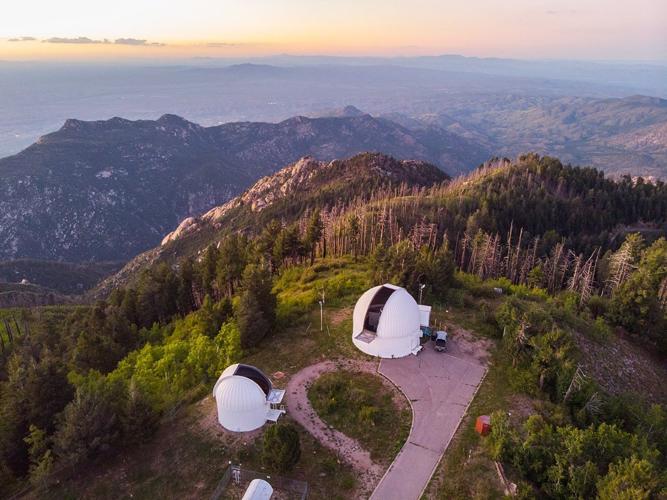
The NASA-funded Catalina Sky Survey, based at the University of Arizona, is featured in “Planetary Defenders,” a new NASA documentary about efforts to track potentially dangerous asteroids.
As Reddy puts it in the film, “The dinosaurs went extinct because they didn’t have a space program. We do have one.”
NASA held a virtual premiere for “Planetary Defenders” on YouTube at 1:30 p.m. Wednesday, with an interactive watch party and online chat with several planetary defense experts.
The documentary is now available for streaming on NASA+ and on the space agency’s YouTube channel.

