


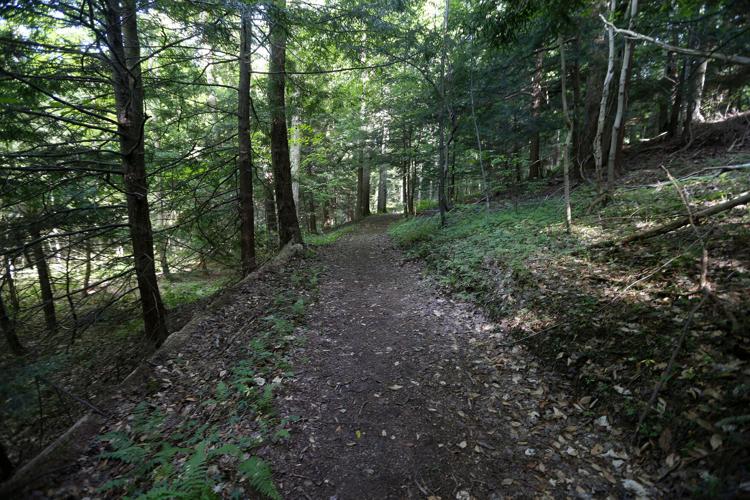
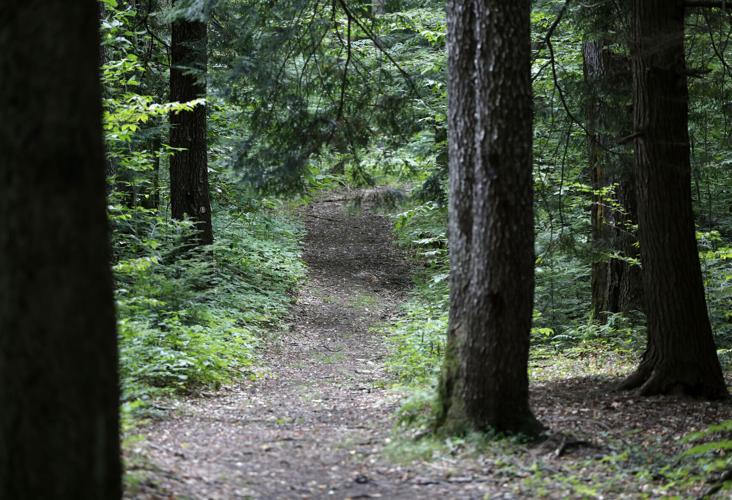
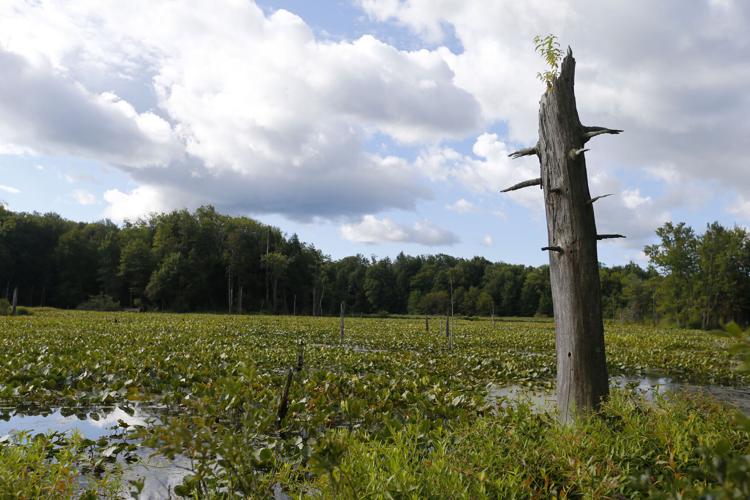
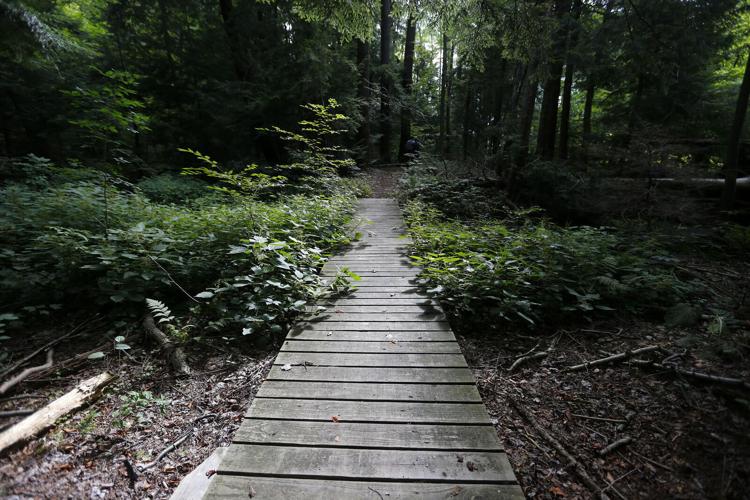
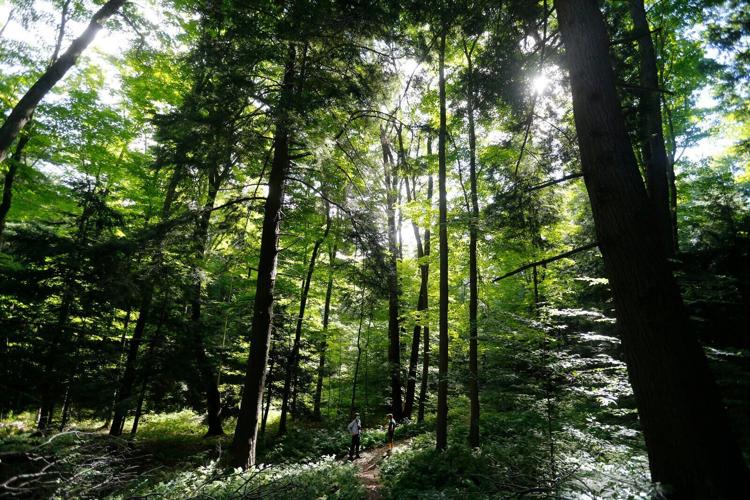
A now-abandoned plan to log trees was the first threat to the pristine forest in northern Chautauqua County, with its old-growth hemlocks and rare orchids and thriving marsh.
Then came the next threat: The College Lodge Forest's 168 acres were put up for sale, again putting the land in jeopardy.
Enter the Western New York Land Conservancy in what has become a familiar scenario: The not-for-profit, based in the Town of Wales, rushed in with an offer to buy the land, including five miles of trails, and preserve it in perpetuity as a nature preserve.
For three decades the land conservancy has prevented forests, wetlands and farmland from being sold or subdivided, protecting 95 properties totaling 7,489 acres since its founding in 1991.
College Lodge Forest would be the 96th.
"We try to protect the most important natural places left in Western New York," said Jajean Rose-Burney, the Land Conservancy's deputy executive director. "We protect a lot of forests and meadows, and farms too. And we do it so it's permanent."
Rose-Burney said the biodiversity of the College Lodge Forest makes it particularly significant.
"The incredible diversity of plants and animals, and also nature trails make this one of the most important places to protect in the entire region," he said recently while standing by one of the forest's towering trees.
Rose-Burney rattled off some of the forest's inhabitants at risk.
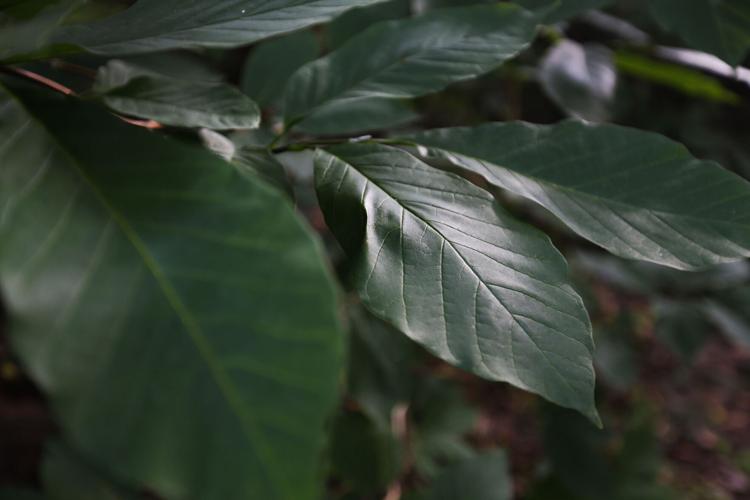
"The old-growth hemlocks there are 300 to 400 years old," he said. "There are giant black cherries and big sugar maples and beech, and beautiful wetlands with a beaver pond and three kinds of carnivorous plants."
The land is being sold by the Faculty Student Association, an auxiliary of SUNY Fredonia. The association decided to retain the College Lodge that's used as a retreat center and the acres around it, but sell the forest.
The Land Conservancy has raised about half of the $790,000 needed to buy the land and sustain the forest through its Stewardship Fund. They need to meet a $200,000 challenge gift by Dec. 31 to purchase the property.
'Project by project'
As a land trust, the Land Conservancy works with willing landowners to preserve open space.
In some cases, an owner wants the conservancy to own the land, which is the case with the College Lodge Forest. In other cases, a municipality, organization or individual owner doesn't want the land sold but still protected long-term as a nature preserve or farm.
"It's always project by project – what makes sense for the landowner and what makes sense for us," Rose-Burney said.
The conservancy owns 19 of the 95 properties it has helped protect, about half of them with trails. Another 58 properties are protected by conservation easements entered into with an owner to prevent land from being sold for development or subdivided.
For the other 18 properties, the conservancy helped municipalities and organizations preserve land without taking ownership or conservation easements.
While the majority of the protected areas are forests and wetlands, 40 – close to half – are working farms totaling 3,330 acres. The clusters of protected farms, none of which the Land Conservancy owns, are in Amherst, Clarence, Marilla and Eden.
Some places the Land Conservancy wants to protect have a special habitat or species of animal or plant that precludes people from being there. Some are remote and others just don't lend themselves to public access.
The Land Conservancy began as an all-volunteer organization in the Sardinia home of a founding board member. Later, the office relocated to the basement of the Roycroft Campus in East Aurora. Today there are nine full-time and four part-time employees, plus an AmeriCorps Vista volunteer.
"They went from working on small pieces of property to massive projects," said Rick Ohler, who has written about the Land Conservancy for years in the East Aurora Advertiser. "It's amazing what they have done."
Rose-Burney said the organization is necessary because the government can't be relied on to protect everything.
"The government doesn't have enough money, resources or priority to protect all the things that need to be protected," he said.
The organization's budget for fiscal year 2020 is $4.8 million.
An additional $1.5 million Stewardship Fund is used to manage and monitor protected properties. Because the funds are invested, only a small percentage can be used in a given year. Every new addition – like College Lodge Forest, which carries an estimated annual maintenance cost of $10,000 – requires additional money to be added to the Stewardship Fund to ensure its long-term sustainability.
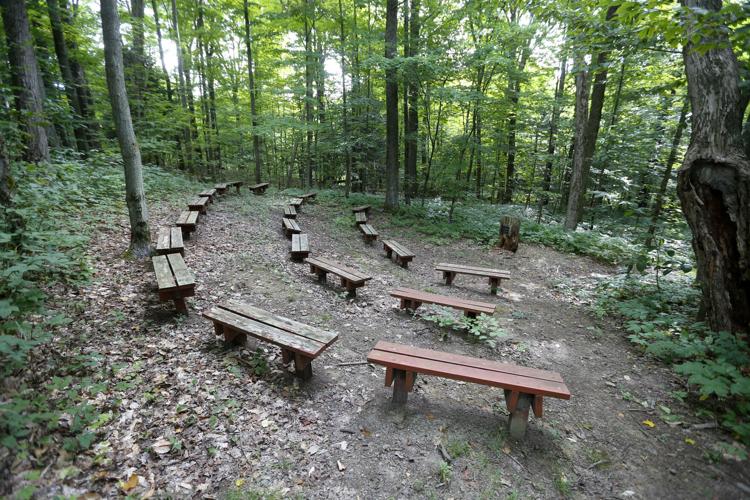
"With these funds, we maintain trails, signs, benches, and other facilities on publicly accessible nature preserves, so that people can enjoy them," said Nancy Smith, the executive director since 2008. "We improve wildlife habitat and control invasive species, ensuring the properties are healthy. We also monitor conservation easements to make sure no one is violating the restrictions that protect those farms and forests."
The long-term costs for acquiring land go well beyond the purchase price and setting money aside in the Stewardship Fund. The organization hires contractors, consultants, design teams, and pays for costs such as surveys, title searches and environmental reviews.
To do everything, the organization has raised an average of nearly $2 million a year since 2012. It also counts on the support of wealthy contributors.
Though it doesn't always get as much attention, saving farmland is one of the Land Conservancy's top priorities.
"Our farms are disappearing rapidly and are the first places to be turned into subdivisions," Rose-Burney said.
Conservation easements are used to prevent farmland from being developed.
"It can be sold to other farmers or passed on to family members, but a big box store or house subdivision can't go there," Rose-Burney said. "It can only be used for farmland."
Seen as a 'godsend'
Erie County, with 56 properties, has been the largest beneficiary of the Land Conservancy's interventions.
Niagara County is next with 10 properties, followed by Chautauqua and Allegany with four and Cattaraugus with three.
One of the Land Conservancy's most important projects was completed in August when it purchased Mossy Point, a 222-acre secluded forest in Wales that's home to foxes, black bears and migratory birds that visit the deep woods to nest.
The organization bought the 131-acre Kenneglenn Scenic and Nature Preserve, which adjoins Mossy Point, in 2000. Shale-bedded Hunters Creek flows through both properties, home to some old-growth forest. Together with the 760-acre Hunters Creek County Park, the three properties form a 1,113-acre protected area, one of the largest patches of protected forests in the Niagara River watershed.
In 2015, the organization purchased the 29-acre Stella Niagara Preserve in Lewiston from the Sisters of St. Francis. Because of the Land Conservancy's action, the land remains the largest undeveloped property on the lower Niagara River. At $3.7 million, it was the most the organization has spent on any one project.
"It was, as they say, a match made in heaven," Sister Mary Serbacki said. "The Land Conservancy's willingness and interest to take over that portion of our land and preserve it was perfect. Their values are so in sync with our Franciscan values of preserving nature and conserving."
Former Niagara Falls Mayor Paul Dyster called the Land Conservancy's involvement "a godsend."
"We just knew there were developers licking their chops and waiting to grab this land to put condos on it, or whatever," Dyster said. "The problem is that there is important habitat, including breeding habitat, for a wide variety of animals and fish that we thought was critical for the success of the whole Niagara Greenway. That's when the Land Conservancy came forward."
The 57-acre Owens Falls Sanctuary tucked away in East Aurora was purchased in 2016 by the Land Conservancy after a developer planned to bulldoze the forest to build seven "McMansions," Smith said.
The tiny five-car parking lot at the site has been busy in recent months, she said, as people seeking nature during the pandemic go there to walk on trails above a 125-foot gorge.
The organization's successes are gratifying, Smith said.
"So many of them do feel absolutely impossible," she said. "How on earth could we possibly accomplish this? The generosity of the community has allowed us to have these successes."
Then there are the open spaces the Land Conservancy wants to help preserve but can't, often because of the costs involved.
"We are not always successful, and it is so hard to watch something disappear and become houses and no trespassing signs," Smith said.
"The harder thing is when the phone rings," she said. " 'Can you help me save my land? The record was five in a day. The land is disappearing faster than what we can do."
First urban project
The Land Conservancy is expanding its mission to bring nature to people who don't have the opportunity to visit areas farther away and to work on popular, ecologically important sites.
"For the first 20 years of the Land Conservancy, we worked predominantly in rural areas protecting big open spaces and big farms," Rose-Burney said. "While we continue to do that, in the last 10 years we have emphasized how to connect people to nature by trying to bring people to different places and having more nature preserves that have trails."
There's another motive, too: Working on high-profile projects means more exposure for the Land Conservancy, which in turn can attract more people to share their core mission of preserving open space.
The Riverline is the Land Conservancy's first urban project, with an anticipated cost that Smith said will easily make it the most expensive. Plans call for a 1.5-mile nature trail along an unused rail corridor through the Valley, Perry and Old First Ward neighborhoods.
It's a section of post-industrial Buffalo with hulking grain elevators in the distance that is far different from the landscapes the Land Conservancy is used to preserving.
The Riverline is also going through working-class neighborhoods that have been historically divided. With that in mind, a consultant has been hired to help make sure the trail is open and accessible to everyone.
"The Western New York Land Conservancy's work takes perseverance and vision and courage, and all of my dealings with the Western New York Land Conservancy affirms those principles," said Brian Higgins, D-Buffalo. "Projects like The Riverline aren't easy, and it takes an organization that is purpose-driven and results-oriented."
The Land Conservancy is also helping to remove invasive species and restore habitat in the Niagara Gorge. Their $3 million commitment to date is part of an effort joined by New York State Parks and the New York Power Authority.
The bulk of the Land Conservancy's work remains preserving remote areas like the College Lodge Forest.
Saving old-growth
The College Lodge Forest is located right on the Continental Divide.
On one-half of the property, the rain drains into Lake Erie and eventually, the Atlantic Ocean. On the other half, it drains into the Allegheny River, Ohio River, the Mississippi and the Gulf of Mexico.
Song birds spend their summers in the forest and their winters in South America. Northern birds like the Canadian warbler are also there.
A giant beaver dam is in the marsh. Wood ducks and rarely seen fishers and bald eagles can be found there, too. So are red squirrels, Allegheny dusky salamanders and carnivorous plants that feed on insects in the shallow pond.
On a recent day the forest, despite bursting with life, seemed unusually quiet. A patch of pink lady slippers, a native orchid, was spotted near a carpet of pine needles.
"A lot of people think of orchids as something you buy at a big box store but there are some that are native and natural," Rose-Burney said.
"People have been studying this place for a hundred years, but even so ecologists and our staff found three new species of orchids that had never been found here before," he said.
The College Lodge Forest is one of only a handful of preserves the Land Conservancy is involved with that has old-growth trees.
"Old-growth is so rare in Western New York and across New York State," Rose-Burney said. "This forest has been here 12,000 years, evolving and changing. Cut it down and it doesn't come back as healthy and vibrant as it was."

