




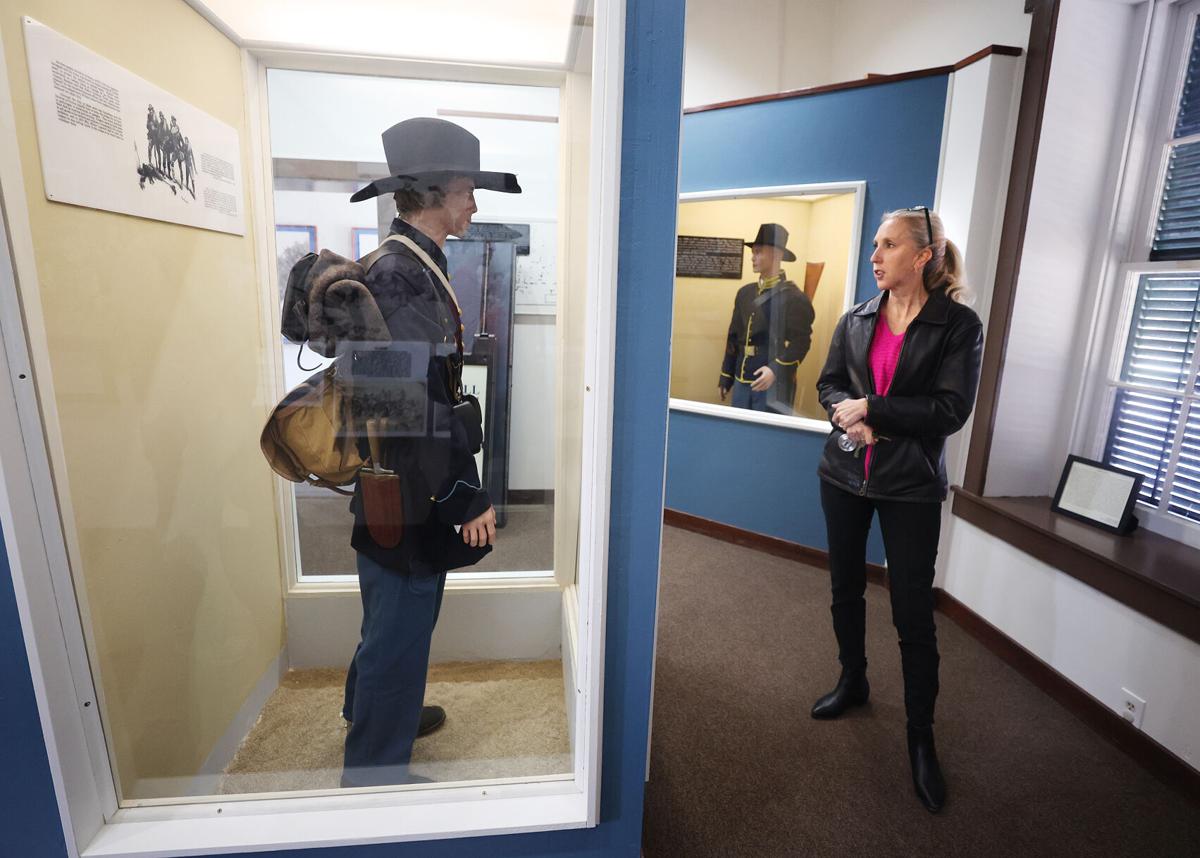
After a change in management, a major restoration and a global pandemic, the Fort Lowell Museum will open Saturday for the first time in more than three years.
The city-owned building in Fort Lowell Park has undergone $335,000 in renovations and will reopen under the direction of the Tucson Presidio Trust for Historic Preservation.
Amy Hartmann-Gordon, executive director of the nonprofit trust, said she is thrilled for the return of the “small-but-mighty local museum.”
“It is an important east-side cultural resource,” she said, and getting it open again “has truly been a public, private, community effort.”

Fort Lowell looking north to the Santa Catalina Mountains in the early 1900s.
To celebrate the grand reopening, the museum at 2900 N. Craycroft Road will host a free event from 10 a.m. to 2 p.m. Saturday, Dec. 2, featuring guided tours, reenactments, period musical performances and children’s activities.
Starting next week, the collection of historical exhibits will be open from 9 a.m. to 2 p.m. on Thursdays, Fridays and Saturdays. Admission will be $3 per person or free with a Presidio Museum membership.
The museum shut down due to the COVID-19 pandemic on April 1, 2020. Six months later, the cash-strapped Arizona Historical Society withdrew from its operating agreement after more than 30 years of managing the facility.
Tucson City Councilman Paul Cunningham, whose Ward 2 includes Fort Lowell Park, helped recruit a new operator for the museum late last year in consultation with the Old Fort Lowell Neighborhood Association.
The Tucson Presidio Trust also runs the Presidio San Agustín del Tucson Museum downtown.
“We very much see this as a work in progress,” Hartmann-Gordon said of the Fort Lowell Museum. “This is definitely phase one.”

The Fort Lowell Museum will open on Dec. 2 for the first time in more than three years. The building is a re-creation of an officer’s home and the rooms show displays about family and military life.
She said the trust hopes to gradually expand the museum’s scope to better reflect the wide sweep of history at the site.
For more than a millennium, people have been drawn to the lush floodplain where Tanque Verde Creek and Pantano Wash meet to form the Rillito River. Archaeologists have found evidence of human habitation there from as far back as 650 A.D.
The U.S. Army established Fort Lowell on the outskirts of Tucson in 1873 to serve as a territorial supply depot for other camps and forts in Arizona.
The cavalry and infantry units stationed there escorted wagon trains, protected nearby settlers, guarded supplies, patrolled the border and participated in the military campaigns against the Western and Chiricahua Apache tribes.
After the Army abandoned the fort in 1891, Mexican farmers and ranchers moved into the area, incorporating some of Lowell’s old structures into a community known as El Fuerte.
The ruins also became a popular picnic spot for Tucson residents and a camping destination for the University of Arizona’s military cadet program and the Boy Scouts.
What used to be the officers' quarters was eventually turned into a private sanitarium for people with tuberculosis and other chronic illnesses.
The old Post Trader’s Store, on the north side of Fort Lowell Road, became the hub for an artist colony that sprang up in the neighborhood in the 1940s and earned a mention in Jack Kerouac’s classic novel “On the Road.”
Pima County first opened the museum in 1963 inside a replica it had built of one of the adobe officers' quarters at the old fort.
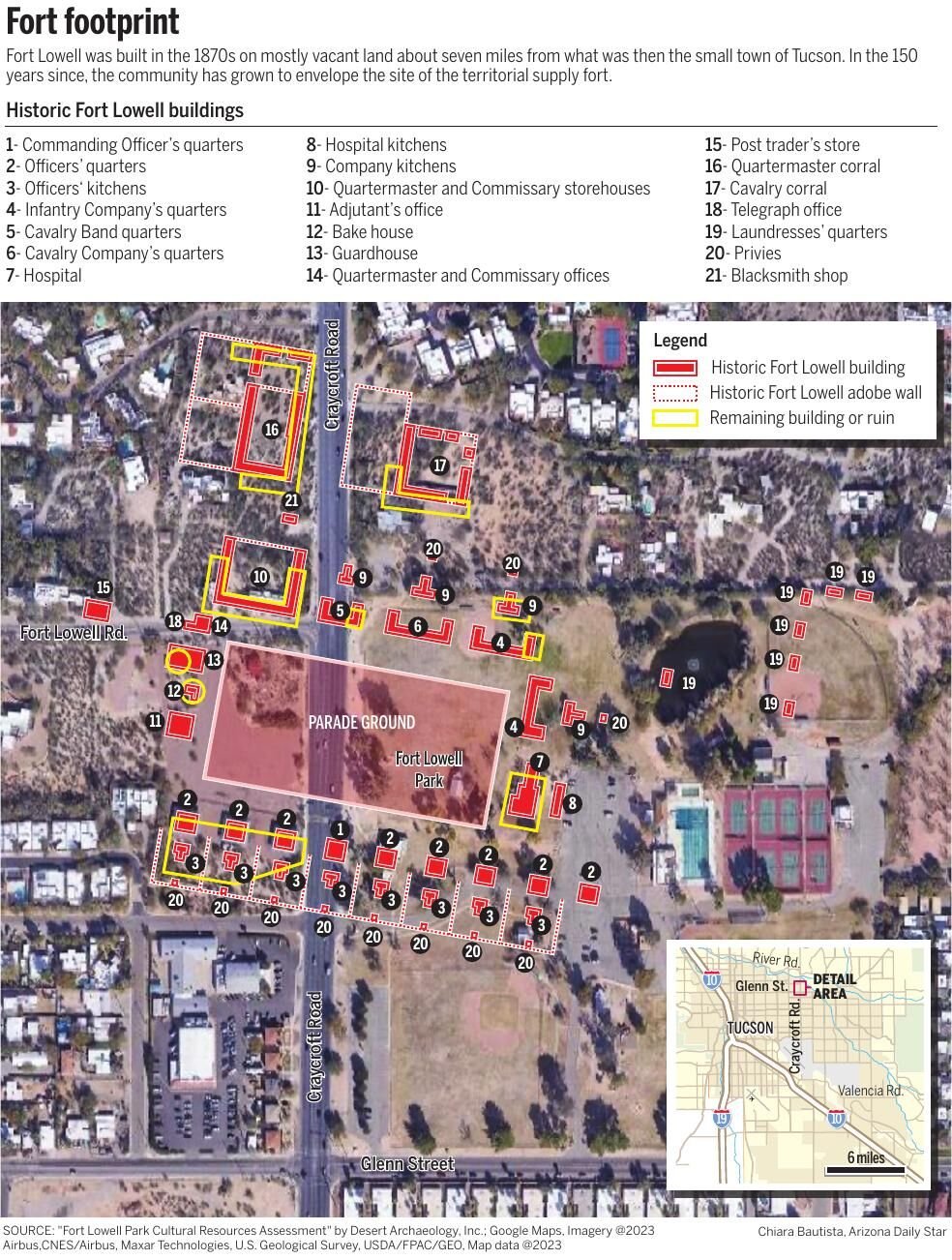
The city acquired the building and the park surrounding it in 1984.
The recent renovations were paid for with Proposition 407 bond money, approved by Tucson voters in 2018 to upgrade local parks. Work on the building began in the summer of 2022 and wrapped up earlier this fall.
Only about 10-15% of what’s now on display is new to the museum, but many of the old displays have been refreshed and nearly everything has been moved around, Hartmann-Gordon said.
The building’s central hallway is now lined with giant prints of historic images from the late 1800s and early 1900s, during and after the fort’s operation.
Hartmann-Gordon said nearly all of the artifacts on display are on loan from the Arizona Historical Society.
Efforts to preserve the ruins of the fort have been going on for almost a century.

