


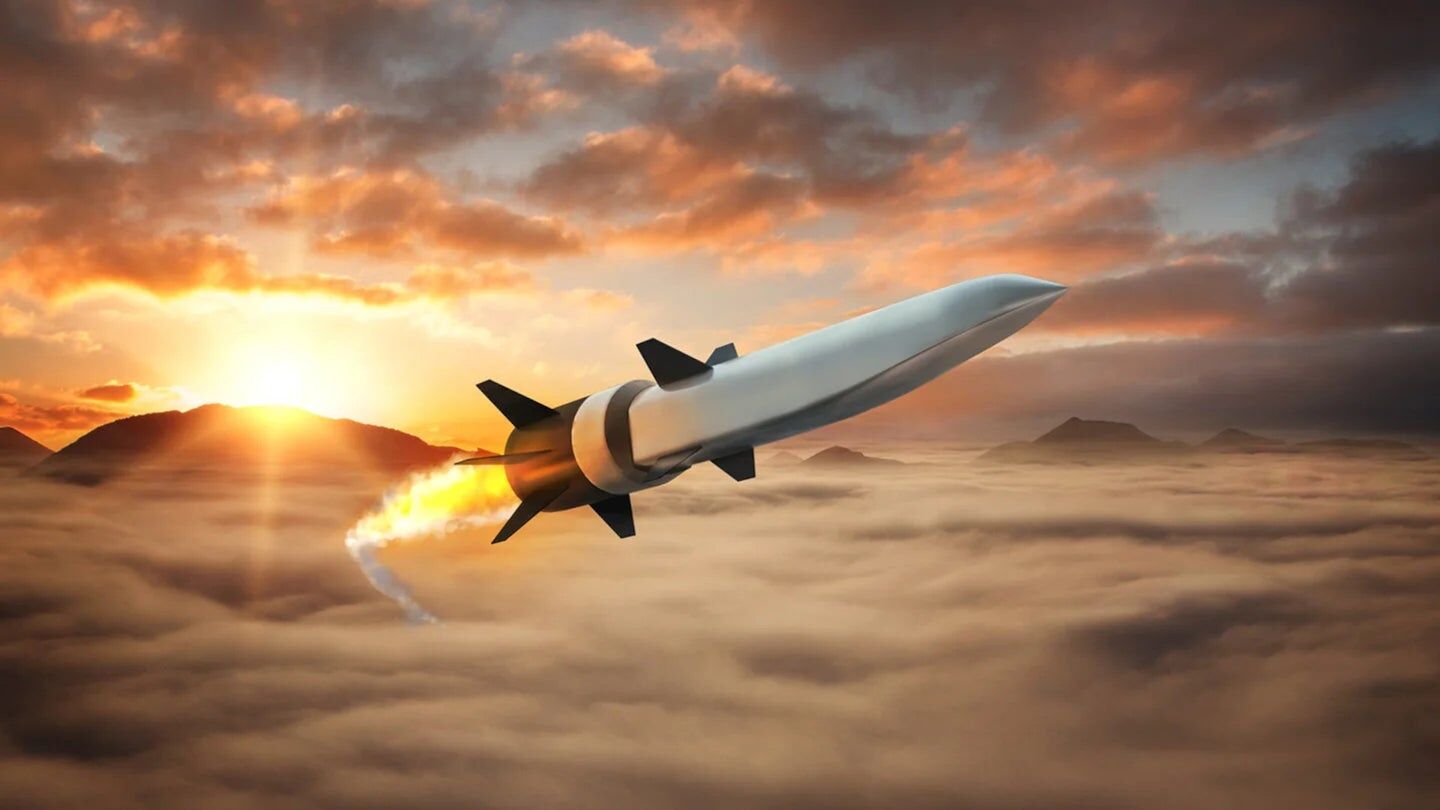

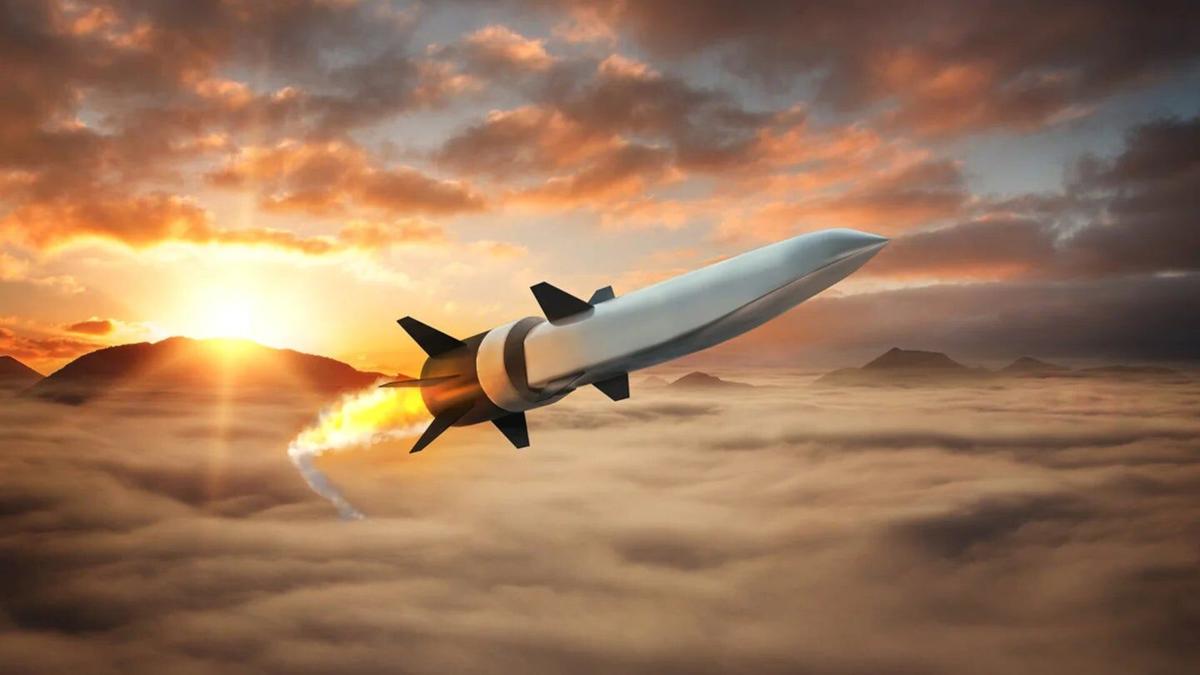
Researchers conducted the first free-flight test of a hypersonic missile made by Tucson-based Raytheon Missiles & Defense and partner Northrop Grumman, in a historic step in the Pentagon’s race to develop the ultra-fast, hard-to-kill weapons.
In a first-of-its-kind test last week, the Defense Advance Research Projects Agency flew an air-launched version of the Hypersonic Air-breathing Weapon Concept, or HAWC, hypersonic missile at an undisclosed location, DARPA and Raytheon announced Monday.
The U.S. is rapidly developing hypersonic missiles, which fly at speeds of Mach 5 and faster, in response to hypersonic test programs launched by Russia and China.
During the recent test, a Raytheon HAWC missile was released from an aircraft seconds before its Northrop supersonic combustion ramjet, or “scramjet,” engine kicked on.
The engine compressed incoming air mixed with its hydrocarbon fuel and began igniting that fast-moving airflow mixture, propelling the cruiser at a speed greater than Mach 5, or five times the speed of sound, DARPA said.
The test validated the aircraft launch capability and the ability of HAWC’s airframe and propulsion system to reach and cruise at hypersonic speeds, Raytheon and DARPA said in a rare look at a program shrouded in secrecy.
“The HAWC free flight test was a successful demonstration of the capabilities that will make hypersonic cruise missiles a highly effective tool for our warfighters,” said Andrew “Tippy” Knoedler, HAWC program manager in DARPA’s Tactical Technology Office. “This brings us one step closer to transitioning HAWC to a program of record that offers next generation capability to the U.S. military.”
Raytheon said the companies are on track to deliver a prototype HAWC system to the U.S. Department of Defense.
Hypersonic missiles are dramatically faster than traditional weapons such as cruise missiles, with the ability to maneuver at high speed at altitudes that avoid long-range radars.
Hypersonics would give military commanders not just a more survivable weapon, but a greater range of options as to how and when to deploy them, Raytheon says.
“This flight test brings the U.S. military closer than ever before to deploying an offensive air-breathing hypersonic capability — a revolutionary leap forward for our warfighters,” Wes Kremer, president of Raytheon Missiles & Defense, said in prepared remarks.
Colin Whelan, vice president of advanced technology at Raytheon, called the test “a history-making moment.”
“This success paves the way for an affordable, long-range hypersonic system in the near term to strengthen national security,” Whelan said.
Tucson-based Raytheon Missiles & Defense — the Tucson region’s largest employer with about 13,000 local employees — was awarded a DARPA contract worth up to $174 million in 2016 to develop the HAWC missile.
The company also is involved in several other hypersonics programs, including a “tactical boost-glide” program for DARPA and the Air Force, in which rockets are used to boost a glide vehicle to hypersonic speeds; the Navy’s conventional “prompt strike” hypersonics program; an Army long-range hypersonic program; an Air Force joint program with Australia; and other, classified hypersonic and counter-hypersonic programs.
Two local veterans, ages 102 and 95, were taken on flights in a World War II-era Boeing Stearman biplane out of Ryan Airfield west of Tucson as part of Operation September Freedom.
The two-month mission organized by Dream Flights, a nonprofit organization, aims to give 1,000 veterans across the country a scenic flight with the help of volunteer pilots.
Leo Fisher and Louis Hiett, residents of Splendido at Rancho Vistoso in Oro Valley, were among four veterans who got to soar above Tucson on Tuesday, Sept. 14, 2021.

