

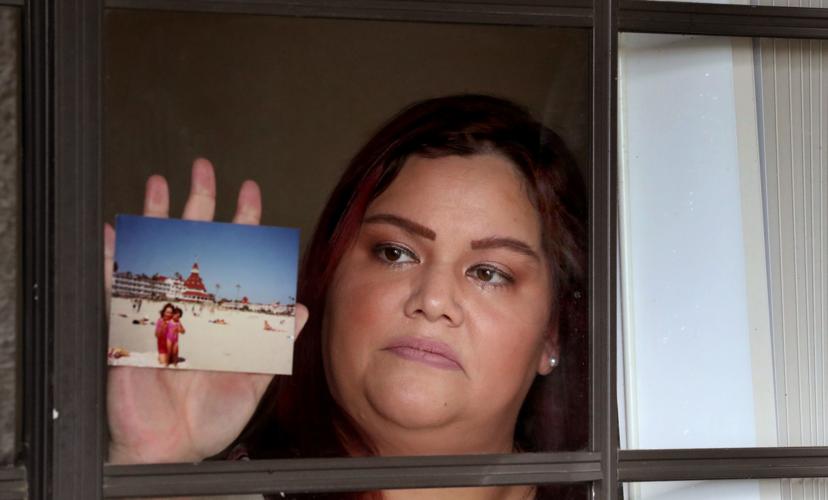
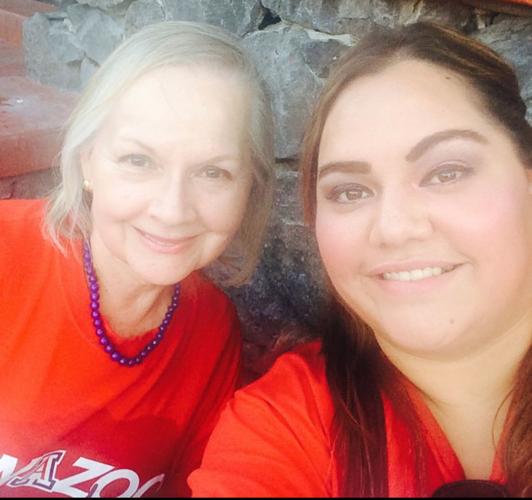

Christina Rodriguez can’t explain to her mom why nurses care for her in full protective gear. She tells her mom that it’s for the nurses’ protection. She tells her mom why she can’t visit her, why her mom must remain isolated.
But her mom doesn’t fully understand that she’s infected with a highly contagious virus that’s killed over 100,000 people nationwide.
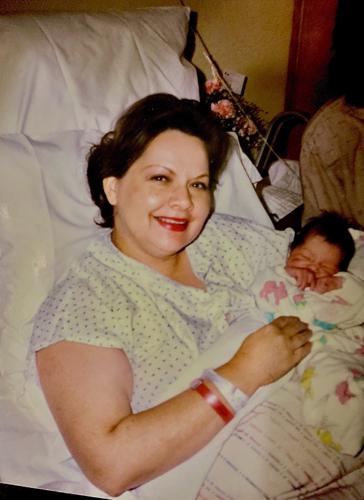
It wasn’t something Christina Rodriguez thought she’d have to explain to 69-year-old Catherine Rodriguez when the older woman was diagnosed with Alzheimer’s about two years ago.
But after her mom fell in the bathroom at Sapphire of Tucson Nursing and Rehabilitation, doctors tested her for coronavirus at the hospital, Christina Rodriguez said.
She was positive.
Catherine Rodriguez was one of more than 90 people, including staff workers, at Sapphire who tested positive for coronavirus in April.
After the outbreak, Christina Rodriguez transferred her mom to another nursing home, she said, but her mom didn’t want to go to the special unit there for coronavirus patients
She was angry and agitated. And she lacked the cognitive ability to understand what was going on, Christina Rodriguez said. “I think that can be a little scary for somebody.”
On top of everything else, her mom had developed serious preexisting conditions, like kidney failure after a series of infections, before contracting coronavirus, Christina said. “Alzheimer’s creates a myriad of complications.”
When the Pima County Health Department analyzed all coronavirus deaths in the county to see who is most affected, Health Department officials found that patients like Catherine Rodriguez were at a greater risk of serious illness or death. The department published a report this week highlighting three — perhaps unsurprising — leading risk factors: age, preexisting conditions and poverty.
“Our health department fully recognizes the uneven medical and social vulnerability of segments of our community and is pledged to continue to address these unique needs,” County Administrator Chuck Huckelberry said in a preface to the report, which was sent to the county Board of Supervisors.
Health Department officials found that 80% of those who died in Pima County were 65 years old or older. And those who died largely had one or more preexisting conditions such as diabetes, heart conditions, kidney disease or lung disease.
While coronavirus has impacted Tucson’s entire community in some form, the virus seems to disproportionately take the lives of patients with low income or a low “socioeconomic status,” which is a measure that considers income, education and occupation.
“Poor people are disproportionately impacted, both in terms of mortality and morbidity,” said Dr. Francisco Garcia, Pima County’s chief medical officer.
Nursing homes can be only option
In a series of maps, the Health Department shows that “congregate settings” accounted for the geographic coronavirus hot spots around the county.
These include a variety of places, from nursing homes to student apartment buildings, he said.
“Any place where you’re putting a lot of people together, where they’re sharing common areas, where they’re sharing staff or they’re sharing a variety of things, he said. “That’s what puts them at risk, because it’s the person-to-person contact in the end.”
Nursing homes have been disproportionately hit by coronavirus, said Dr. Clifford P. Martin, an infectious-disease doctor and chief of the medical staff at Tucson Medical Center.
And an older person’s income may play a role in determining if they live at a nursing home. It’s why Catherine Rodriguez wound up at Sapphire, Christina Rodriguez said.
“I’m not in the financial position either to help with any of that,” she said. “She’s been on Social Security for a long time, which puts her in the low-income bracket.”
Many patients are in nursing homes because they can’t afford private in-home care, Martin said. “Because most patients that have the resources to be able to pay for private health care at home are doing it.”
Coronavirus and race
Around the country, demographic data show the coronavirus disproportionately affecting people of color by different metrics.
Nationwide, black people account for 13% of the population but 25% of coronavirus deaths where race is known, according to the COVID Tracking Project, a volunteer effort that compiles coronavirus data by race and ethnicity.
In Arizona, Native Americans account for just 4% of the population but 20% of cases and 21% of deaths where race is known, according to the project.
In Pima County, however, these trends aren’t readily apparent in the death certificate data, according to the county’s analysis.
“I think that our mortality is about what you would expect,” Garcia said. “It really kind of reflects the diversity of the community. I think you are seeing more cases among poor people. And that’s poor people of every racial and ethnic background.”
In Pima County, racial disparities also aren’t easy to see in the breakdown of cases in data published by the Arizona Department of Health Services.
“It’s a trend that’s obviously extremely concerning nationwide and something that we need to keep an eye on here locally as well, as we look at all different kinds of vulnerabilities,” said Katherine Ellingson, assistant professor with the University of Arizona’s Zuckerman College of Public Health.
She pointed out that sample sizes nationwide and statewide are much bigger than the county’s sample size, which is an advantage for detecting trends. A bigger sample size of tests might be more representative of the population’s racial and ethnic makeup.
“The first thing I think about is access to testing, and how that might confound some of these comparisons,” she said. “Ensuring that there’s sort of even access to testing throughout the state is one thing I think about when I look at these numbers.”
It’s also possible that issues surrounding access to testing could affect the death certificate data, she said. If someone dies from COVID-19 but was not tested, one of their underlying conditions could show up on the death certificate instead.
“Death data is notoriously complicated, and ensuring that the appropriate cause of death is attributed is tricky,” she said.
Also, data on who is being tested by race and ethnicity is largely not available, which is another barrier to understanding racial disparities.
Demographic data is collected on case follow-up, she said. “It’s possible that some labs have that data, but I’m not convinced that it’s collected evenly.”
“It would be really helpful to know the distribution of individuals tested by race,” she said, adding that, if there’s an uneven proportion of people tested in different race categories, that will affect the number of positive cases.
“The underlying racial and socioeconomic health disparities that were present long before this pandemic are definitely playing out,” she said.
This might mean a patient lives in a rural area without a car or other transportation, for example, which could mean they won’t get tested, even if they are showing symptoms of coronavirus. Or, it might make it harder for a doctor to discharge a patient from the hospital.
The latter was the case for one of Martin’s patients who live on a local Native American reservation.
“It was very difficult to arrange for the appropriate situation for this patient to be discharged home safely, to continue dialysis safely and to continue to be with their family safely,” he said.
She needed transportation to a dialysis center and quick access to health care, he said. But cost and distance, among other factors, stood in her way.
“And so it was heartbreaking to see her in the hospital for several weeks, isolated from her family, only being able to talk by phone,” he said. “It was heartbreaking but it was nice to see her get better enough to go home.”
“Nothing would have prepared me”
As a family member of a patient at greater risk of the worst outcome, Christina Rodriguez finds it hard to hold on to hope, she said.
Doctors couldn’t tell her if her mom would pull through and survive coronavirus, she said, adding that her mom’s preexisting conditions are obviously making things more difficult.
“I think all I can do is hope that she’s not suffering,” Christina Rodriguez said. “It’s very hard to have strangers care for a parent when you can’t be there.”
She misses comforting her in small ways like reading to her or watching TV with her, things she feels she took for granted before the pandemic.
She hasn’t seen her now for over two months, the longest she’s ever gone.
Sometimes her mom will say a few words on the phone. Sometimes she doesn’t recognize her.
“It’s hard enough to have her with Alzheimer’s,” she said.
“Nothing would have prepared me for COVID. And all of us were unprepared, you know, but not being able to see her is very, very difficult, so completely out of the blue.”
“Poor people are disproportionately impacted, both in terms of mortality and morbidity.” Dr. Francisco Garcia, Pima County’s chief medical officer

