




While the origins of the Moko Jumbie are disputed, scholars agree on this: the colorful stilt walker was brought to the Caribbean by Africans who were enslaved. The Moko Jumbie has entertained centuries of people celebrating Carnival (the Caribbean take on Mardi Gras).
One account claims the Moko Jumbie is the spirit of Moko, a deity of retribution that has endured incredible mistreatment, yet remained “tall, tall, tall.” When asked where he came from, the Moko Jumbie might tell a story of walking across the Atlantic Ocean, from West Africa to the islands of Trinidad and Tobago.
Chandra Kimmel remembers Moko Jumbies from her childhood. The stilt walkers, dressed in flamboyant, colorful costumes that concealed their identity, towered over her small frame during the Carnival celebrations on St. Croix.
The Moko Jumbies were a memory she kept of the Caribbean when her family moved to Tucson when she was in school. Her mom, who is Puerto Rican, kept the culture in a different way: through food.
“My mom wanted to make sure the culture was instilled in us, that we grew up with the foods we grew up with our whole lives. We couldn’t go out and get it, but my mom was making it at home,” Chandra said.
When Chandra and her husband decided to open a Caribbean food truck, they named it DC Jumbie: DC for their initials, Daniel and Chandra; Jumbie for the stilt walkers they carried with them from childhood.
“Across the Caribbean, you’ll find a lot of stilt walkers. They ... basically, like, sort of take care of or look over the islands, is what they are,” Chandra said. “We have the stilt walkers in our logo. They’re called Moko Jumbies in the Caribbean, but we just took the jumbie part of it.”

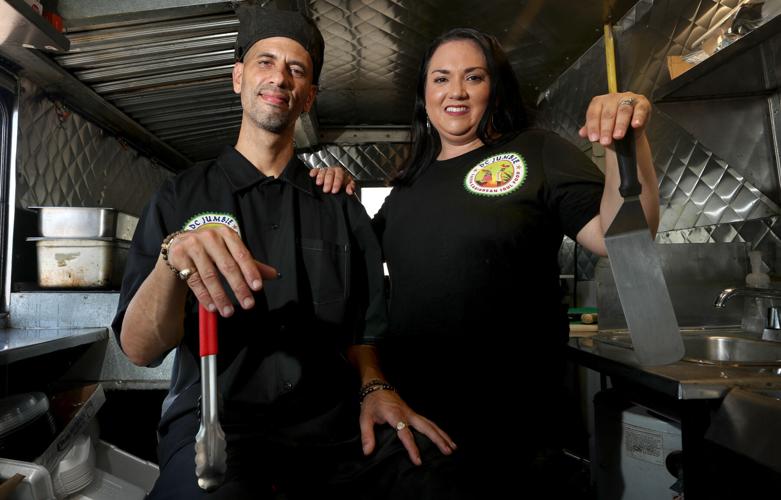
Daniel Figueroa, left, and his wife Chandra Kimmel, have been running their food truck, DC Jumbie, for 10 years.
Daniel Figueroa grew up in Chicago and Miami, in Puerto Rican neighborhoods where his dad sometimes sold food from a cart near a convenience store.
“We were surrounded by Latin flavors all the time,” Chandra said. When the couple moved to Tucson from Miami, where they met, he loved the slower pace of life here, but he mourned the loss of his cuisine.
When Daniel got the idea to open a food truck in 2012, he was originally thinking small: a hot dog cart, not unlike his father’s. But as the couple started taking the idea seriously, they realized they could fill the niche they both sorely missed.
“That kind of created our fusion of flavors. We just wanted to bring Caribbean flavors and Puerto Rican flavors to the desert, because it was sort of desolate here for those flavors. My husband being from the bigger cities and constantly having these things available to him, he was adamant about the public having access to that. Now it’s 10 years later and we’re still truckin’,” Chandra said.
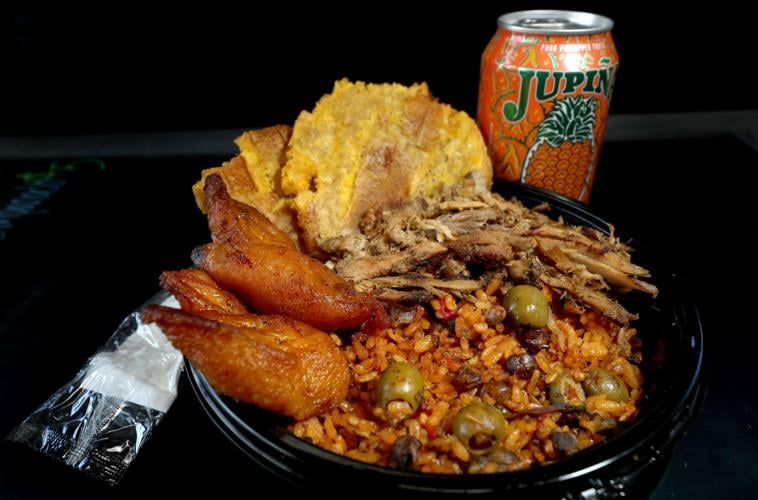
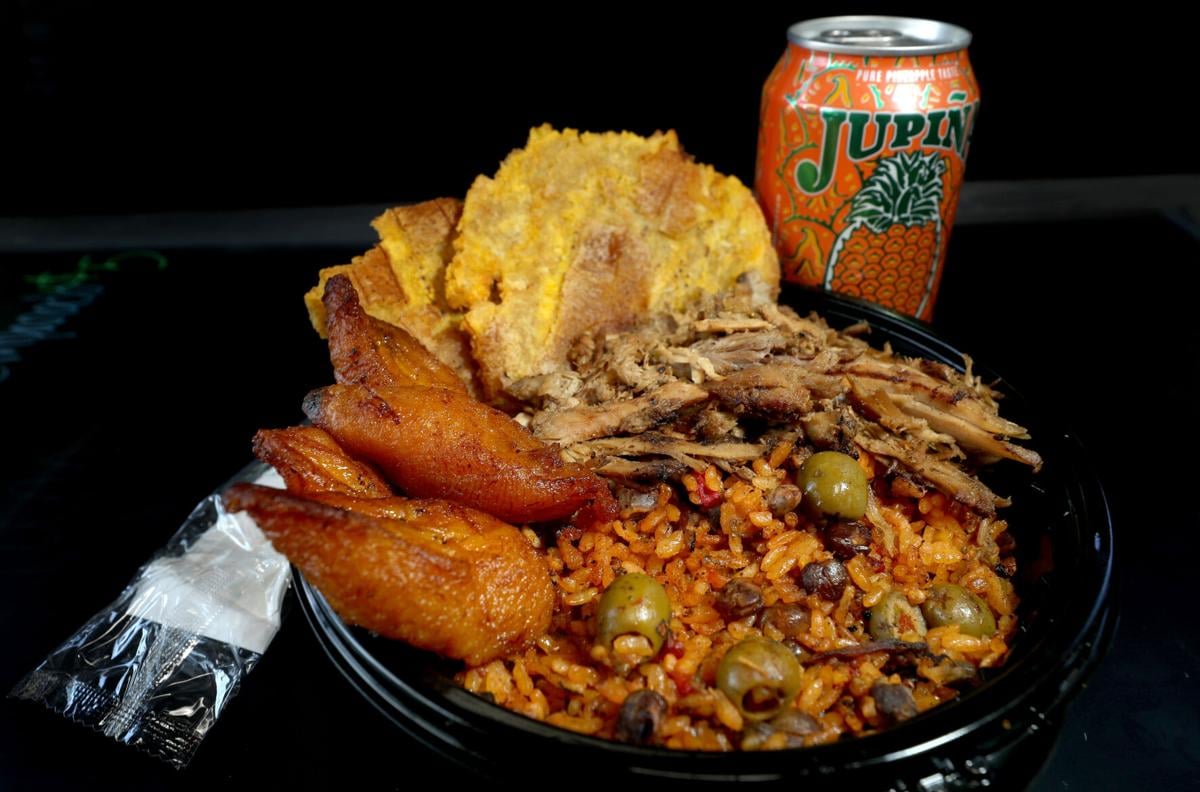
Chandra’s favorite items off their Caribbean menu are the Puerto Rican staples she grew up with. Arroz con gandules is part of Puerto Rico’s national dish. It’s the kind of food where everyone says they have a family member who cooks it better than anyone else. The dish is pigeon peas and rice seasoned with sofrito, the flavor-packed base of many Puerto Rican specialties. You can order it at DC Jumbie under the Puerto Rican plate, which also comes with pernil — a slow-cooked pork that Daniel roasts for six to eight hours in their commissary kitchen — and sweet plantains.
“But my top would be the triple threat or the tripleta, which is actually a very popular sandwich in Puerto Rico,” Chandra said. “That one has slow-roasted pork; slow-roasted ham, that’s oven baked; and our grilled chicken. (It has) all our toppings — potato sticks, lettuce, onion, tomatoes and our signature sauces: sofrito dressing and our mayo-ketchup sauce.”

The beef empanada with sofrito and mayo-ketchup dipping sauces from DC Jumbie.
Chandra said that, because most Latin American food in Tucson is Sonoran, many customers trying Puerto Rican food for the first time might think it would be spicy in an unfamiliar way.
“A lot of times we get the question, is it going to be spicy because of the Caribbean aspect?” Chandra said. “What you’ll find in the Puerto Rican (food) is more flavors: garlic and culantro, which is a more potent version of cilantro. You’re going to find those really deep flavors in all of the cooking. Not to say Puerto Ricans don’t like spice, it’s usually an option on the side, but Puerto Ricans don’t eat too much spicy food.
“Authentic recipes, doing everything from scratch, it’s not the easiest thing to cut corners at all in Puerto Rican cooking. If you don’t have the right ingredients, it’s not going to taste the same,” Chandra said.
The importance of heritage ingredients created a serious obstacle for DC Jumbie. Puerto Rican ingredients like the herb culantro and the bread pan sobao are difficult, if not impossible, to find in Tucson.
“There’s certain peppers and stuff that we use. The culantro was hard to find at first. So, Cuban bread is not a thing here. Just recently, I think you might find some Puerto Rican breads in Walmart, actually. But that’s also always been a challenge since the beginning.
“We do a lot of sandwiches, as you know. We’re working on that, to get more authentic bread over here. The cost of shipping bread over here is really not worth it at this point. We’re exploring our options to see if there’s anything we can do on this end of the U.S. because it’s not readily available here in AZ,” Chandra said.
She was finally able to find culantro and the kinds of peppers used in Puerto Rico by working directly with the owners of local Asian supermarkets like Lee Lee. “You know, obviously they’re calling these things different names and they’re packaging them different,” Chandra said.
“Speaking with the owners and letting them know what we need or what we’re looking for, and putting our heads together and seeing if this is something they could order, or how we could go about getting those items in. That’s how we were able to figure out (if) they could carry this or they do carry this, but they call it something else.
“That was definitely a challenge at the beginning. At least the two Asian markets, they do carry, they carry almost everything now. At the beginning, (though) it was scarce,” Chandra said.

The Cubano, slow-roasted pernil (pork shoulder), ham, Swiss, dill pickles, mustard, mayo and sweet plantains from the food truck DC Jumbie.
The difficulty in sourcing ingredients might have contributed to the dearth of Puerto Rican restaurants in Tucson while Chandra was growing up.
“There was a Cuban restaurant. I couldn’t tell you, it was probably (closed) before I graduated from high school in 2003. I think it closed before then. That was around. It was a deli type of place, a small little restaurant. It had burned down. There was a couple of other little places. But for some reason, I don’t know why, Tucson hasn’t been able to hold onto these Latin or Caribbean restaurants for very long periods of time,” Chandra said.
When she was growing up, Chandra never had the goal of opening a Caribbean restaurant or owning a business. She had dabbled in serving in her twenties, but it took her husband’s resolve to convince her to open DC Jumbie with him.
“Via his enthusiasm of wanting to do it: my husband is super enthusiastic about things. He was just really excited about it, and it got me really excited to do it as well. I don’t know, we just saw an opportunity. There wasn’t a whole lot of food trucks other than the Mexican food trucks that were around. We just thought it was a great opportunity to give Tucson an opportunity to have the flavors we grew up with. I think that was the biggest driver. There was just none of that option here. And if there was, I didn’t know about it,” Chandra said.
Tucson’s Caribbean community has grown since they started in 2013. You might see a Cuban vendor selling at the Tucson Meet Yourself festival or have a mojito at Mojo Cuban Kitchen. You might be able to find the ingredients for pernil at Lee Lee, thanks in part to Chandra’s efforts working with international supermarkets to sell Caribbean ingredients.
When Chandra first moved to Tucson, she was isolated. She had grown up on an island; she had been excited to try someplace new until the reality of being landlocked set in. Her mom was the only Puerto Rican chef she knew.
To Chandra and Daniel’s children, who are growing up in Tucson, Puerto Rican food isn’t just going to be a memory or something kept at home. Caribbean food is part of our culture now, too.
DC Jumbie is a mobile truck. To track its schedule and location, follow them on Instagram.
Get your morning recap of today's local news and read the full stories here: http://tucne.ws/morning

