





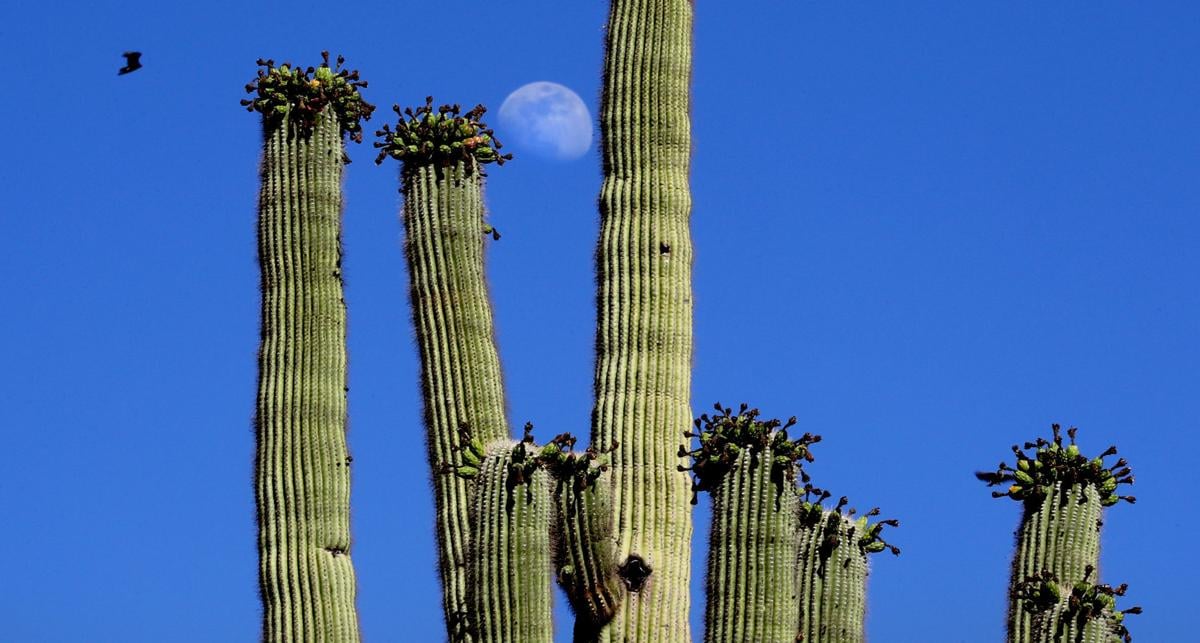
The moon is a cold, lifeless ball of rocks and dust. So why does a University of Arizona researcher want to seed it with millions of plants and animals from Earth?
“An insurance policy,” said Jekan Thanga, a professor of aerospace and mechanical engineering in the UA College of Engineering.
Thanga and a group of his students are exploring the concept of a lunar ark to store cryogenically frozen seeds, spores, sperm and egg samples from most Earth species.
The biological repository would be built inside the moon’s natural underground caverns and serve as a backup copy of sorts to protect our planet’s biodiversity in the event of global catastrophe.
Thanga and five of his students presented a paper on the idea earlier this month during the international IEEE Aerospace Conference, which was held virtually this year.
UA doctoral candidate Álvaro Díaz-Flores Caminero and undergraduate student Claire Pedersen were lead authors of the paper.
While NASA's Solar Dynamics Observatory had its eye on the sun, it captured a unique lunar transit that makes it appear to suddenly reverse course.
The concept is inspired by the biblical story of Noah’s Ark.
Only instead of two of every animal, the lunar ark would store 50 samples from each of the chosen species in a high-tech archive manned by robots and powered with solar panels.
The specimens could be kept safe and frozen inside caves carved billions of years ago by molten lava hundreds of feet below the lunar surface.
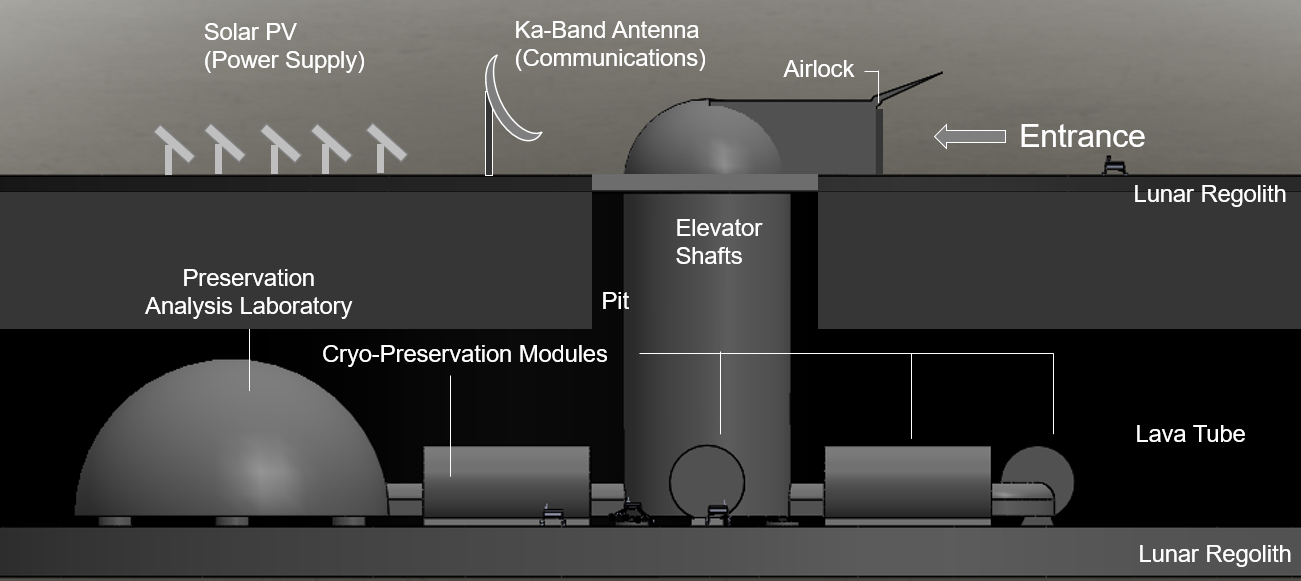
A conceptual drawing shows a possible design for an underground ark on the moon to preserve cryogenically frozen samples of 6.7 million species of plants and animals. The specimens could be kept safe and frozen inside caves carved billions of years ago by molten lava hundreds of feet below the lunar surface.
The lava tubes, some large enough to hold a 30-story building, can be reached by rocket from Earth in four to five days and provide an environment essentially undisturbed for the past 3 to 4 billion years.
“There’s nothing like that on planet Earth. There’s nothing as secure,” Thanga said.
It sounds like science fiction, but Thanga insists it is achievable, even with today’s technology.
The thick layer of granite surrounding the lava tubes will shield the samples from meteorite impacts and “all kinds of nasty solar and cosmic radiation” while keeping them at a constant temperature of minus-13 degrees Fahrenheit.
The cryogenically frozen material will have to be chilled even further — down to about minus-320 degrees in some cases — so the facility will require power for refrigeration.
But Thanga said the ark could be developed in phases, starting with a rudimentary plant repository.
He estimates that it could take as little as five years and 15 space launches to create a lunar version of the Svalbard Seed Bank, an existing repository in Norway that holds hundreds of thousands of plant samples.
Thanga said as many as 1 million different seed packets could be preserved beneath the lunar surface without the need for additional cooling.
The 6.7 million species the team hopes to mothball on the moon represent 80% to 90% of all known plants and animals, minus those that likely cannot be cryogenically preserved, Thanga said.
It’s unclear what might become of the samples after they are placed in the lunar ark.
Though they should remain viable for centuries with the proper care, there’s no guarantee that there will be anyone left with the ability to retrieve them or put them to use should the worst happen back on Earth.
But Thanga said that’s no reason not to try to preserve our planet’s biological bounty.
“We want to save it for a time when we have the technology to (re)deploy it,” he said. “Because once it’s lost it’s lost forever. There’s no way of getting it back.”

A conceptual drawing shows one possible design for an underground ark on the moon to preserve cryogenically frozen sample of 6.7 million species of plants and animals.
Thanga and his students have spent the past seven years or so engineering solutions to a variety of doomsday scenarios, including solar storms, meteor strikes and super volcanoes.
He said a lot of their work was focused on trying to “dodge” catastrophe.
Then, about two years ago, they started to look at ways to ensure the survival of life on Earth even in what Thanga called a “worst-case cataclysm.”
Work on the lunar ark idea has been funded so far through a grant from NASA. Thanga expects his team to produce additional papers on the concept, as they flesh out more of the specifics.
For example, they don’t know how the seeds and genetic samples might react to long-term storage in microgravity.
One solution is to use centrifugal force to produce artificial gravity on the moon by keeping the samples in some sort of spinning contraption, Thanga said.
Countless engineering problems like that will have to be solved before something as ambitious and costly as a lunar ark can ever be built.
Díaz-Flores Caminero, the UA doctoral student who co-wrote the first paper on the concept, welcomes the challenge.
“Multidisciplinary projects are hard due to their complexity,” he said in a written statement, “but I think the same complexity is what makes them beautiful.”
10 of the biggest threats to biodiversity, and why you should care
Climate change
Updated
Ninety-seven percent of climate scientists agree that climate-warming trends over the past century are very likely due to human activities, and most of the leading scientific organizations around the world have issued public statements backing this position, NASA reports. As a result of this climate change, oceans are warming and becoming more acidic, ice sheets are shrinking, sea levels are rising and glaciers are melting. All of this affects the species of the world, including humans.
Overfishing
Updated
Your love of halibut is decimating it. In 2003, a scientific report estimated that industrial fishing reduced the number of large ocean fish to just 10 percent of their pre-industrial population, National Geographic reports. According to the International Union for Conservation of Nature's Red List of endangered species, 1,414 species of fish, or 5 percent of the world's known species, are at risk for extinction.
Agriculture
Updated
To keep up with projected demand, farming output will need to double in the next few decades, Stanford University reports. This could be devastating for the environment as a whole and biodiversity in particular. Pesticides can damage the soil and water, and the loss of habitat adversely affects species. In addition, the agricultural sector around the world consumes about 70 percent of the planet's accessible freshwater, WWF reports.
Habitat loss
Updated
Where subdivisions are built, where trees are clear-cut, where farmland spreads, where ranchers seek grass for their herds to graze on and where mining operations begin, biodiversity can suffer. Forests cover 31 percent of the land area on our planet, providing oxygen and protection and more. Many of the world’s most threatened and endangered animals live in forests, and 1.6 billion people rely on the benefits forests offer, WWF reports.
Overpopulation
Updated
The world's population is more than 7.3 billion. The United Nations predicts it could reach 9.7 billion people by 2050, and more than 11 billion by 2100. The needs of all these people will continue to affect other species on the planet as people fight for natural resources and room to live. The strain also will be felt among those people who don't have the means to acquire the resources they need to survive.
Poaching
Updated
Many nations are fighting a losing battle against poachers. The world’s last male northern white rhinoceros died this year. The rhino is a victim of the greed of poachers who harvest the animal’s horn, which can fetch up to $100,000 for about 2.2 pounds, making it worth more than its weight in gold, The Atlantic reports. The horn is mistakenly believed by some to have medicinal qualities and virility enhancers. A comprehensive survey found that 100,000 elephants (pictured) were poached across Africa between 2010 and 2012 -- mostly for their tusks -- and many other animals also have been decimated by hunters. The pangolin is the world’s most poached animal because its scales are used in traditional medicine and fashion. Scientists think that more than 1 million pangolins have been poached in the past decade, according to National Geographic.
Pollution
Updated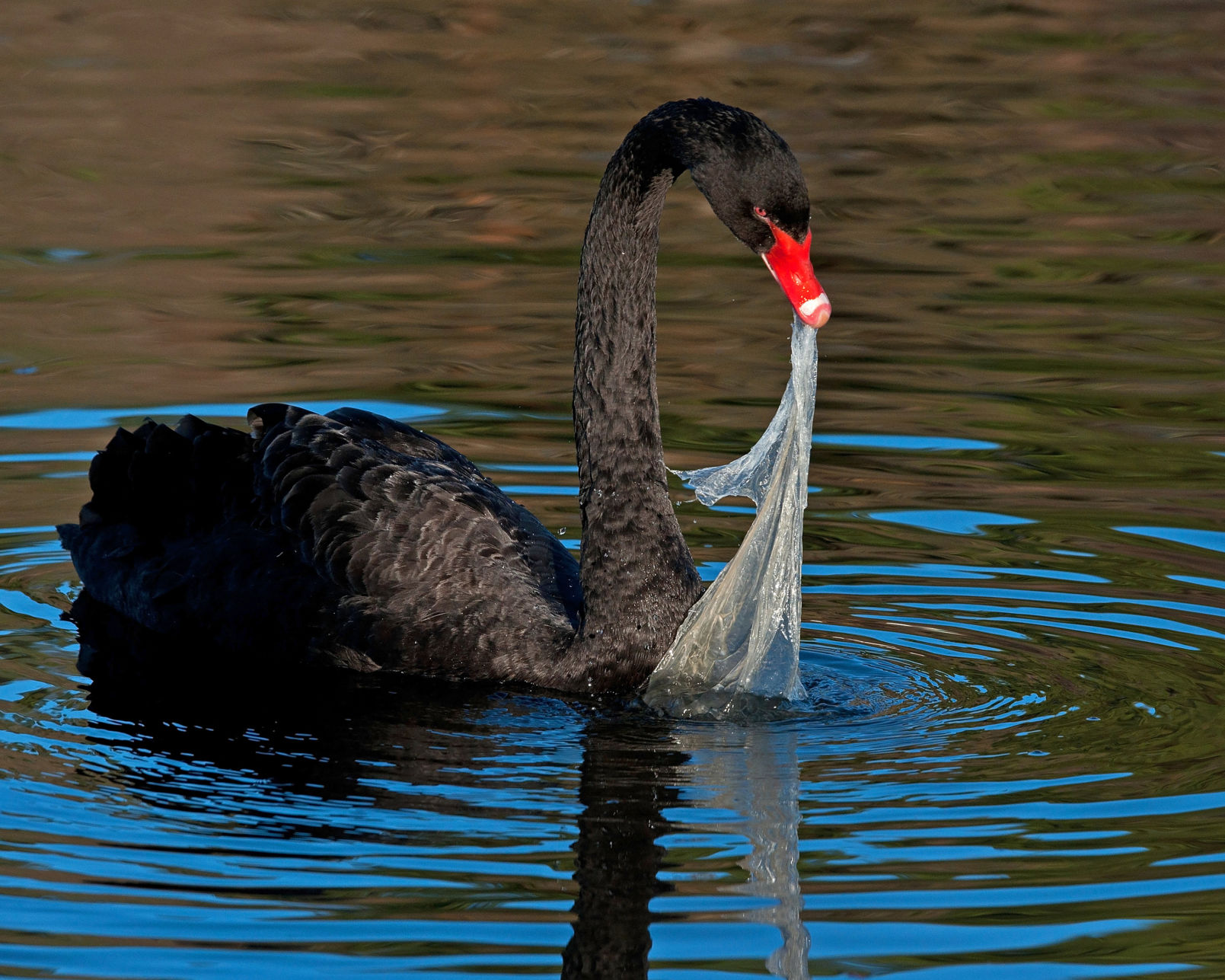
Ocean litter, pesticides, fertilizer, acid rain, air pollutants, noise and light pollution, oil spills, chemicals — they all harm our soil, water and air, choking life around the world. It is estimated that more than one million seabirds and 100,000 sea mammals are killed by pollution every year. People also are at serious risk. Environmental health experts estimated that 9 million premature deaths worldwide were linked to pollution in 2015, with the majority of deaths coming from air pollution, Time magazine reported.
Invasive species
Updated
An invasive species can be any kind of living organism — including the lion fish (pictured), or even an organism’s seeds or eggs — that is not native to an ecosystem and causes harm. Approximately 42 percent of threatened or endangered species are at risk due to invasive species, the National Wildlife Federation says.
Tourism
Updated
You may think you’re doing a magnanimous thing by visiting a developing nation and helping the local economy. But there’s a dark side to tourism. Tourists are tromping on plant life in ecologically sensitive areas, they’re leaving behind plastic and other garbage on beaches and they’re a drain on the natural resources of an area.
Conflict
Updated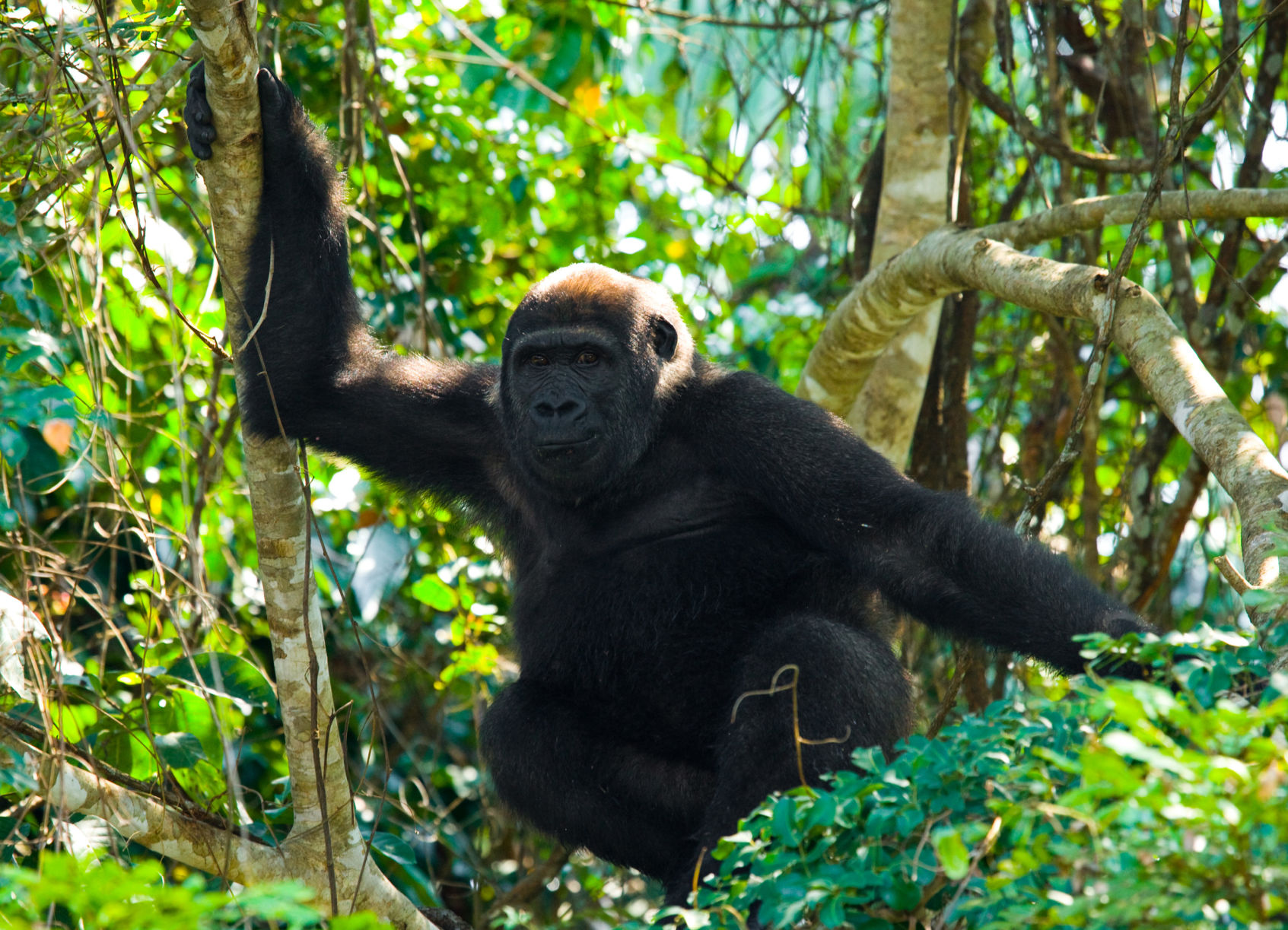
War can affect species in many ways, including through the carbon footprint of an advancing army, chemical weapons, the destruction of land, hunting and the displacement of people and animals. Lowland gorillas (pictured), for instance, have been adversely affected by civil war in the Democratic Republic of Congo. There were nearly 17,000 eastern lowland gorillas in the mid-1990s, but scientists estimate that the population has dropped by more than 50 percent since then, The World Wildlife Fund reports.

