


Producer Johanna Eubank's Fave Five
From the Reporters' and photographers' favorite works of 2019 series
-
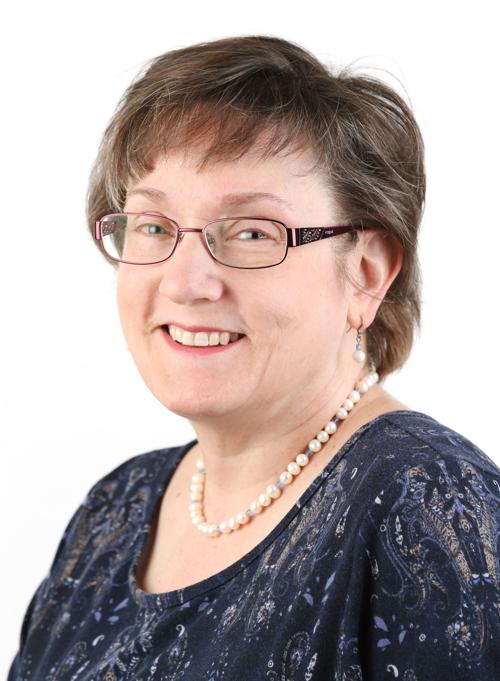
Johanna Eubank
Online producer
- Updated

 |
We are sharing Arizona Daily Star reporters' and photographers' favorite work from 2019.
Digital producer Johanna Eubank has been at the Star for 28 years and filled several roles. Here are her favorites of 2019:
Support group founder wants to help others with chronic pain
UpdatedI really came to respect April’s tenacity as I worked on this story. She really doesn’t give up, even when she has been hospitalized several times during the time I was interviewing her and researching the article.
─ Johanna Eubank

Two years after surgery, April DuBoce’s right leg was amputated above the knee. She copes by using humor.
One member collects Scripture and inspirational text, writing them on cards she can read when such messages are needed.
Another member warms her hands in a paraffin dip to ease her arthritis as she begins her day.
Welcome to a meeting of the Chronic Pain/Illness Support Group at St. Mark’s United Methodist Church.
There are about 20 members of the support group, but seven people have come to this meeting.
All of the members at this meeting are a part of the church, but that isn’t always the case. Membership in the support group is open to anyone who has chronic pain or a chronic illness.
This is a safe place to share frustrations, worries and fears, as well as ways of coping with illness and pain that’s chronic.
The group does outreach projects so its members aren’t isolated in their illnesses. One such project involves making greeting cards for the holidays or “just because” for people who are homebound.
They have also gone to other churches to train lay ministers so that they know the best ways to talk with and help church members they visit at their own congregations.
They listen to each other, offer support and exchange tips for managing time and energy.
But they don’t compare their pain.
Patricia Falcon, a Tucson health psychologist who treats patients with major medical issues, says support groups are beneficial for people with physical or mental issues. It helps erase feeling isolated by illness.
Good support groups are places to learn strategies for coping, new treatment options and a place to gain a sense of control. The most successful groups have an educational component to them, Falcon said.
Volunteering also is important, she said.
“The effect of helping other people with kindness and volunteering gives people a nice dose of good self-worth. Despite illness, they are capable of helping and being there emotionally for someone else,” Falcon said.
Even with a small group meeting this day, the sharing of stories isn’t complete before someone mentions April DuBoce, the group’s founder. Normally she would be running this meeting, but on this day DuBoce is in the hospital.
“She’s like a DieHard battery. She just keeps going,” group member Cliff Nystrom says of DuBoce.

April DuBoce removes her everyday walking prosthetic before trying on a new blade prosthetic leg at the Hanger Clinic. DuBoce recieved the blade through a grant so she could run.
“I just wanted to help others”
DuBoce, 49, founded the support group because she understands chronic pain.
Seven years ago, her right leg was amputated above the knee, two years after knee surgery.
At home, DuBoce had more pain than was expected. Her surgeon said DuBoce’s symptoms were psychosomatic. She had been diagnosed previously with PTSD and took antidepressants. The doctor told DuBoce the pain was all in her head.
She tried to see other doctors, but they all told her to go back to her surgeon. One physician told her, “Grow up, get over your mental illness and be productive in society. You’re not in pain.”
After 2½ years and two suicide attempts, DuBoce finally got a diagnosis from another doctor: Reflex Sympathetic Dystrophy syndrome (RSD).
With RSD, the sympathetic nervous system gets mixed signals and causes blood vessels to get smaller to reduce blood flow to an injury site. Normally the blood vessels would expand again when the injury crisis is over, but with RSD, they do not, and blood flow is restricted. While not very common, RSD often follows a surgery or traumatic injury.
The diagnosis was too late to save DuBoce’s leg.
People will ask why she didn’t sue for malpractice, but the statute of limitations for a malpractice lawsuit in Arizona is two years, which had passed before she was diagnosed.
“When I found out my leg was going to be amputated,” says DuBoce, “I just wanted to help others and I didn’t know how that was going to take shape back then. It’s taken shape in the form of the (support) group.”

April DuBoce has shirts with such messages as: “It’s taking a lot longer for my leg to grow back than I thought it would.”
Wanting to be physically active
DuBoce has been an athlete for much of her life, playing football in junior high school and softball from high school into adulthood. Soccer, which she played for 35 years, was her passion. “I could kick with both legs, but my right leg was my power. It demonstrated my strength. I helped me let go of stress, anger and hurt inside and it powered me. So now I’m finding different ways.”
After her amputation, her athleticism worked in her favor. She found ways to be up and about within days of her amputation.
However, her health has not been so cooperative.
Several illnesses unrelated to her amputation or RSD have caused her to lose weight, which recently meant she needed a new socket and liners for her prosthesis.
At the Hanger Clinic in September, seven years since her amputation, Jeff White, a prosthetic specialist, and Justin Rheault, a resident at the clinic, adjusted her regular prosthesis, noting a sore spot on what’s left of her leg.
Her prosthetic leg has microprocessors in the foot and knee. DuBoce and White believe she was the first in Tucson to receive the Ottobock Meridium foot. It is flexible enough that she could wear heels or flip-flops. There is differentiation between the big “toe” and the others. The foot handles inclines and rough terrain better than previous models and will lock so that one may stand on an incline.
DuBoce wanted the ability to run. She applied for and recently received a grant to get a blade for running, but she has not had the opportunity to become comfortable with it. She learned how to attach it and walk on it at the Hanger Clinic when she had her regular prosthetic leg adjusted.
A week later she planned to do a short run in the Phoenix area. She did some preliminary events but went to the hospital because of an illness, one of several hospital stays that month.
She hopes she will be able to run in the future, but her RSD has now spread to her left leg, causing more pain.
Her vascular surgeon has told her there is nothing more he can do. “When you hear those words, it’s a gut punch,” DuBoce said.
She may lose her other leg.
So she does what she can to manage her pain and copes by using humor. She has T-shirts with such messages as: “Keep calm and put your leg on” and “It’s taking a lot longer for my leg to grow back than I thought it would.”
Her best friend, Shannon, limps because she has a bad knee. However, when she’s walking with DuBoce, she will not walk behind her even a step or two. She doesn’t want people to think she’s making fun of DuBoce’s gait. They have joked about it for some time.
DuBoce says, “For this amputee you can joke, laugh, make fun, poke it with a stick. I don’t care. I don’t mind sticking out if it helps other people.”
A person in DuBoce’s situation doesn’t have to give up her athleticism, says Peter T. Hughes, director of adaptive athletics at the University of Arizona.

April DuBoce walks cases of jewlery out to her car for a Origami Owl Jewlery pop-up sale at a nearby retirement center in Oro Valley, on Nov. 19, 2019.
Hughes says there’s always a way to continue to be active regardless of disability. There may be some adaptation, but an athlete can still be involved in competitive sports. Wheelchair basketball is an example most people have heard about, but there are others.
The Adaptive Resource Center has a gym with equipment that can be used even by those who aren’t UA students or staff members. There are various membership plans.
Similarly, the UA and Southern Arizona Adaptive Sports provide opportunities for sports and other physical activity.
Sports at SAAS include wheelchair basketball, adaptive cycling, wheelchair softball and wheelchair tennis, says Mia Hansen, its president and program manager. The groups works to remove barriers to participation in any activity. There is even the possibility of adding rock climbing, if there’s enough funding.
The group also encourages volunteerism and provides opportunities that will raise funds for the nonprofit organization.
DuBoce’s goals include educating children so they aren’t afraid of seeing a person with a prosthetic limb. And if she could help coach a children’s soccer team, she would be happy.
She would like to see more doctors listen carefully to their patients instead of making assumptions based on previous diagnoses, and to help end shaming of people who have lost a limb.
Also, DuBoce would like to find a support group for non-veterans who have had amputations. While she is immensely grateful for the sacrifices veterans have made to keep our country safe, she doesn’t want to compare her stories to theirs.
Will DuBoce ever run? “I’d like to think that nothing is out of the realm of possibility for me,” she said. “My mentor of 17 years, who recently passed away, always told me: ‘Everything’s going to be OK, we just don’t know what OK looks like yet.’ That’s how I try to look at things.”
A favorite Scripture of hers is Hebrews 12:1, which ends with “Run with perseverance the race that is set before you.” She has a tattoo of the line on her left ankle.
But she doesn’t need the tattoo to remember its meaning.
DuBoce perseveres — and concentrates on helping the members of the support group to do the same.

April DuBoce tries on a new blade prosthetic at the Hanger Clinic at 4920 E. Speedway Tuesday morning, Sept. 17, 2019. DuBoce recieved the blade through a grant so she could run.
Conservation and consumption meld at Tucson's 'free' store
UpdatedI just love the concept of this store. It’s like the penny jar at the check-out at diners and coffee shops with the sign: “Have a penny, leave a penny. Need a penny, take a penny.”
─ Johanna Eubank

Gloria Valdez, left, and her daughter, Ada, look through household items at the Free Store, 3820 E. Blacklidge Drive. There is a limit of five items per “shopper” so that everyone has an opportunity to benefit, but there are exceptions. Just ask.
The price is always right at this Tucson store.
The idea for a store where everything is donated and everything is free started with a phone call from Tucson businessman Aaron Polley to his friend Deborah “Debbie” Mitchell.
Mitchell loved the idea from the beginning and signed on immediately.
She called Deron Beal, the brains behind Freecycle.org, a place where people can connect online to offer items they no longer want for free, thus keeping them out of landfills.
Two days later Beal, Polley, of the local electronics recycling company Suburban Miners, and Mitchell, a volunteer at several local organizations, met and the Free Store was born.
On May 1, a month after that first meeting, the store opened to customers.
The first big donation — a 24-foot truck full of items — came from a woman who does estate sales.
The merchandise didn’t last long.
News of the store is spreading by word of mouth, through nonprofit organizations and churches.
The Free Store’s policy is simple: If you need it or can do something with it that doesn’t involve putting it in the trash, take it. No charge. If you have something you don’t need but someone else might be able to use, leave it. Donating something is not required to take something.
There is a limit of five items per “shopper” so that everyone has an opportunity to benefit, but there are exceptions. Just ask.
The exceptions have included a refugee family and some veterans in transition who recently were able to make use of furniture that wouldn’t even fit in the store’s small space. Beds, sofas, end tables and entertainment units helped these people who were able to move into housing but had nothing in the way of furniture.
While Mitchell and Polley didn’t want the store to grow too quickly because they weren’t ready for a huge influx of merchandise, they are already looking for a larger space. The current space is on the grounds of Suburban Miners, north of East Glenn Street off North Alvernon Way.
Polley has long been looking to turn one man’s trash to another’s treasure. Years ago, he had a thrift store called Yes Thrift. It didn’t work out, but now his goal is to have a full-scale thrift store where everything is free.

“There’s such an abundance of stuff, and there’s people who can use it, and we keep it out of the landfill,” Deborah Mitchell says.
The friendly team of volunteers includes Polley, who Mitchell says is the brains behind the idea; Mitchell, who Polley says brings the magic that makes it work; Tim Backus, the muscle, without whom trucks of donations might never get unloaded; and Claudia, another regular volunteer. The entire operation is run by volunteers; no one makes money on this. Other volunteers offer their help from time to time.
Mitchell, who manages the store, says items have come in that she can’t identify. She’ll wonder if anyone will want them, but days later, someone will say, “I’ve been looking all over for one of these.”
Some items found at the Free Store include: a Foreman grill, keyboards and computer mice, pots and pans, dishes, glassware, blankets, tablecloths, books, games, artwork and clothing. Polley says they test as many electric items as possible as they come in to make sure they work, but jokes they have a free return policy.
The store is open for shoppers Wednesday mornings and the first Saturday morning of each month. They’ll accept donated items weekdays during business hours.
Mitchell says that since stuff keeps coming in, the store may have to add another Saturday each month to keep things moving.
“There’s such an abundance of stuff, and there’s people who can use it,” As Mitchell says, “and we keep it out of the landfill.”

Clothes and many household items are available at the Free Store, 3820 E. Blacklidge Drive. The store is open on Wednesday mornings and on the first Saturday of each month.

This was just really fun gathering these paper doll pages from 1935 and getting them ready to run again in a special section. Like many who co…
Diapers and plastic bags are curbside recycling no-nos
UpdatedWith all the recycling articles I have done, it seems the biggest message no one gets are that plastic grocery bags should never be recycled curbside. And I just have to wonder why people put dirty diapers in the recycling bin.
─ Johanna Eubank

Never put plastic bags in curbside recycling. Ever.
So says Jake Anderson, general manager of Republic Services, the company that runs the recycling plant in Tucson. (An Arizona Daily Star reader once suggested every article on recycling should begin with that sentence, and it turns out he may be right.)
To make recycling worthwhile, contamination must be reduced. Contamination is anything that should have been thrown in the trash or recycled elsewhere.
Anderson says there will always be a certain percentage of the population that won't abide by the rules. However, some items that are put in curbside recycling in violation of the rules actually cause serious problems. Plastic bags fall into that category.
If there was one common contaminant Anderson would like eliminated from curbside recycling for good, it would be plastic grocery bags and other flimsy or flexible plastic. These get caught in the discs as recycling moves through the plant and is sorted. The entire operation must be shut down to untangle these bags from the machinery.
Besides plastic bags, other contaminants that have been seen at Republic Services are gas grill propane tanks, clothing, shoes and green waste. None of these should ever be put in curbside recycling.
What should you do with these things that contaminate recycling loads? Plastic bags can be recycled at most grocery stores. Almost all grocery stores have boxes or bins near the entrance that indicate you can put your old, clean plastic bags there for recycling.
Green waste, which is mostly yard clippings, should be held for brush and bulky pickups or put in the regular trash barrel. Outside of the Tucson city limits where brush and bulky pickups aren't done regularly, you can call your trash and recycling provider and request a special pickup if you are planning to do some major yard work or landscaping.
Shoes that are so worn out that no one will want them should be thrown in the trash. If they have life in them yet, consider donating them to Goodwill or another such organization. The same goes for old clothing. If it is in good condition, donate it. If you have friends who sew, quilt or do other craft projects, they might be interested in the fabric. Otherwise, it belongs in the trash.
Propane tanks can be refilled and reused if they aren't leaking and are in good condition. Those tanks that can't be reused should be considered hazardous waste. The city of Tucson has designated drop-off sites for Household Hazardous Waste. Tucson residents can drop off items for free. Those outside of Tucson will be charged a $10 fee ─ a small price for safety. Find drop-off locations and hours at tucsonaz.gov/es/household-hazardous-waste.
But there's one contaminant is in a category all its own. The worst item those at the recycling plant see frequently is dirty diapers. Every single day, dirty diapers must be removed from the conveyor at the plant.
One must wonder if anyone really believes these can be recycled. Consider the more than 200 local employees of Republic Services when you toss a soiled diaper in your bin and remember the Golden Rule. Would you want someone putting dirty diapers in your path?
One final word: Never put plastic bags in curbside recycling.

The time machine sections were a lot of fun to research. I’m especially fond of the older, pre-20th-century pages. We just don’t write like th…
Johanna Eubank
Online producer
In this Series
Reporters' and photographers' favorite works of 2019
1
Updated article
Photographer Josh Galemore's Fave Five
2
Updated collection
Cartoonist David Fitzsimmons' Fave Five
3


