


A judge’s order to revise Joseph Bongiovanni’s presentence report offers an indication for the first time on how long the judge might imprison the retired Drug Enforcement Administration special agent.
Complete coverage: The case of ex-DEA agent Joseph Bongiovanni
Based on U.S. District Judge Lawrence Vilardo’s order, the recommended sentencing range for Bongiovanni would be nine to 11 years, according to Bongiovanni’s lawyers.
That is more than the roughly two years Bongiovanni’s defense team recommended for his corruption and drug convictions but far less than the 19 to 24 years the U.S. Probation Office calculated in its initial presentence report. Federal prosecutors called for an even longer prison sentence than probation officials first suggested.
The report’s recommendation is advisory, so while Vilardo must consider a sentence within the guidelines range, he is not required to impose one within the range. He can impose more or less prison time.
Still, the guidelines range is important, because it is the starting point for whatever sentence Vilardo imposes.
A defendant’s sentencing range is calculated using a base offense level. These scores range from 1 for the least severe offenses to 43 for the worst crimes. Higher offense level scores lead to longer prison sentences.
Bongiovanni’s offense level is mainly driven by the amount of drugs involved in his role with the Ron Serio-Michael Masecchia drug-trafficking organization. Prosecutors say Bongiovanni protected the drug organization from 2008 through his arrest in 2019 as it brought 10,000 pounds of marijuana, at least 11 pounds of cocaine and 16,000 fentanyl pills to Western New York.
Jurors in October found Bongiovanni guilty on seven of the 11 counts he faced in U.S. District Court, making him the first DEA agent in Western New York convicted of corruption. He was convicted of conspiring to distribute drugs, making a false statement to a federal agency, conspiring to defraud the United States and four counts of obstruction of justice.
But jurors acquitted Bongiovanni of one count that specifically accused him of accepting bribes from the Serio-Masecchia drug-trafficking organization, as well as all charges that he protected Peter Gerace Jr., the owner of Pharaoh’s Gentlemen’s Club in Cheektowaga, from federal investigation.
What’s more, even though jurors convicted Bongiovanni of narcotics conspiracy, they found that the weight of marijuana that was “reasonably foreseeable” for Bongiovanni to know about was less than 110 pounds. That amount was enough to cover only how much marijuana was grown at home by Louis Selva, a longtime friend of Bongiovanni’s who testified against him. Selva testified that he worked for the Serio-Masecchia organization and persuaded Bongiovanni to provide protection for it, eventually forging an agreement to gain sensitive law enforcement information from Bongiovanni for $2,000 a month and, later, $4,000 a month.
Bongiovanni’s lawyers said if jurors believed Bongiovanni played a role in the thousands of pounds of marijuana that Selva, Serio and Masecchia spread across Western New York, they would have found that a much greater weight was proven in the conspiracy.
So while the Probation Office’s initial presentence report calculated an offense level score of 38, based on the thousands of pounds of marijuana and other drugs, Bongiovanni’s defense lawyers pushed for a score of 16 reflecting only Selva’s home-grown marijuana he testified Bongiovanni knew about.
“The Court finds that the correct amount is somewhere between the two extremes,” Vilardo said in his ruling.

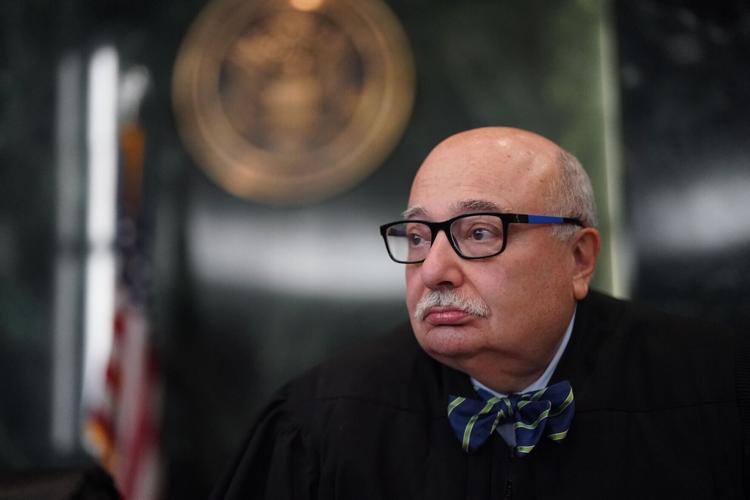
U.S. District Judge Lawrence Vilardo said evidence showed Joseph Bongiovanni “generally helped” the Serio-Masecchia drug-trafficking organization evade detection, but there is no evidence the then-DEA agent “caused fentanyl distribution.”
“There was ample evidence at trial suggesting that Bongiovanni was aware of more than just Selva’s basement grow,” Vilardo said.
Vilardo found that Bongiovanni agreed to protect the Serio-Masecchia drug-trafficking organization in a “wide-ranging manner,” noting the government’s case about the organization’s Southern Tier outdoor grow operations, Serio and Masecchia’s trips to New York City to pick up marijuana, and the tractor-trailer truckloads of marijuana that arrived in Western New York from California and British Columbia in Canada.
But the question, Vilardo noted, was how much of the drugs was reasonably foreseeable by Bongiovanni?
Vilardo’s decision did not explicitly indicate an offense level score he expected in the revised presentence report. But the judge’s ruling about how many drugs were foreseeable to Bongiovanni, as well as his other findings in his decision, will lead to an offense level score of 31, according to defense lawyer Robert Singer.
“We are pleased on one hand that the court rejected the government’s preposterous narrative that it proved every single fact put forth at trial, warranting a 20-plus year sentence,” Singer said. “On the other hand, we continue to disagree with certain facts the court found attributable to Mr. Bongiovanni.”

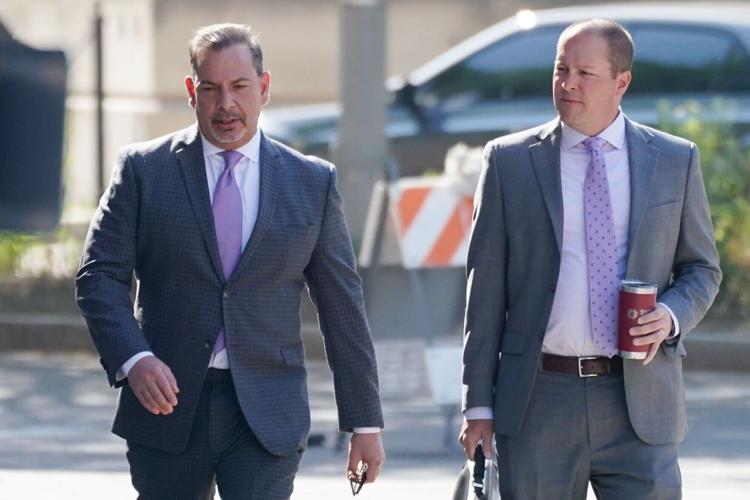
Retired DEA special agent Joseph Bongiovanni chats with attorney Robert Singer on June 21, 2023, as they arrive at the Robert H. Jackson U.S. Courthouse in Buffalo. Bongiovanni is the first DEA agent in Western New York convicted of corruption.
Vilardo attributed to Bongiovanni:
• Only the amount of marijuana found foreseeable by the jury – no more than 110 pounds.
• No more than 4½ pounds of cocaine, based in part on an internal DEA report written by Bongiovanni about what a confidential information told him about Serio’s drug organization.
• None of the fentanyl contained in the 16,000 pills that Serio said brought in.
While the evidence showed Bongiovanni “generally helped” the Serio-Masecchia drug-trafficking organization evade detection, “there is no evidence that Bongiovanni ... willfully caused the fentanyl distribution,” Vilardo said in his decision.
Singer, who with attorney Parker MacKay defended Bongiovanni at his trial and retrial, disagreed that the confidential informant’s unverified debriefing statements against the Serio’s organization − which he said differed significantly from his trial testimony − reasonably put Bongiovanni on notice of what the Serio DTO actually was doing, particularly when Serio confirmed the confidential informant wasn’t even a part of his drug organization.
“Furthermore, we do not believe the jury intended to hold Mr. Bongiovanni accountable for any cocaine activity tied to Ron Serio,” Singer said. “We go back to the jury’s inquiries about Lou Selva’s grow operation, and its finding that Mr. Bongiovanni only was responsible for 50 kilograms or less of marijuana, which we believe removed his greater ties to the Serio DTO’s activities.

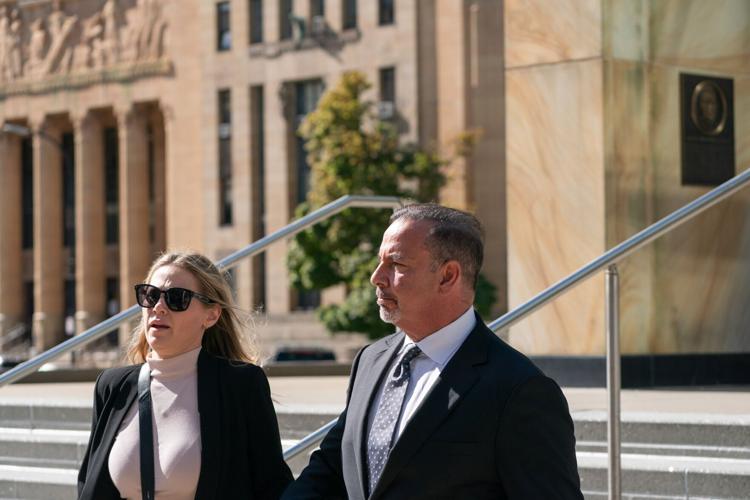
Joseph Bongiovanni and his wife, Lindsay, walk out of the Robert H. Jackson Courthouse after he was found guilty on seven charges in October 2024.
“In any event, the sentencing guidelines are simply an advisory starting point to a sentence, and we look forward to painting a more complete picture of Mr. Bongiovanni as we approach sentencing,” Singer said.
Assistant U.S. Attorney Joseph Tripi said in a June 16 court filing that the U.S. Probation Office’s initial presentence report correctly included the thousands of pounds of marijuana and other drugs in its offense-level score calculation for Bongiovanni. But Tripi called for an even higher offense-level score to reflect what he called Bongiovanni’s “significant control of the complex criminal scheme in which he was a major participant.”
“The defendant exercised some degree of control over Lou Selva, including the general and specific information the defendant selected for Lou Selva to provide to others in the organization, such as Michael Masecchia and Ron Serio,” Tripi said, urging the report add a three-point enhancement to bring the offense level to 43.
If Vilardo had agreed with Tripi, that offense-level score would have recommended life in prison for Bongiovanni.

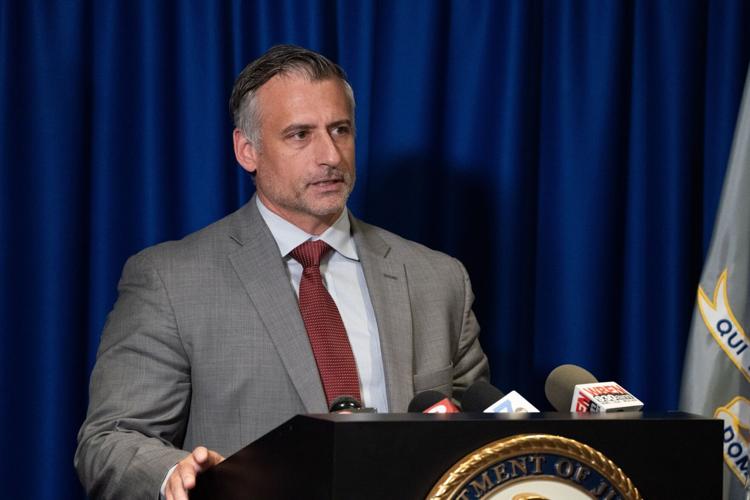
Assistant U.S. Attorney Joseph M. Tripi described Joseph Bongiovanni in stark terms after his conviction, labeling as “corrupt” the former agent who had “violated his oath” and “protect(ed) those he should have been investigating and arresting.”
But the judge rejected Tripi’s request.
“The Court agrees with Bongiovanni that there was no evidence demonstrating that he played the role of a manager in the conspiracy,” Vilardo said.
Vilardo gave probation officials until Oct. 31 to revise the presentence report.
Presentencing reports are sealed from public view, but court filings and the judge’s decision about the initial Bongiovanni report revealed the stark disagreement between Bongiovanni’s prosecutors and his defense attorneys.
The judge has not yet set a sentencing date for Bongiovanni.

