

At his bribery and corruption trial earlier this year, former Drug Enforcement Administration Agent Joseph Bongiovanni was accused of shielding Ronald Serio’s drug-trafficking organization from investigation in part by manipulating a confidential informant.
Complete coverage: The case of ex-DEA agent Joseph Bongiovanni
The informant, Robert Kaiser, testified there was no limit to how much cocaine or marijuana he could have bought from Serio, an Amherst drug trafficker who distributed thousands of pounds of marijuana and eventually cocaine and fentanyl pills across Western New York. Kaiser gave jurors a simple reason for not providing incriminating information against Serio to Bongiovanni or others at the DEA.
“They didn’t ask me to call him or anything,” Kaiser said from the witness stand on Feb. 20.
That testimony would prove to be his last in the Bongiovanni case.
Kaiser died last month. A passerby found his body on a bike path by Grant Street near the pavilion in Scajaquada Park across from the Tops gas pumps, Buffalo police said. Police are investigating and now await a report from the Erie County Medical Examiner’s Office.
Federal prosecutors, who viewed Kaiser’s testimony as bolstering their assertion that Bongiovanni feigned an investigation against Serio, have asked U.S. District Judge Lawrence Vilardo to permit them to introduce Kaiser’s prior sworn trial testimony as evidence in the former federal agent’s retrial that starts July 29.
Prosecutors did not comment on the circumstances of Kaiser’s death in a court filing or during a court proceeding last week.
“Our understanding is that Kaiser overdosed,” said defense attorney Robert Singer, who, with lawyer Parker MacKay, represents Bongiovanni. “Obviously, he was a heavy addict all his life.”
Kaiser, 50 years old when he testified in February, acknowledged he abused alcohol and took heroin, crack cocaine and pills “any time I could get my hands on them.” He was brought to court to testify after he was arrested under a material witness warrant.
As for the government’s bid to read Kaiser’s previous testimony at the next trial, “we will respond to that request if/when the government moves to admit his transcript at trial No. 2,” Singer said. “We can’t really offer more than that right now because we don’t know what their theory of admissibility is.”
Prosecutors say Bongiovanni’s lawyers cross-examined Kaiser at the first trial, so they had their chance to challenge his testimony.
Indeed, the cross-examination of Kaiser accounted for two-thirds of Kaiser’s testimony transcript from the first trial, Assistant U.S. Attorneys Joseph Tripi, Casey Chalbeck and Nicholas Cooper said in a court filing.
At Bongiovanni’s first trial, the jury delivered a partial verdict on the bribery and corruption charges. On April 12, the jury in the eight-week trial found him guilty on one count of obstruction of justice and one count of lying to federal agents, both counts involving a case file kept in his home after his retirement. Jurors acquitted Bongiovanni, 59, of deleting data on his DEA-issued cellphone when he retired. They did not reach a verdict on 12 other charges, including that he protected members of the Serio drug-trafficking organization from arrest and alerted them of informants, in exchange for at least $250,000, as well as other counts involving Peter Gerace Jr., the owner of Pharaoh’s Gentlemen’s Club near the airport. Vilardo declared a mistrial on those counts.
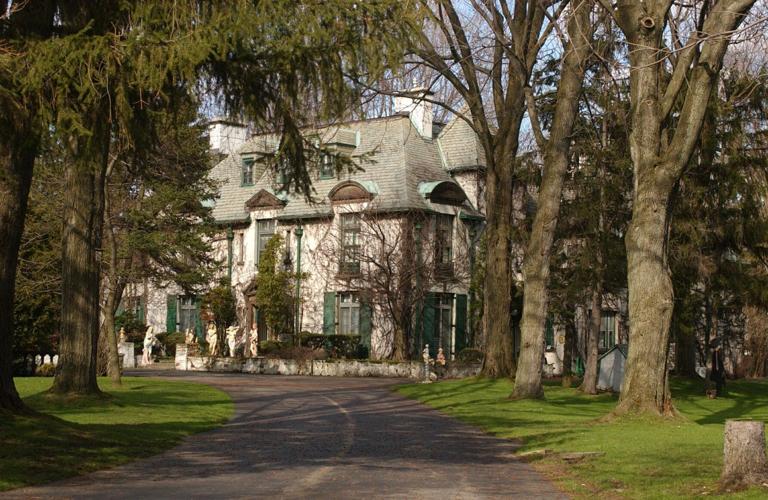
Testifying at the first trial, Kaiser said he could get whatever kind of drug he wanted in 2013 from Serio, who lived in a 9,000-square-foot French Provincial mansion on 2.4 acres in Amherst, with a carriage house, swimming pool and tennis court. Kaiser said he had been inside Serio’s mansion about five times and once bought about 5 pounds of marijuana from him there for $3,000 a pound.

Confidential informant Robert Kaiser testified that he could get whatever kind of drug he wanted from Ronald Serio, who lived in a 9,000-square-foot mansion at 697 Lebrun Road in Amherst. Kaiser was found dead last month.
That Serio was able to buy one of the largest mansions in Amherst, at 697 Lebrun Road, showed how his drug-trafficking organization was doing under Bongiovanni’s protective eye, Tripi said at Bongiovanni’s trial.

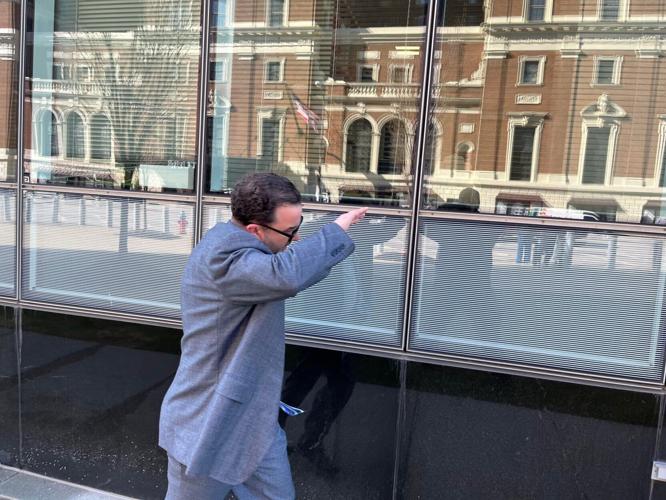
Ronald Serio, a marijuana and cocaine trafficker who said he paid bribes to onetime DEA agent Joseph Bongiovanni, leaves federal court on March 12, 2024, after testifying.
Seeing Serio
When Amherst police arrested Kaiser on burglary charges in 2013, the Police Department referred him to the DEA because of what he said he knew about Serio. But his cooperation ended just weeks after signing a one-year confidential source agreement with the DEA. Bongiovanni, his then-DEA handler, released him from the deal and no longer contacted him, Kaiser testified.
Initially, the DEA wanted Kaiser to befriend another Amherst drug dealer who was connected to Serio and find out where his warehouse was located.
The other drug dealer was “doing a lot of things,” Kaiser testified, so if he helped police “get him, I’d get some help on my case.”
By “doing things,” Kaiser meant selling marijuana and cocaine – “a lot of it.”
When he first met with Bongiovanni and a couple of other DEA agents, “I mentioned that I was in a room where, you know, I see Ron Serio and somebody else do some business.”
At Bongiovanni’s trial, Tripi asked Kaiser about his instructions from Bongiovanni.
“As the handling agent for you as a DEA confidential source, did the defendant ever ask you to buy marijuana or cocaine from Ron Serio?” Tripi asked Kaiser.
“No. No,” Kaiser replied.
Tripi asked if Bongiovanni told him to buy cocaine or marijuana from the other drug dealer connected to Serio.
“He told me to, you know, just gain his confidence, try to get an ounce from him at first, and then go from there,” Kaiser replied.
Kaiser was not able to learn when and where the loads of drugs were coming into town.
“Were you ever asked to wear a wire and speak to Mr. Serio about that?” Tripi asked at the first trial.
“No,” Kaiser replied.
“According to your agreement (with the DEA), if you were asked to do that, would you have tried do that?” Tripi asked.
“Yes,” Kaiser replied.
In prosecutors’ eyes, Kaiser’s testimony showed how Bongiovanni had steered Kaiser away from saying or doing anything to develop an investigation into Serio.
“Amherst (police) knew, had good idea what (Serio) was up to, and they had developed an informant who was going to provide information and could help infiltrate that organization,” Tripi said at the first trial. “And who did they call? The DEA agent. They fed him an informant. And what he did was sign up the informant, shoo the Amherst Police Department away, and immediately use that informant on other investigations, and then closed the informant without ever touching the Serio drug-trafficking organization – intentionally protecting them and shelving the informant so that they could persist and continue.”
A burned informant
Bongiovanni’s defense team framed Kaiser’s dealings with the DEA differently.
Kaiser tried unsuccessfully to buy drugs from the other dealer, who appeared suspicious of Kaiser.
But Kaiser’s cooperation with the DEA led to the conviction of Peter N. Militello, a drug dealer from the Town of Tonawanda, who became the first defendant in Western New York to go to prison for selling fentanyl-laced heroin that killed someone.
The drug-overdose death of Kaiser’s friend, Robert Runfola, hit Kaiser hard. And something Kaiser said to Bongiovanni prompted the investigation into Militello.
Runfola was found dead in his Buffalo home, bags of heroin near his body.
Kaiser testified he was with Runfola on the day that Runfola picked up the heroin from Militello in Militello’s car outside the Buffalo City Court building.
At the time, Kaiser was a DEA confidential informant. Still, Kaiser said he used heroin with Runfola before Runfola’s court proceeding, a violation of Kaiser’s deal with the DEA.
Kaiser said he alerted Bongiovanni after learning of his friend’s death.
“I let him know that my friend died, and how he died, and I was in the car,” Kaiser testified during Singer’s cross-examination of him at Bongiovanni’s trial. “And then light bulbs went off with all of them, and they dropped everything, and Mr. Militello was the case now.”
It wasn’t Serio the federal agents were focusing on.
“So that’s when the DEA asked you to engage in undercover buys with Peter Militello, correct?” Singer asked. “And you eventually make a buy from Mr. Militello, correct?”
Yes, Kaiser replied.
Militello was arrested shortly after Kaiser bought six to eight bags of heroin from him. It led to Militello’s conviction and a sentence of 30 years in prison for selling the fentanyl-laced heroin.
But after Militello’s prosecution, Kaiser was no longer comfortable being a confidential source for the DEA, because he said Bongiovanni blew his cover.
“By him telling Mr. Militello that I wore a wire, it got to the neighborhood that I wore a wire,” Kaiser testified. “So everywhere I went – drug court, streets – I’m fighting for my life. People trying to stab me, everything. Because he told them I wore a wire.”
“So, safe to say at that point in time then you were burned as a confidential informant?” Singer asked, giving jurors an alternative explanation for why Bongiovanni did not ask Kaiser to try to get evidence against Serio.
“Yeah, because I thought the C (in confidential informant) meant confidential – not we tell everything and we just put the person on the street to die. But you see I’m still here, I’m still walking the streets.”
Staff reporter Aaron Besecker contributed to this report.

