


A one-time informant for the Drug Enforcement Administration gave a simple reason for not providing the federal agency incriminating information against a Buffalo drug trafficker who distributed thousands of pounds of marijuana and eventually cocaine and fentanyl pills.
No one asked him for it.
Lifelong friend testifies bribing DEA agent gained drug traffickers a 'watchful eye'
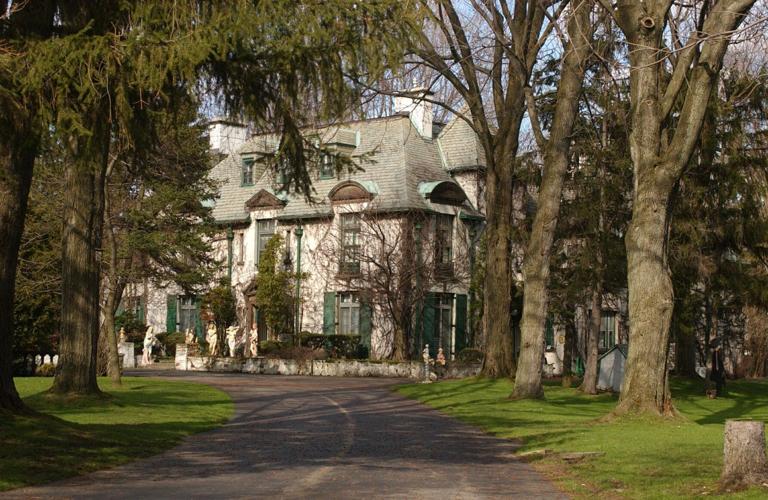
The informant said he could get whatever kind of drug he wanted in 2013 from Ronald Serio, a drug trafficker who lived in a 9,000-square-foot French Provincial mansion on 2.4 acres in Amherst, with a carriage house and tennis court. The informant said he had been inside Serio’s mansion about five times and bought marijuana from him.
“I could have gotten to anybody in the Serio organization,” the informant testified in retired DEA agent Joseph Bongiovanni’s bribery and corruption trial. “They didn’t ask me to call him or anything.”
At the time, the Amherst Police Department suspected Serio was a drug dealer, and the U.S. Attorney’s Office took note of his banking activity that included 298 cash transactions of $10,000 or more, further raising suspicion.
So when Amherst police arrested the then-40-year-old Buffalo man on burglary charges in 2013, the police department referred him to the DEA because of what he said he knew about Serio.
But his cooperation ended just two months after signing a one-year confidential source agreement with the DEA. Bongiovanni, his then-DEA handler, released him from the deal and no longer contacted him, said the informant.
Prosecutors allege Bongiovanni’s handling of the informant helped shield Serio and others in his drug-trafficking organization from investigation. Prosecutors view the informant’s testimony as bolstering their assertion that Bongiovanni feigned an investigation against Serio.
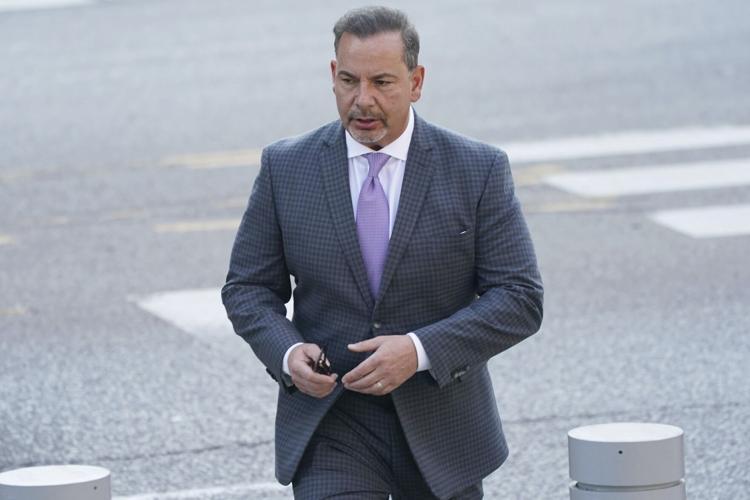
The informant’s testimony is the latest twist in the government’s case against Bongiovanni, a retired DEA agent facing charges he accepted at least $250,000 in bribes from drug dealers whom he thought were associated with Italian organized crime and shielded them from arrest, as well as provided them with information about investigations and cooperating sources. Many of the charges are related to how he protected the Serio drug-trafficking organization and other counts involve Peter Gerace Jr., the owner of Pharaoh’s Gentlemen’s Club in Cheektowaga, who himself is expected to face trial later this year on charges that include bribery, drug trafficking, sex trafficking and witness tampering.
Ex-dancer testifies about drug use at Pharaoh's: 'Girls using ... customers using, employees using'
Bongiovanni denies the charges.
The Buffalo News is not identifying the informant whom prosecutors say still faces retribution from criminals for cooperating with the government in a separate case not related to Serio.
Without notifying the DEA, the FBI and Erie County Sheriff’s Office arrested Serio in October 2019, and he later pleaded guilty to felony drug and weapons charges.
“Amherst had a good idea what he was up to, and they had developed an informant who was going to provide information and could help infiltrate that organization,” Assistant U.S. Attorney Joseph Tripi told jurors. “And who did they call? The DEA agent. They fed him an informant.
“What he did was sign up the informant, shoo the Amherst Police Department away, and immediately use that informant for other investigations, and then closed the informant without ever touching the Serio drug-trafficking organization – intentionally protecting them and shelving the informant so that they could persist and continue,” Tripi said.
Tripi called it just one example of how Bongiovanni used his knowledge of the DEA’s confidential source and informant system to protect Serio, Michael Masecchia and others in the drug organization.
The informant’s testimony dealt with Serio, from whom he once bought five pounds of marijuana for $3,200 a pound intending to resell it.
Bongiovanni’s defense team frames the informant’s dealings with the DEA differently.
Working for the DEA, the informant tried unsuccessfully to buy drugs from a dealer connected to Serio, said defense lawyer Parker MacKay.
Deep roots of friendship are intertwined in alleged scheme to bribe DEA agent
But the informant’s cooperation with the agency also led to the conviction of Peter N. Militello, a drug dealer from the Town of Tonawanda, who became the first defendant in Western New York to go to prison for selling fentanyl-laced heroin that killed someone.
“Sometimes prosecutions just don’t materialize out of investigations,” MacKay said. “Not every tip becomes an investigation, not every investigation becomes a prosecution, and not every prosecution becomes a conviction for any number of reasons beyond deceit.”
‘They didn’t need me’
After his burglary arrest in April 2013, the Buffalo man offered up two names to Amherst police, including Serio’s.
“It was good information,” recalled retired Amherst police Detective Robert Cottrell, who dropped the man off at Forest and Richmond avenues, near the Buffalo Psychiatric Center, to be picked up by Bongiovanni.
Cottrell said he assumed the man would become an informant for the DEA, even though “we would have liked to work with him.”
Indeed, he became one. He was signed up to be an informant for one year starting on April 29, 2013, and Bongiovanni first intended to use him to catch the other suspected Amherst drug dealer – not Serio.
“If I helped them get him, I’d get some help on my case,” the informant explained to jurors.
But the other drug dealer kept putting off the informant, probably aware of the informant’s pending charges, the informant testified.
Then came a drug death of a friend that hit the informant hard, and it led to a new investigation. Robert Runfola was found dead in his Buffalo home, bags of heroin near his body.
The informant said he was with Runfola when Runfola bought the heroin.
After the death, the informant said he let Bongiovanni “know my friend died and how he died.”
So the informant, working with the DEA, made one buy of six to eight bags of heroin from Militello. It led to Militello’s conviction and a sentence of 30 years in prison for selling the fentanyl-laced heroin.
It also ended the informant’s time as a DEA source, he said.
The DEA stopped contacting him, he said.
“It was over,” he said. “Now that they got Peter Militello, they didn’t need me or anyone else. I wasn’t asked to do anything else. It was their decision.”
‘Pretending to investigate’
Serio was on the radar of federal authorities even before the informant was arrested.
Scott Deming, a financial analyst for the U.S. Attorney’s Office, testified that Bongiovanni brought Serio to his attention in March 2013. Deming’s role was to follow Serio’s money.
In one email about Serio, Bongiovanni said “things are progressing well on our end of the investigation,” Deming said.
Prosecutor: DEA agent Bongiovanni became 'a double agent' for drug traffickers in WNY
In an email in May, Bongiovanni said “we are making strides on the street so we will report soon.”
“We are very close on the drug end,” Bongiovanni wrote in another email, according to Deming, whose financial work would be more useful with a “specified unlawful activity” charged in the case.
But there was no further advancement into the Serio organization, Tripi said.
Tripi acknowledges Bongiovanni pivoted the informant to the legitimate investigation of Militello.
Bongiovanni then ended the informant’s cooperation deal on July 30, 2013.
“After Militello was arrested, Bongiovanni alerts (the informant), ‘you’re done here,’ informs him that he’s going to close him,” Tripi said.
In June of 2013, a month before the informant was told his help was no longer needed, Bongiovanni sent another agent on a surveillance mission to look for warehouses where marijuana was being grown.
The agent found a warehouse connected to Serio within just a couple of weeks of looking, Tripi said.
The agent saw two men one day at the warehouse on Sycamore Street, not far from the DEA office. One of them had a license plate associated with Tom Serio, the brother of Ron.
The agent calls Bongiovanni and says, “Hey, this is what I’m seeing at the warehouse. Why don’t you send more people out on surveillance, we’ll do more surveillance on them,” Tripi said.
“Bongiovanni said, ‘no, that’s good enough, come back.’ He pulled (the other agent) off surveillance,” Tripi said.
Two days after he shut down the informant, Bongiovanni wrote in a report that the DEA was waiting on GPS tracker warrants to find vehicles associated with Serio.
“No warrants were ever submitted for a prosecutor to review in the (case) he was pretending to investigate,” Tripi said.
Bongiovanni prepared a one-page source deactivation form for his boss to sign, Tripi said. Bongiovanni referenced the Militello case but wrote that the informant could not help in any other investigations.
“His boss didn’t go and check and look to see what other things (the informant) had talked about in his initial meeting (with the agency), so he signs off on the closure,” Tripi said.
Not its ‘bread and butter’
Others in the DEA office were focused on Serio long before Bongiovanni, said MacKay, who, with Robert Singer, represents the ex-DEA agent.
In his opening statement to jurors, MacKay said the Serio investigation was essentially cut loose from the DEA and pushed over to the IRS to see if it could make a money laundering case.
Ex-DEA agent accused of corruption and a 'little dark secret' gets his day in court
“It’s no longer in the control of the DEA,” MacKay said. “And why is that? Well, we expect you’re going to hear that marijuana was not a priority for the DEA. Not that they never did marijuana cases, it’s that their bread and butter is cocaine, heroin and crack cocaine, and that the threshold to bring marijuana cases is so high.”
When a drug case against Serio never materialized, there was ample evidence of money laundering based on his property purchases, casino visits and the way his money moved, MacKay said.
“Mr. Bongiovanni moved on, because the DEA doesn’t do money laundering investigations,” MacKay said.
As for the confidential source delivered to the DEA by Amherst police, plans were drafted for him to make a buy from a suspected drug dealer connected to Serio.
“Those plans were circulated, they were detailed, they were signed off at various levels. But the informant was never able to buy from the drug dealer.”
In May of 2013, “Joe becomes frustrated with this source because things don’t pan out,” MacKay said. “He begins to get ready to close out this source.”
But then the informant tells Bongiovanni about his friend’s fatal fentanyl overdose.
That “completely shifts” Bongiovanni’s attention to the Militello investigation and it became a successful prosecution with the informant’s help, MacKay said.

