


The man accused in the October 2022 killing of a University of Arizona professor has a history severe mental illness that got to the point that he was unable to tell right from wrong, his attorney told jurors Tuesday.
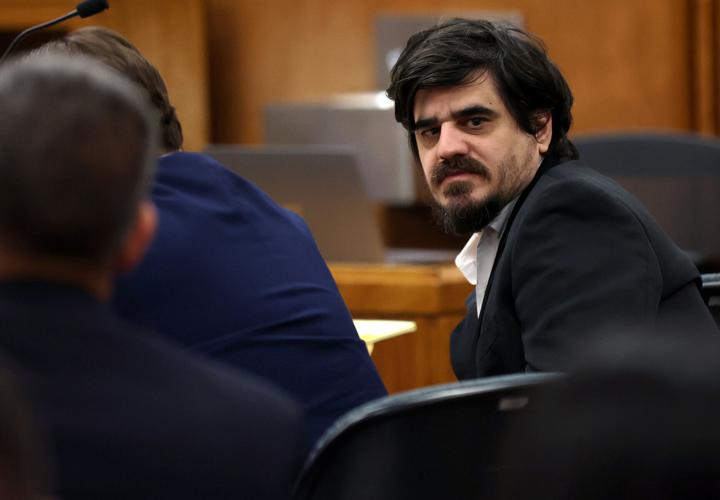
Murad Dervish, 48, an expelled UA graduate student, is accused of shooting Thomas Meixner to death in an on-campus attack.
Leo Masursky, the defense attorney, on Tuesday detailed a “range of mental health” issues suffered by Dervish, who is on trial for first degree murder in Pima County Superior Court.
“Mr. Dervish suffers from a range of mental health impairments from major depression to autism, possibly mild brain damage and other disorders,” said Masursky, who is representing Dervish along with Derek Miller. “He also has an impulsive character (which) may be related to the autism, (and) the autism may be partly related to the brain damage he suffered at birth.”
Patricia Grace, Dervish’s biological mother, testified Tuesday that he “was never comfortable in his being.” Grace said she couldn’t “predict what was coming next” and that there were many moments when Dervish was growing up where she found herself saying, “what were you thinking?”
Dervish, who’s contact with his mother has been spotty over the years, left her a voicemail for her on Oct. 5, 2022, right after Meixner was killed, Grace said.
“Mom? I gotta talk to you. I shot that guy. I hope he’s dead. I guess I have to kill myself now. All right,” said Grace, narrating the voicemail as she recalled it.
Dervish, who reportedly physically assaulted his mother in 2011, according to previous reporting by the Arizona Daily Star, was involuntarily committed to a mental institution twice in the past, said Grace. He was first committed in 1995 in Pennsylvania and the next in 2011 in South Carolina, the same year he also served prison time in California.
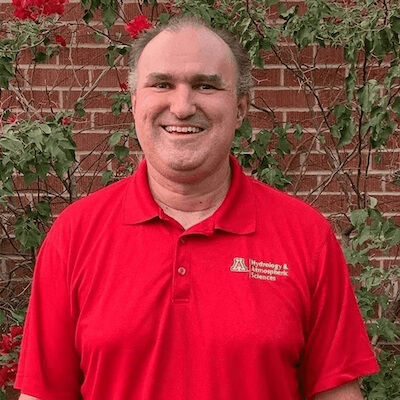
Professor Eyad Atallah, an assistant professor in the UA’s hydrology and atmospheric sciences department, testified that he had been threatened Dervish, including some that were racially charged.
“I got messages that had the tone of ‘you’re either with me or against me’ (and) that ‘God help me if he found out I wasn’t,’” said Atallah, who went on to recommend university and counseling resources to Dervish.
Dr. Richard Samuels, a clinical and forensic psychologist who interviewed Dervish 11 days after the shooting took place, was the third witness brought on by the defense on Tuesday.
Samuels said Dervish’s psychological report results pointed towards alcohol use disorder, avoidant personality disorder and schizoid personality disorder. He said there were mostly indications of alcohol, but also some of drugs.
According to his interview days after the incident, Samuels said Dervish had very little recollection of the shooting itself. He said Dervish was not fully aware of his thoughts, feelings and actions for the “few moments of his offense,” but that he realizes he was wrong in retrospect.
According to Samuels, Dervish was diagnosed with schizophrenia earlier in life as well as persistent depressive disorder. He said it was Dervish’s delusional quality which drove him to his acts of violence, according to the psychological reports submitted by him.

