


The window is closing fast to secure the Colorado River's future "and move beyond crisis-driven policymaking," says a coalition of seven Western environmental groups.
Two other environmental groups say it's clear that state and federal negotiators can't produce a meaningful management regime to deal with the Colorado's dwindling reservoir levels. “The federal government's deference to the states has got to stop," one group's leader says.
And the Gila River Indian Community says it will not stand for any plan that takes away its water rights without its consent. It has by far the state's largest share of rights to Central Arizona Project water from the Colorado River.
"We can and will simply say 'no' if we believe that our trust-protected water rights are not being protected and respected as they need to be," said Stephen Roe Lewis, tribal governor of the Gila River Indian Community.
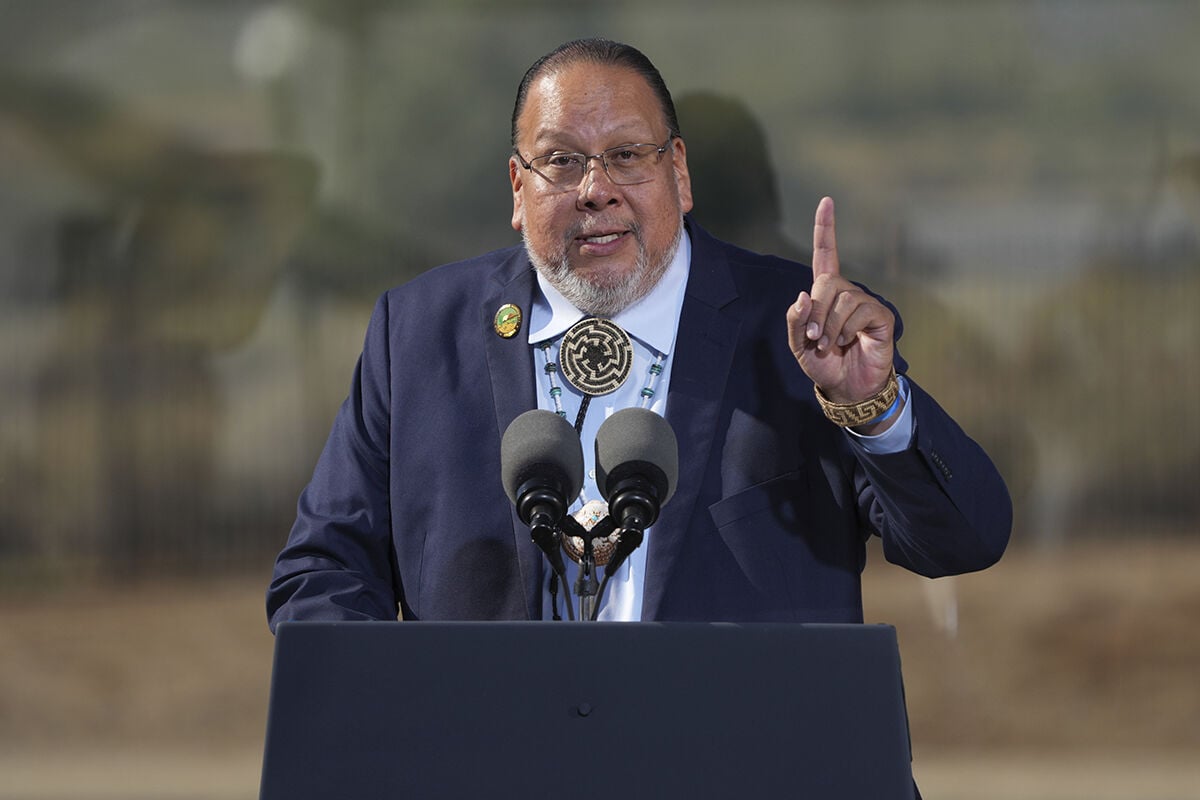
Stephen Roe Lewis, governor of the Gila River Indian Community, says the tribe will not stand for any plan that takes away its water rights without its consent. The Gila River Indian Community has by far the state's largest share of rights to Central Arizona Project water from the Colorado River.
These comments reflect the disappointment and frustration among river advocates over the failure of the seven river basin states and the federal government to reach a compromise by the Nov. 11 deadline on how to trim the chronic deficit between what Mother Nature provides the river and what people take out of it.
Exasperation is close to boiling over for the Gilas, the most active and vocal tribal participants in Colorado River issues, and for nine environmental groups who have been fighting for decades for a sustainable fix for the basin's chronic overuse of water.
The river's Lower and Upper Basin states have failed for nearly two years to reach a compromise over how to reduce their use of water from the long-oversubscribed river. The Colorado's average annual flows have dropped around 20% since the turn of the century due to drought and human-caused climate change.
Representatives of Arizona and Colorado, the two states whose water policies and use have drawn the most attention in the current conflict, and the federal government, all declined to respond to or comment on the statements from the tribal and environmental groups. They mainly issued general statements with little substance beyond acknowledging the lack of agreement, asserting that some progress has been made and vowing to continue negotiating.
But in a follow-up statement issued three days after their initial, Nov. 11 comments, Interior and Reclamation officials responded to environmentalists' concerns about the lack of progress by saying, "Interior and Reclamation remain focused on delivering a clear and durable operating framework for the Colorado River that protects the 40 million Americans, tribal nations, farmers, and businesses who rely on it. We will not allow gridlock or commentary from outside groups to dictate federal water policy."
The lack of agreement among the states stems in part from the Lower Basin states' resistance to being asked by the Upper Basin states to swallow the entire burden of cutting river water use. They say that's not equitable. Upper Basin states have said they can't afford to give up any of their supplies because their use of river water has already been pinched greatly by drought.
Arizona, California and Nevada are the Lower Basin states, while the Upper Basin states are Colorado, New Mexico, Utah and Wyoming.
The river currently has a deficit between supply and demand of more than 3.5 million acre-feet, or enough to serve Tucson Water customers for around 35 years.

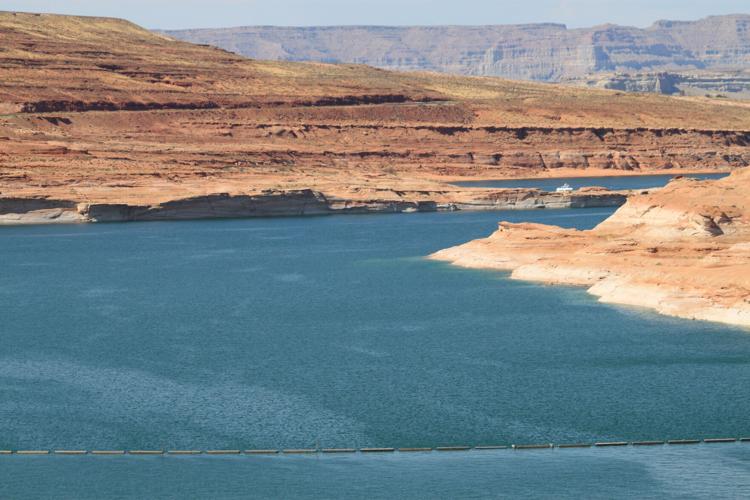
Lake Powell near Page. The window is closing fast to secure the Colorado River's future "and move beyond crisis-driven policymaking," says a coalition of seven Western environmental groups.
The tribes' and environmental groups' statements following the Nov. 11 announcement of no deal for the river said a major overhaul is needed in the negotiations' substance and process.
"The Colorado River cannot wait while we debate (or litigate) its future — solutions are needed now," headlined a news release from seven conservation groups, including the National Audubon Society, American Rivers and Western Resource Advocates.
"We understand the extraordinary complexity of this challenge and the difficult tradeoffs the states are working hard to navigate — but the river isn’t going to wait for process or for politics," they wrote. "Drought, intensified by increasingly extreme conditions, is reshaping the basin, and the window to secure the river’s future and move beyond crisis-driven policymaking is closing fast."
Across the river basin, communities, tribes, farmers, ranchers, water managers and conservation groups anxiously await more clarity about future river management "as they plan, conserve, and adjust to a hotter, drier reality," wrote the groups, which also include the Environmental Defense Fund, the Nature Conservancy, Trout Unlimited and the Theodore Roosevelt Conservation Partnership.
"Without a clear operating framework, the basin remains exposed to escalating risks — from declining storage in Lakes Powell and Mead to deepening uncertainty about how the system will respond to hydrologic extremes. Every month without alignment makes it harder to stabilize the River and protect the people, economies, and ecosystems that depend on it," the statement said.
From the Gilas, Lewis' statement at first blamed the seven-state impasse in part on "the fact that some of the basin states appear to have engaged in more gamesmanship than statesmanship."
But Lewis also cited what he called a "hyper-focus" among negotiators only on one aspect of the river's crisis — managing releases of water from Lake Powell to Lake Mead, which stores water. He said the negotiators need to pay attention to a much broader range of river issues.
He called for a comprehensive plan that would:
- Ensure Mexico reduces its water use by a fair share.
- Develop new water supplies to reduce the region's "over-reliance on the Colorado River."
- Develop more efficient ways of using the limited river supply that exists.
- Use what he called "creative concepts" to create shared "pools" of water supplies among the various users to allow some supplies that aren't currently being tapped, including tribal supplies, to be brought to bear on the broader water scarcity existing across the basin.
- Reduce "an unhealthy reliance" on underground storage of Colorado River water in aquifers, and existing storage of river supplies owned by various users, including Arizona, in Lake Mead.
The Gila River Indian Community has developed numerous proposals to reduce water use, including its own, while ensuring flexible water management tools are in place to help mitigate the impacts of reduced reliance on the Colorado River, Lewis said.
But so far, tribal proposals haven't been integrated into a more comprehensive approach "we think is essential for the basin states to come to an agreement," he said.
"Accordingly, any progress made in the negotiations to date is merely rationing a reduced supply, not actively managing and augmenting it as a shared resource with strategies and tools that can benefit the entire basin," Lewis said.
"To date, we, and the other tribes in the Basin have been told that we should be patient as our issues and ideas will be dealt with 'in the next phase' of negotiations. To some, that may seem reasonable. To tribes, and particularly the Community, who has too often in the past heard similar assurances only to be granted water supplies that are now the most at risk, our water delivery facilities built last, if at all, and our ancestral rights trampled, this is unacceptable," he wrote.
In a third statement, the environmental groups Living Rivers and the Great Basin Water Network hammered at the basin states and the feds for what they called a lack of transparency about the negotiations.
The groups said it is troubling that the states have gone more than two years in a tangled process toward developing new operating rules for the river "without any tangible information and transparency."
"We fear that the public process is eroding before our eyes and undermining the public interest," the groups said.
In June 2023, the U.S. Bureau of Reclamation filed a notice saying it intends to prepare a Draft Environmental Impact Statement to examine the impacts of the river's next round of operating criteria, the groups noted.
"The implications were that, by this point, there would have been robust public participation and documents available for review — public meetings, public comment periods, scrutiny, analysis, and lots of perspectives," the groups said.
"Instead, after spending billions of taxpayer dollars in the past four years, we are still waiting for a Draft Environmental Impact Statement that details how we will manage the water supply for 40 million people," they wrote.
"This is troubling," they said, noting that as the most recent river management guidelines were developed in 2007, "there were multiple in-person meetings, 60-day public comment periods, and open discussions about the proposals from the basin states and other interests that were being vetted pursuant to the National Environmental Policy Act.
"With the uncertainty regarding legal interpretations, regulations and other elements of our bedrock environmental laws, the inaction symbolizes the overall dysfunction and uncertainty on the river and in government," Living Rivers and the Great Basin Water Network wrote.
The Interior Department says it plans to release a draft Environmental Impact Statement on the river in February 2026.
Colorado state's Colorado River Commissioner Becky Mitchell said the seven states "remain committed to collaboration grounded in the best available science and respect for all Colorado River water users. We are taking a meaningful step toward long-term sustainability and demonstrating a shared determination to find supply-driven solutions.”
In their statement, the Bureau of Reclamation and Interior said they continue "to work with all seven Basin states, consistent with the law and hydrologic realities, to finalize practical and science-based operations. The administration remains committed to ensuring long-term stability on the river through responsible management, transparency in federal spending, and solutions that support Western communities and the nation’s economic strength."
Longtime Arizona Daily Star reporter Tony Davis talks about the Colorado River system being "on the edge of collapse" and what it could mean for Arizona.

