



Chiricahua National Monument is up for a promotion once again, thanks to a bipartisan push from Arizona’s congressional delegation.
The roughly 12,000-acre monument in Southeastern Arizona would be upgraded to a national park under a bill from Sens. Mark Kelly and Ruben Gallego.
The two Democrats sponsored the “Chiricahua National Park Act” in the Senate late last month as companion legislation for an identical measure that was introduced by Tucson Republican Rep. Juan Ciscomani on Dec. 3 and advanced by the House Committee on Natural Resources on Wednesday.
“Chiricahua is one of Arizona’s true gems — a place with incredible natural beauty, rich cultural history and deep meaning for the communities surrounding it,” Ciscomani said. “Upgrading the monument to a national park will strengthen its national profile, support local jobs, and bring even more visitors to Cochise County and the surrounding region.”
Gallego said the goal of the measure is to “bring even more tourism to the area and create new economic opportunity in Cochise County.”
Kelly called Chiricahua a “one-of-a-kind landscape,” where national park status could provide “a win for southeastern Arizona’s recreation economy.”
“This is about keeping this place special and making sure nearby communities and small businesses benefit even more from it,” he said.

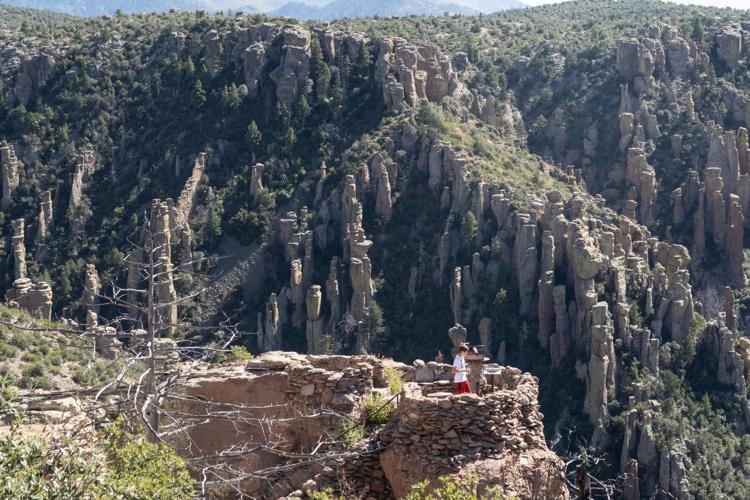
A visitor takes in the view from Massai Point at Chiricahua National Monument.
This marks the latest of several attempts by Kelly, Ciscomani and others to elevate the monument to a national park. At least five similar measures have been introduced, dating back to a bill from then-Rep. Martha McSally in 2016, but none advanced to a vote of the full House or Senate.
If approved, Chiricahua would join Grand Canyon, Petrified Forest and Saguaro as Arizona’s fourth national park. Beyond the name, though, little else would change.
The monument 120 miles southeast of Tucson is already managed by the National Park Service, along with about 20 other sites in Arizona. The proposed legislation preserves Chiricahua’s existing boundaries and land uses, but does not direct any additional funds or staffing to the park.

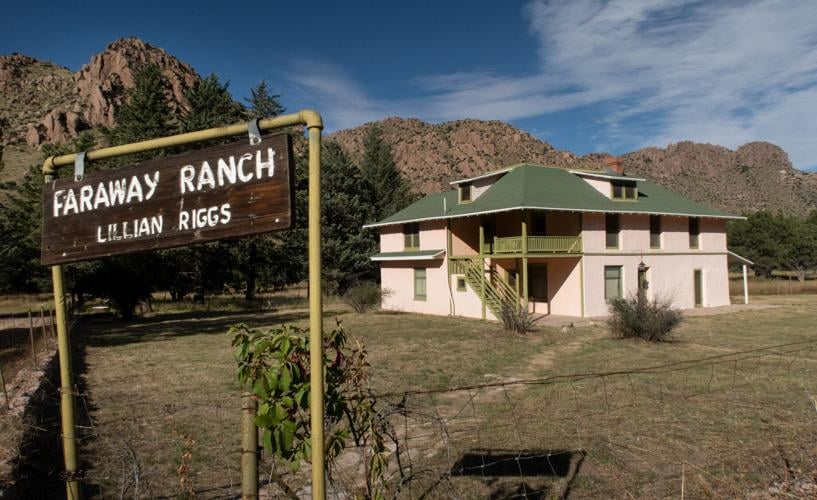
Before it was added to Chiricahua National Monument in 1978, the historic Faraway Ranch was originally homesteaded in the late 1880s by Swedish immigrants Emma and Neil Erickson.
President Calvin Coolidge used his authority under the Antiquities Act to establish Chiricahua National Monument on less than 4,300 acres on April 18, 1924. President Franklin Roosevelt expanded the monument by another 6,407 acres on June 10, 1938.
It has seen several smaller additions since then, including the acquisition of the historic 440-acre Faraway Ranch in 1978.
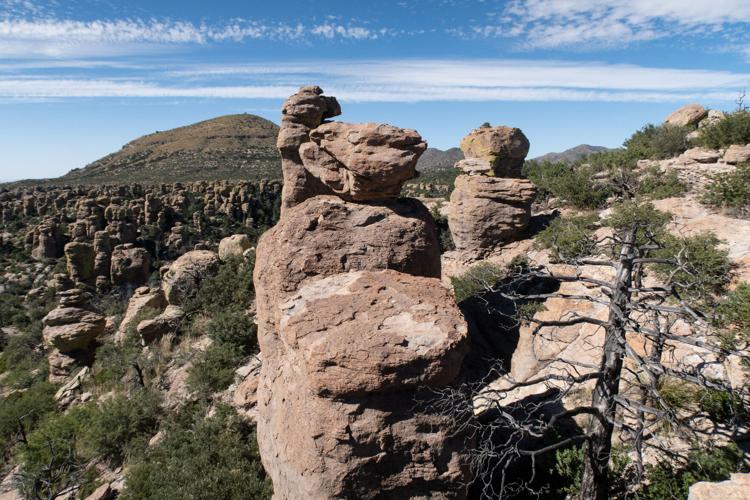
Today, the monument includes just over 12,000 acres of the Chiricahua Mountains, known for balanced boulders, rhyolite pinnacles, dark night skies and unique, sky-island wildlife.
The so-called “Wonderland of Rocks” also harbors traces left behind by prehistoric people, Apaches, Buffalo Soldiers, ranchers, homesteaders and laborers from the Civilian Conservation Corps.
Most of the monument land is already protected as wilderness and as a national historic district.

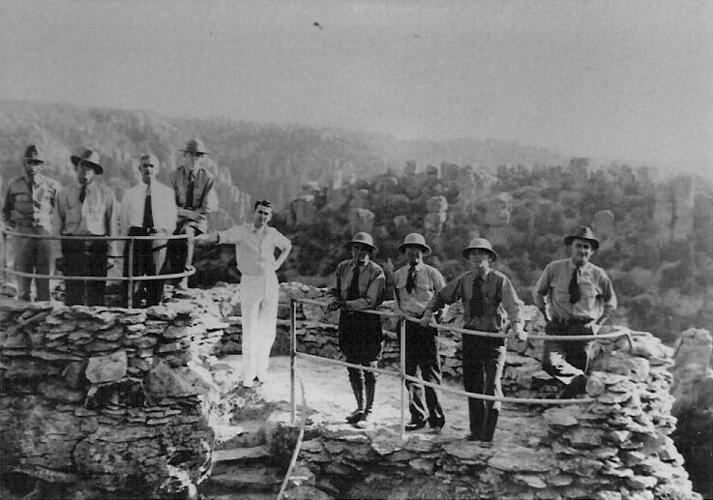
An undated National Park Service photo shows men posing on an overlook built by the Civilian Conservation Corps in 1934 for the dedication of Chiricahua National Monument.
The national park legislation would reinforce protections for cultural and religious sites, requiring consultation with tribes and continued access for traditional tribal uses.
Cicscomani, Gallego and Kelly introduced their bills with support from city and county governments, tribes and outdoor groups in southeastern Arizona that are banking on a tourism boost from Chiricahua’s increased status.
The monument currently averages about 57,000 visitors a year.
“This change is long overdue, and it’s an exciting opportunity to spotlight southeastern Arizona on a national stage,” Ciscomani said.
National parks are designated by Congress and tend to be larger, with a wider range of resources under their protection. National monuments are generally smaller in size and scope and can be created by presidential decree to preserve a single nationally significant resource.
The push to raise Chiricahua’s profile comes as Park Service sites in Arizona and across the country continue to feel the effects from Trump administration budget cuts, staff reductions, a record-long government shutdown and controversial policy directives targeting “negative” or “corrosive” interpretive signs and historical material.

Chiricahua National Monument and its famous balanced-rock formations would be upgraded to national park status under legislation introduced by members of Arizona's congressional delegation.
At Coronado National Memorial near Sierra Vista, about 90 miles southwest of Chiricahua, government contractors are in the process of blasting hillsides and carving a path across Park Service land to erect more barriers along the U.S.-Mexico border.
That’s why the independent, nonpartisan National Parks Conservation Association is expressing support for the Chiricahua proposal, but not without voicing concern about the state of the nation’s parks overall.
“Celebrating what makes Chiricahua so special to Arizonans also means confronting a harder truth. National parks across the country are being dismantled, and we’ve seen the devastating impacts here in Arizona’s 22 National Park Service sites,” said Sanober Mirza, Arizona program manager for the association. “In addition to this legislation, if we want our newest national park to truly thrive, we need Congress to restore funding and staffing needed to care for these landscapes and their visitors.”

