


In the end, Project Blue died in Tucson from lack of trust, says the councilwoman in whose district its two planned data-center complexes would have landed.
Opponents of Project Blue focused on water and wastewater that the project would use to cool the data centers. The opposition also hammered at its projected energy use, which they calculated would at least equal that used by all residents within Tucson Electric Power’s service area. They expressed alarm about the project’s potential impacts on air quality and the region’s already overheated climate.
Beneath all those concerns lay a strong sentiment of public distrust, says Ward 4 Councilwoman Nikki Lee.

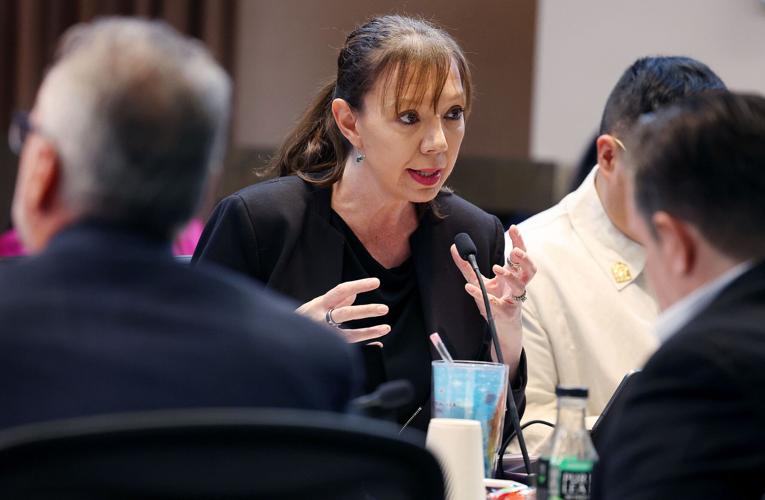
Ward 4 Council Member Nikki Lee speaking at the Aug. 6 meeting where the council voted unanimously against moving forward with Project Blue.
From the beginning, the project suffered from a lack of transparency, which eroded trust and made it difficult to recover, Lee wrote in a newsletter explaining to constituents why she joined the unanimous “no” vote against the project on Aug. 6.
“Distrust in the project itself, distrust in government, distrust in corporations, and distrust specifically in tech companies. People shared real fears about artificial intelligence, how rapidly things are evolving, and the impact these changes are having on our society. There is a growing sense that control is slipping away from everyday people, and this vote felt like one of those rare moments where the community could take some of that power back,” Lee wrote.
“I cannot turn my back on what the community is saying, and it is not their fault they feel this way,” wrote Lee, who said she voted “no” after determining “it was clear that large-scale data centers, even those presented as a more sustainable alternative, are not the type of development Ward 4 residents want in their backyard.”

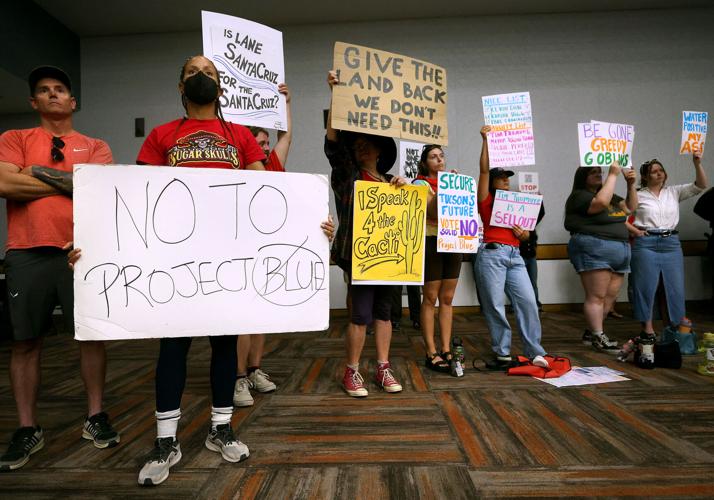
Citizens hold up signs during a public meeting about Project Blue at the Tucson Convention Center on Aug. 4.
A project of this scale, requiring this much trust, should have had deep engagement with the community from the start, she wrote.
“That did not happen,” she said, in a reference to the non-disclosure agreements between the Project Blue developers and city and county officials that kept secret basic information such as the centers’ projected water use until mid-July.
“By the time the community and my council colleagues had the details, land had already been sold, Pima County approved the rezoning to allow a data center development, things were already in motion, and trust had already been broken,” Lee wrote.
During more than two months of public debate over the project, Lee had never taken a stand although she had done considerable research and asked city staff a long list of questions about the project. Even the day before the council vote, Lee was undecided, she told the Star at the time.
Councilman Kevin Dahl said that day — Aug. 5 — that he planned to push a motion the next day to kill the project, but Lee said she wasn’t ready to support it. That same day, she wrote another newsletter to her constituents saying that just the previous day, representatives of Project Blue developer Beale Infrastructure told her in a meeting that they have “a short list” of alternative sites “in our backyard” they would consider trying to locate in if Tucson turned them down.
“The reality is this: Project Blue will be built in the Tucson metropolitan area, regardless of what the City of Tucson decides,” Lee wrote.
She said she was concerned that if Project Blue goes elsewhere in the Tucson area, it will be able to operate with fewer environmental restrictions and avoid having to use reclaimed water, as it had pledged to do in Tucson after its first two years of operations here.
But by the time the council vote came around, Lee had decided not to move forward with the project “because, as leaders, we often have to make decisions without having every piece of information we would like. That is the reality of leadership. The decision point arrives whether or not all the answers do.”
The idea of bringing a water-intensive, energy-intensive industry into this environment, even with the proposed “water positivity” and other sustainability measures that have not yet been proven to Tucsonans, created a strong sense of concern, she wrote.
“In a community that values sustainability and understands the limits of our natural resources, those concerns carry weight. When you combine these environmental realities with today’s climate of distrust in government and big tech, and add fears about artificial intelligence and its rapid impact on society, it becomes too much, too fast for the community to accept. This reinforces why trust, time, and transparency are essential in decisions of this scale.”

