



There will be "horrible consequences" if RTA Next, the 20-year, $2.67 billion regional transportation plan is rejected by Tucson voters on March 10, local leaders say.

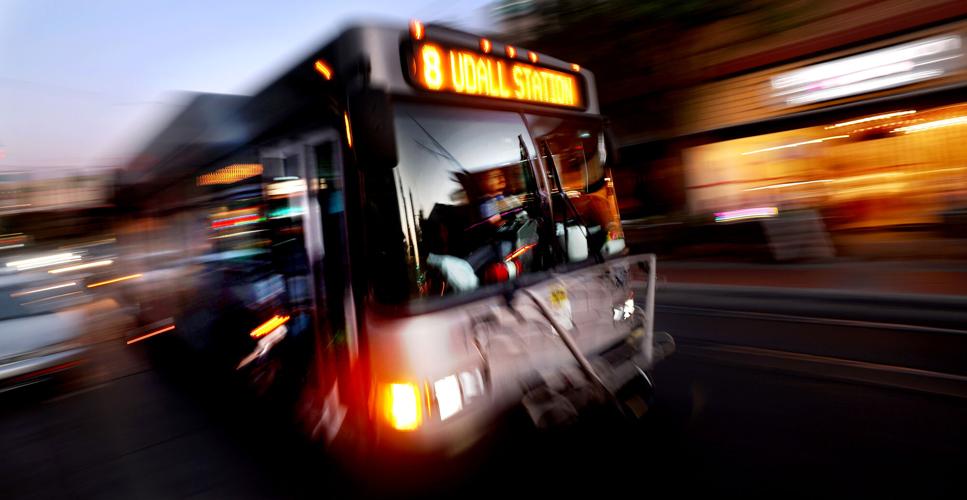
Layoffs and transit service cuts are among the most immediate effects of voters rejecting a massive transportation plant later this month, Tucson Mayor Regina Romero and others warn.
"What it means to all of us to not pass 418 and 419, in laying Sun Tran drivers off an affecting those families, in cutting weekend hours and evening hours from the streetcar and the bus system, the paratransit services," Tucson Mayor Regina Romero said. "What it means to the Tohono O'odham Nation, to not have the RTA fund their dial-a-ride and their only source of transportation into the city to go to the doctor, to go to work, to go to school. It's irresponsible."
RTA Next appears on the ballot as two propositions, 418 and 419. Mail-in voting has started for RTA Next's March 10 election.
If a voter hasn't voted their mailed ballot by March 10, they will need to fill it out and drop it off at one of the ballot drop-off sites run by the Pima County Recorder's Office. Of, if they no longer have their bail ballot, they can cast a replacement ballot at one of the Recorder's ballot replacement sites.
Locations can be found at www.pima.vote, or at www.recorder.pima.gov/EarlyVotingSites.
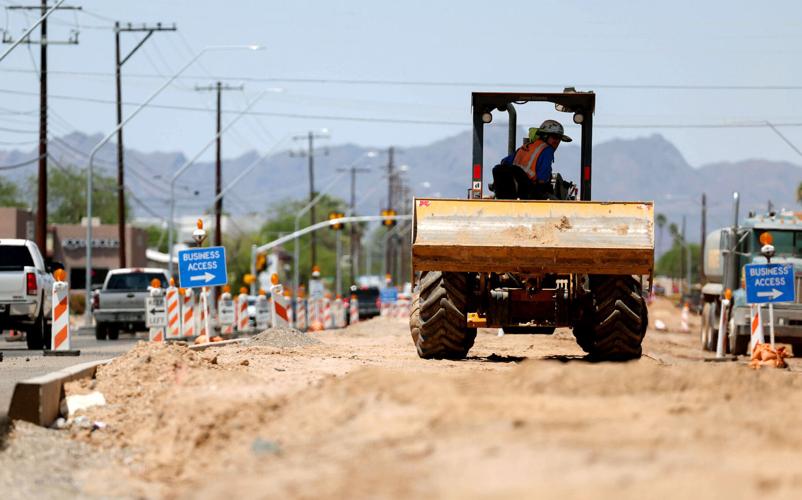
RTA Next, if approved by voters, would not change the sales tax rate currently at 8.7%, but it would fund about $1.42 billion in roadway projects and nearly $178 million in arterial rehabilitation for roadways in poor condition.
About $254 million would be allocated for safety and ADA projects, and $726 million would go toward supporting regional transit operations.
The list of projects and services is not the only regional benefit RTA Next could bring, the authority says. If approved, according to the RTA, the region would see an "economic benefit" of roughly $3.7 billion over the next 35 years.
Roughly 48,000 jobs would be created over the 20-year lifespan of the plan, and "enhanced connectivity" due to all the new-and-improved roadways, bike lanes, side walks and transit services "would "spur economic growth and attract private-sector investments in housing, retail, and other commercial enterprises," according to the authority.
Included in the RTA Next plan are seven unfinished projects from the original 2006 plan approved by voters. They are:
• Silverbell Road, from Camino del Cerro to Ina Road;
• First Avenue, from Orange Grove Road to Ina Road;
• First Avenue, from Grant Road to River Road;
• 22nd Street, from Interstate 10 to Kino Parkway;
• Houghton Road, from Broadway to Tanque Verde Road;
• Tangerine Road, from Marana Tech Park Drive to Dove Mountain Boulevard;
• and the final phase of the Grant Road widening project, from Fremont Avenue to Sparkman Boulevard.
In 2006, Pima County voters approved a half-cent sales tax to fund $2 billion worth of transportation projects. But revenue came in much lower than expected, leaving a multi-million-dollar shortfall to complete the projects promised to voters nearly 20 years ago.
If RTA Next passes, the first priority, in-terms of project delivery, are those seven unfinished projects leftover from the original RTA Plan.
But what happens if RTA next is rejected by voters next Tuesday?
"The plan is the key," RTA Executive Director Michael Ortega told the Star.
If the plan is rejected, the sales tax proposition fails automatically, regardless of if voters actually pass it.
If the plan is approved but the sales tax is not, the RTA Board can go back to the voters within five years to try to ask again for funding.
"The paths are slightly different, but the plan cannot be implemented unless both the plan and the tax, both propositions pass," he said.
But a loss at the ballot spells big trouble, particularly for the region's transit system, city officials warn.

RTA Next is a 20-year, $2.67 billion transit and transportation plan that would fund projects across Pima County.
"I understand that a lot of people are concerned about it . . . as the mayor of Tucson, and as someone that deeply understand that city of Tucson's budget," not passing Props. 418 and 419 would have "horrible consequences," Romero said. "Not just to the budget of Tucson, but to our transit system and our transportation infrastructure as a whole."
Rejecting RTA Next, Romero said, "is shooting your foot. It's cutting off your nose to spite your face."
The potential damage to the region's transit systems was spelled out early last month during a city council meeting.
Tucson transportation director Sam Credio told council members that there would likely have to be a reduction of approximately 141 daily weekday trips, 205 daily Saturday trips and 115 daily Sunday trips across Tucson's 42 Sun Tran routes.
City Manager Tim Thomure, on Friday, said there would be an "immediate loss," to the tune of up to $30 million as of July 1, the start of the fiscal year..
"The city would be losing approximately $10 million a year toward frequencies and hours of transit on our existing routes that are inside the city. And then there's another $5 to $10 million that we operate on behalf of others, like the county," he said. "The initial impacts could be that significant reduction ... There's not really a lot of one-time dollars available in the city. We're facing a deficit that we're working on right now. We won't have a deficit by the time we propose a budget, but that means we're working very hard to look at reductions, not expansions."
Thomure said it's the city's "expectation and understanding" that the RTA still has an obligation to complete the unfinished projects from the original RTA Plan, it would just have be out of the other federal dollars "that come to the region every year that are outside of the RTA."
"It would just take a lot longer to get them done, and it would gobble up all the regional dollars, so it's just that other significant work that normally does get done outside of the RTA (that) would be paused for a long time," Thomure said.
Regarding those unfinished projects, Ortega said there's one "extremely important" thing to remember about five of the seven carrying over from the original plan: RTA Next is not only asking for sales tax revenue to finish those projects, but they're also asking voters to approve scope changes to the designs of those projects.
Without the scope changes being approved, projects revert to the original designs approved in 2006. The design changes are being asked for because they would reduce costs, he said.
"Two examples that are going to be extremely difficult: if the voters do not approve (scope changes) on North First Avenue, we revert back to six lanes divided. If the voters don't approve the change, we revert back to six lanes divided on 22nd Street," Ortega told the Star. "So the conversation becomes, okay, these two are in the city of Tucson. (The city wanted the changes) and frankly, we support it because we know it's not necessary.
"We can't afford a six-lane, but we can't build a four-lane because the voters said no. So what do we do? And that's the conversation that's going to be a policy discussion on all of those projects" Ortega said. "What we'll do is, basically, take all the money, all the dollars that we have and say, 'okay, here's a list of the projects, and here's the scope which was the original scope that we have to have a conversation about."
On the city's side, there is a possibility that, if RTA Next doesn't pass, then the city looks at "some other ways to generate additional revenues," Thomure said.
"What those options are, I couldn't say," he said. "But in two-and-a-half weeks time, I might be having to come up with something."
For a brief moment it seemed that city officials were considering skipping out on RTA Next and instead fund its own long-term transportation plan, when in 2023, Ortega, when he was the city manager, released a memo stating in-part that he "may not be able to in good conscience recommend" that the city continue its participation in RTA Next.
Since then, however, tension between the city and the regional authority has cooled down. That has not stopped some, like council member Miranda Schubert, to call for a plan funded only by city residents, for city-only transportation projects.
In an op-ed published in the Arizona Daily Star earlier this year, Schubert called for a no-vote from voters on Props. 418 and 419, saying that Tucson instead should go after its own city-only, half-cent sales tax to fund transportation projects for Move Tucson, the city's transportation master plan.
Speaking with the Star in late January, Schubert said city voters are "looking at buying into a plan that's going to have us donating millions of dollars a year to the suburbs for their big roads," instead of funding much-need transportation projects and the transit system in Tucson.
When asked, in-general, about those who feel the city should go after its own transportation plan, Romero said that ship sailed about two years ago.
"Not that we can't continue moving in the direction of doing additional funds for Tucson," Romero told the Star, because "that ship is going to come back in, but at the decision-making point that we are at right now, today, it is too late."
Romero estimated it would take about two years to get community input about a plan, put it together, sell it to the community and establish a campaign for it.
It would also cost the city about $1 million to put such an election on the ballot. All of that to get something on the November ballot, in roughly eight months, is unrealistic, she said.
"It's very naive to think, 'oh, you know what, let's just let this fail and do something else on our own,'" she said. "In what world would people say yes to another transportation measure this November, even if it were to (be a city-only plan).
"Voters are not going to distinguish. They're going to say, 'we just told you no.'"

