


Three candidates are vying in the Aug. 5 primary election for the Democratic nod in Tucson’s Ward 6 City Council race.
Come November, that ward will have new representation for the third time in less than two years.
In March 2024, four-term councilman Steve Kozachik, a Democrat, resigned from the post. It was filled by Karin Uhlich, a former City Council member for Ward 3, who was appointed in May 2024 but is not seeking a full term.
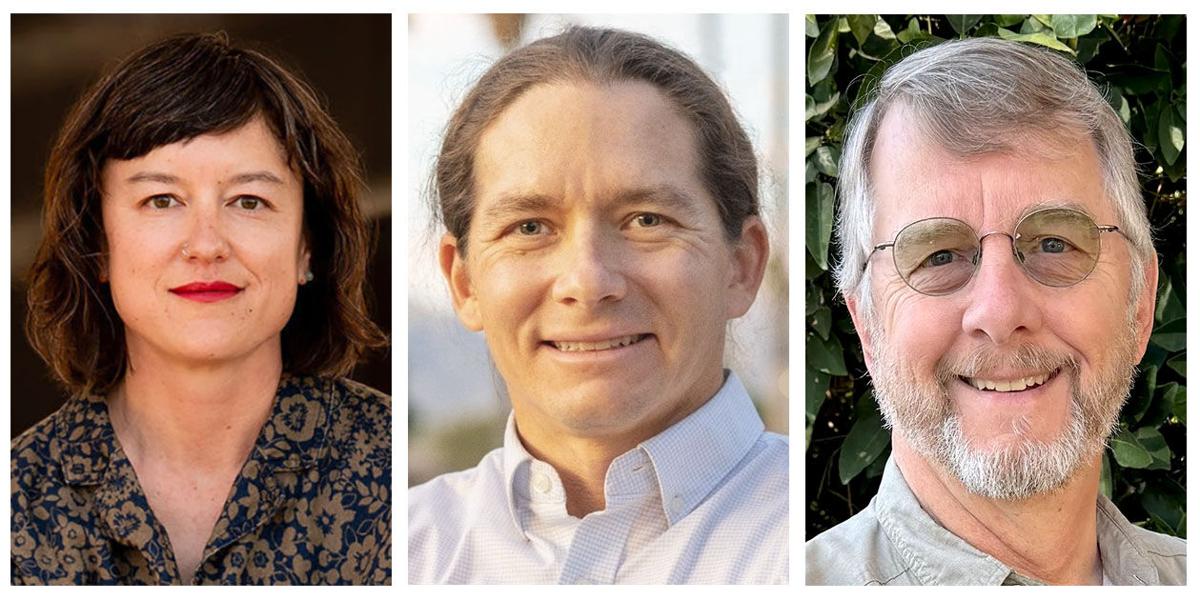
Three Democrats — Leighton Rockafellow Jr., Miranda Schubert and Jim Sinex — as well as Republican Jay Tolkoff, are running to represent the ward, which spans the midtown areas around the University of Arizona and on to Armory Park downtown.
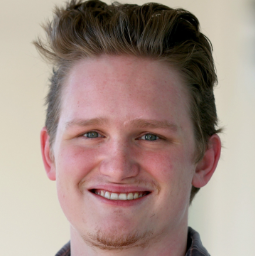
Leighton Rockafellow Jr.
Rockafellow was born and raised in Tucson and is the son of Leighton Rockafellow Sr., who formed the Rockafellow Law Firm in the early 1980s.
After graduating from Arizona State University, Rockafellow Jr. moved to Rochester, New York, but quickly came back to Tucson for a law degree. Since 2011, Rockafellow has been practicing as a personal injury attorney at the family law firm.
“My No. 1 motivating factor (to run for the seat) is this age-old problem that Tucson faces of not having enough high-quality careers or jobs to support the middle class that we so desperately need,” he said. “At least in my lifetime, we see a lot of really talented people from our top-tier university just leave, and I am afraid that my children will face that same dilemma, and I’d like to try to figure out how to improve that.”
That’s a long-term problem that will require long-term solutions, Rockafellow said.
If elected, he said his top immediate priority would be to make progress in addressing homelessness and reducing its numbers.
“There’s no magic to the homeless crisis, and to be quite honest, Tucson is doing a lot of the right things in my opinion, but they’re not going far enough,” he said.
An example he gave was the Tucson Pima Collaboration to End Homelessness, a partnership “that has the right idea” but is “not comprehensive enough.”
“There are groups that are deciding they don’t want to have any part of it. There are groups that are being shut out by the city or county, and there are very important organizations, such as La Frontera, who don’t feel they are given a voice in this issue at all, and so they continue to fight their fight, but on an island, and this is a huge problem,” Rockafellow said.
A realistic, attainable goal for the city that Rockafellow would like to establish is a 10% decrease year-over-year in the city’s point-in-time count of unhoused people, which occurs once a year in January. Rockafellow also wants to increase the number of counts done every year.
“We need to be exploring either ways to make it more accurate, or ways to extrapolate more accurate numbers from the inaccurate numbers that we are collecting,” he said. “I know that sounds so simplistic. ‘Oh, it’s a data problem,’ but I just can’t understand how we actually start improving the numbers, without actually knowing what those numbers are first.”
Another short-term action Rockafellow would push for the city to implement is sanctioned campgrounds on unused city-owned space, he said. In March, Councilmember Uhlich floated the idea of a pilot program to let aid groups use city parks to provide daytime aid and overnight campsites.
Rockafellow said he “liked the idea” but wouldn’t support it if it meant taking recreational spaces away from the public.
“The idea of a sanctioned or designated campground is gaining momentum, though ... I’m glad that it’s gaining steam as a possibility, because we can’t build housing fast enough,” he said. “You need to start with some safety and security. I think the fastest way to do it is to give them options, one of which would be designated campgrounds with lockers, with bathrooms, hopefully with showers, with some sort of security, and yes, with low or no barriers.”
Another issue the city needs to begin addressing immediately, Rockafellow said, is public safety and operations at the Tucson Police Department. The department not only needs to grow its force, it needs to pay officers better, too, he said.
“It wouldn’t be easy, we’d have to make cuts to some programs. We’ve had a lot of new programs come online under the current administration, programs that I do think are valuable to the city of Tucson, however, not as valuable as is having a viable police force that is able to train and retain good officers,” he said.
“We are seeing the effects of having an understaffed police force for the size of our city. We have to face the fact that whatever made the decision to keep our funding so low, it wasn’t the right decision, and we need to reverse it,” he said.
One of the ways the city could infuse some funding into the police budget is by reinstating transit fares, despite it never turning a profit for the city, Rockafellow said.
“I don’t feel like we’re in any position to be saying no to an extra, let’s say $10 million in revenue every year that goes into the general budget,” he said. “It’s still a source of revenue that we are saying no to at the expense of higher police salaries, early education, better infrastructure ... it’s still money that is not being flowed into the system.”
Miranda Schubert
Schubert is the operations manager for KXCI radio. She previously worked as an academic advisor at the University of Arizona, where she helped organize the union UCW local 7065, one of the times that got her interested in politics.
“I would say that combined with the George Floyd uprisings in the summer of 2020 got me really interested in city budgets. ... I really see (local politics) as where it starts, where we build a better society, where people aren’t struggling so much,” she said.
Schubert ran for the Ward 6 seat against Kozachik in 2021, losing but earning 28% of the vote, which she said gave her encouragement to run again. She serves on the city’s Board of Adjustment and the Complete Streets Coordinating Council. An avid cyclist, Schubert also helped found the Transit for All Coalition.
The election of Lane Santa Cruz in Ward 1 also inspired Schubert, she said.
“I saw a council member that was relatable, and I’m sure that was a little dash of ingredient in the mix for me as far as wanting to run,” she said. “If they can do it, and people are pumped about this way of leadership that’s really accessible, that’s really people-oriented,” then why can’t she do it, Schubert said.
She said she would employ a program in Ward 6 that Santa Cruz has championed in Ward 1: participatory budgeting.
“Traffic calming is a hot topic (in Ward 6). Drainage is also a big problem on a lot of these roads,” she said. “I’d love to get to the point where there’s more awareness of (participatory budgeting) and we can do project-based spending around the things that come out of the community.”
Schubert sees the city’s functions and initiatives in the areas of transportation, roadways, housing support and homeless intervention services and programs as working. But they need to be expanded, she said.
One way to improve: The city needs to wean itself off its reliance on cars as the primary mode of transportation, she said. She thinks it can go down that path by not only keeping the transit system free but also expanding routes, because public transportation “is an economic driver.”
“Fares only ever accounted for maybe 10% of the total operating system cost, at the most. Research has shown that for every dollar invested in public transit, $4 of economic benefit are generated. It’s a really good economic driver,” she said. “It’s not just a question of turning the tap back on and saying, ‘okay, now were collecting fares.’ ... After all is said and done, you’re maybe going to make a few million dollars at the most, and ridership would drop significantly.”
Safety on the bus has been a hot topic in recent months. Schubert, while thinking safety concerns may be blown a little out of proportion, said riders would feel a lot safer if the city started a volunteer ride-along ambassador program.
“I know that the city has been talking to Primavera about creating some kind of a program and Sun Tran was also looking for volunteers for this type of work,” she said. “By and large, just having the person there I think would mitigate a lot of these problems.”
Schubert would want to push the city to expand its Housing First program. But the expansion of that initiative in recent years was in large part due to big infusions of federal funding. Even though the city won’t be able to count on federal funding anymore, Tucson needs to make expanding Housing First “realistic” despite budget constraints, she said.
“It’s imperative that we solve this problem. We need to do more with less. We need to invite partners across the different sectors, public and private nonprofit,” she said. “I definitely think that we need to pursue designated camping sites for people.”
“I also think about parking requirements. Parking requirements are a huge barrier to projects’ affordability and to building affordable housing, because right now, the amount of parking that is required just adds significantly to the overall cost of the project,” she said.
Other priorities for Schubert include repealing the city’s ordinance banning camping in city-owned washes and removing barriers to staying in city-operated shelters.
“It’s inhumane. It’s a death sentence. ... We have to give them a place to be, and the city needs to repeal it until there’s a pathway for individuals,” she said.
James Sinex
Sinex is a longtime Tucsonan and former science teacher at Tucson High School, where he cut his teeth in union organizing.
Of the many campaign issues City Council candidates have in their platforms this year, Sinex’s top issue is unique: the city’s election system. It’s his top priority above all else, because to him it’s a civil rights issue, he said.
Sinex said the city’s current way of electing a councilmember is flawed, because although the primaries are only for residents in the wards up for election, the vote goes citywide for the general election. Meaning, a candidate in the general election could win the seat while at the same time losing the vote within the ward they’re trying to represent.
“It should actually consider the community instead of looking at ‘how will I get reelected?’ ... That’s not thinking of the whole community,” he said. The city’s system “disenfranchises the voters,” he said. “We should be able to elect our own representatives, and that is huge in Ward 6, because three out of the last seven elections has gone to a Republican that has not won the ward.”
Sinex would want to put this to a vote, preferably in a year, such as 2027, when Tucson’s mayor is up for election, to ensure high turnout.
“We can do two things, one is instant runoff (ranked-choice voting). Instant runoff voting enhances minority input while ensuring a majority outcome. The other thing we can do is eliminate the primary,” he said. “We don’t need the primary with ranked-choice voting. ... Most people think that elections are about candidates and political parties. That runs slap counter to the American experiment of self-governance. Elections are about the voters, period.
“So, in a democracy, in honoring our American experiment, the disenfranchisement of voters becomes a civil rights issue,” he said. “It’s damn important. It should be important to you, too. And if you don’t believe in the civil rights of your opponent, then you don’t believe in civil rights.”
Another “historic change” Sinex said he would pursue to if elected would be to get the city to “solarize” its own electric bill and not pay for electricity to Tucson Electric Power. This would be only for the city itself as a customer, and would start with a pilot project in Ward 6.
He would begin by completely solarizing the Ward 6 office building. Getting that office to a point where it runs entirely off solar power 24-7 would mean extra money that the city would not have to send to TEP, he said. Sinex said he would take half of that savings and put it towards a Ward 6 project, such as increasing shade areas, and take the other half and expand the solarizing project to other city-owned, city-operated facilities.
His goal would be for this system to pay for expansion itself, eventually cascading so that all city-owned properties are covered by solar panels and not being charged for electricity. On top of that, half of the money saved would be re-invested into all these properties, Sinex said.
“My local fire station, half the money coming off of that, that’s part of their budget. They need a new hose? Go to that budget,” he said. “This is a liberal idea, free-thinking, and it’s fiscally conservative at the same time. That would be historic, if we could solarize our energy bill here.”

