


See what was torn down in downtown Tucson in the 1960s
The Tucson City Council approved a massive downtown redevelopment project in 1965 that leveled businesses and neighborhoods to make way for the city-county government complex, the TCC, Music Hall and La Placita Village.
We have a Tucson history email newsletter! Sign up at tucson.com/timemachine
West Congress
Updated
The old YMCA building at Court and Congress on October 7, 1966. Next to the YMCA, left, is the La Selva Club. Bill Hopkins / Tucson Citizen.
West Congress
Updated
Open sky at the former YMCA and La Selva Club on West Congress on December 29, 1966, after demolition. Photo by Bill Hopkins / Tucson Citizen.
Greyhound Bus terminal
Updated
The Greyhound Bus depot, located on South Church Avenue and West Broadway Boulevard (left), was one of the businesses that had to move for the urban renewal project when this photograph was taken on July 12, 1968. Art Grasberger / Tucson Citizen
Alfred Messner Antiques
Updated
The businesses of Alfred Messner Antiques (34 S Convent) and Rosequist Galleries (18 S Convent) were once on South Convent Avenue near Broadway Boulevard. The building, which was in the downtown area, was torn down to make way for the urban renewal project. Art Grasberger / Tucson Citizen
Tucson Women's Club
Updated
The former Tucson Women's Club, at 317 W Alameda St., is torn down on November 16, 1967 as part of the urban renewal project. Once considered a landmark the city purchased the building before its demolition. Bill Hopkins / Tucson Citizen
Mariano Samaniego house
Updated
This is the old Mariano Samaniego house at 112 W Jackson on May 9, 1969 which was spared during the creation of the Tucson Convention Center and adjacent La Placita complex. Bill Hopkins / Tucson Citizen
South Meyer Avenue
Updated
South Meyer Avenue looking south from West Congress Street on June 26, 1966. All the buildings were demolished to make way for the Urban Renewal project of the 1960s and 70s. Mark Godfrey / Tucson Citizen
Trolley tracks
Updated
The tangled remnants of the turn of the century electric trolley tracks on West Congress were ripped up in early July 1969 to make way for a new thoroughfare in the urban renewal area. In the background is the Legal Tender bar as well as the Valley National Bank, now the Chase building. Tucson Citizen
South Main Ave.
Updated
The newly aligned South Main Ave swerved its way along a barren stretch of landscape on May 9, 1969. Note the Redondo Towers in the background. John Hemmer / Tucson Citizen
Reuben Gold's
Updated
Reuben Gold's and other buildings along West Congress in downtown Tucson in early 1960s before the block was demolished. Jack Sheaffer / Arizona Daily Star
Reuben Gold's Furniture Store
Updated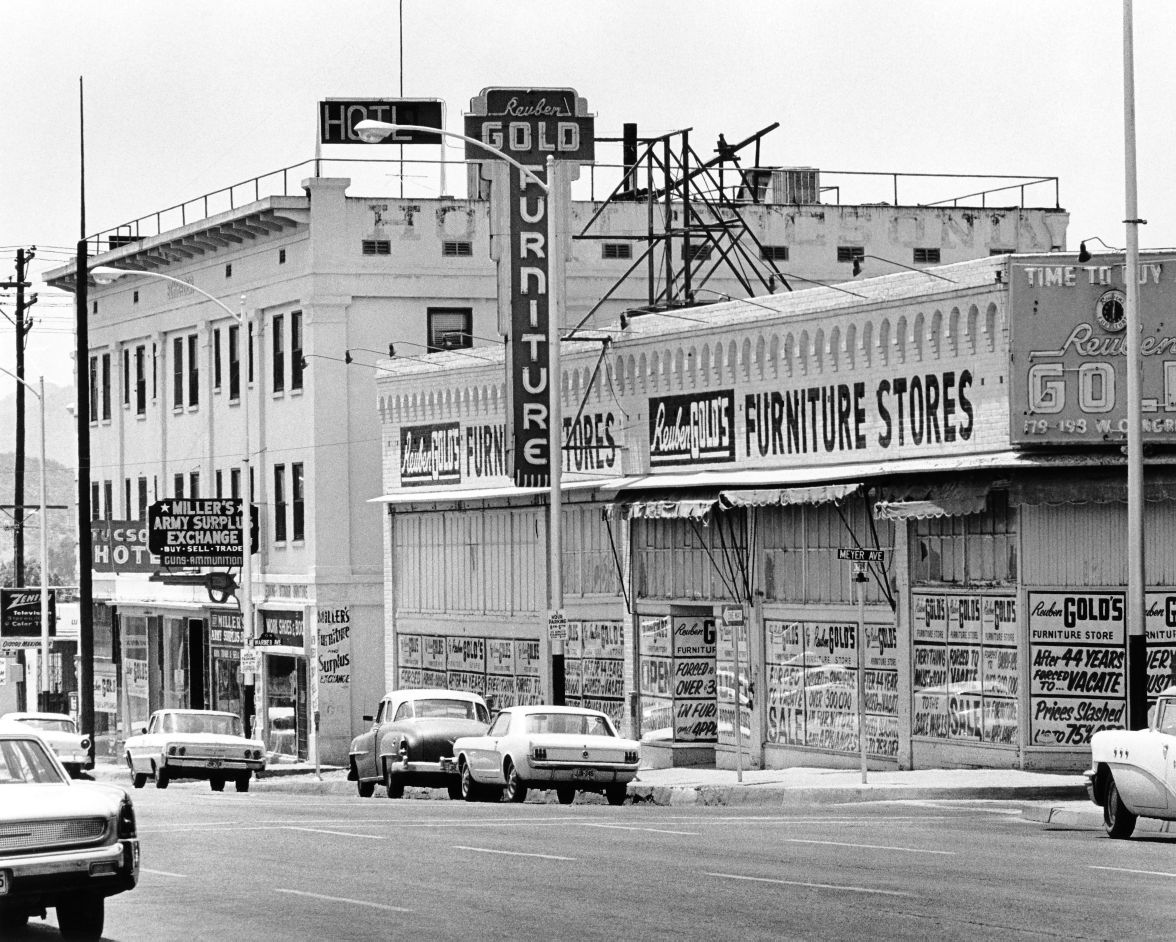
Reuben Gold's Furniture Store in June, 1966, foreground, and the Tucsonia Hotel is in the background. Tucson Citizen
Tucson skyline
Updated
A couple gentlemen stand on West 14th Street (later became Cushing Street) and possibly South Church Avenue as construction continues on the Tucson Convention Center on December 4, 1970. Art Grasberger / Tucson Citizen
Tucson skyline
Updated
A new Tucson skyline was emerging on May 9, 1969 as the home of Sabino Otero, middle left, was eventually destroyed and the stage set for the new convention center and the city's march toward urban renewal. John Hemmer / Tucson Citizen
Plaza Theatre
Updated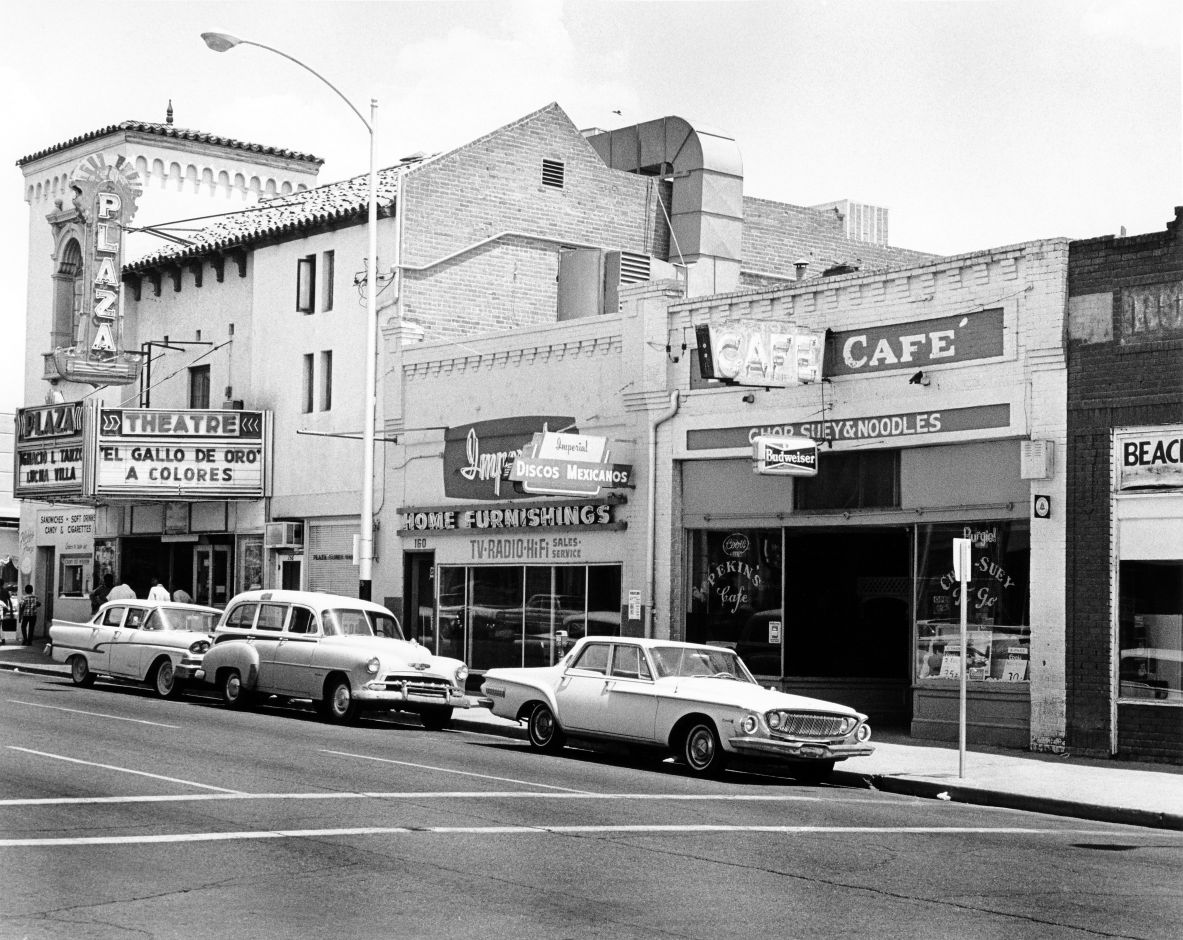
The Plaza Theatre and downtown Tucson buildings taken June 1966. Tucson Citizen file photo.
Plaza Theatre
Updated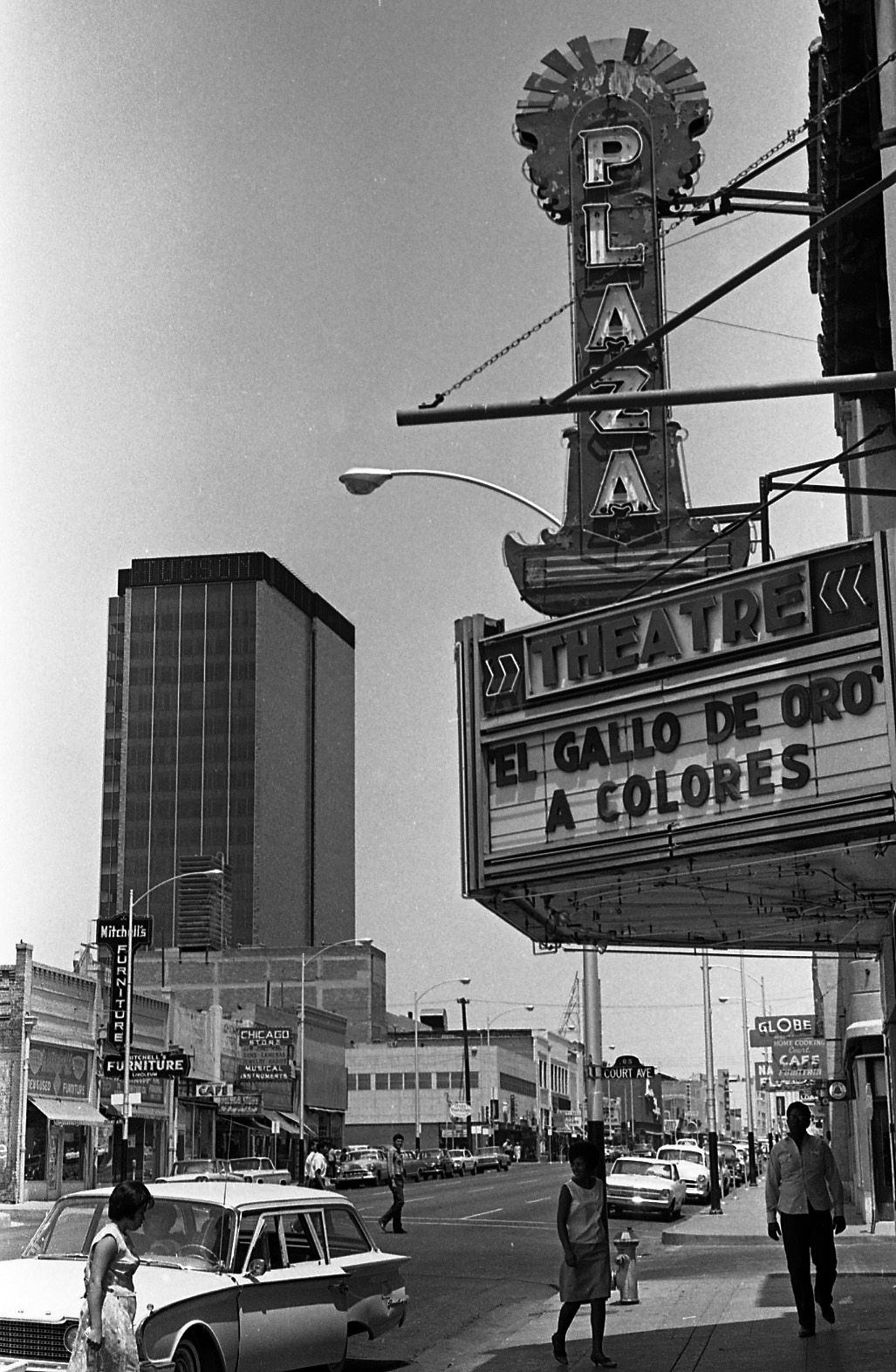
The marquee at Plaza Theatre at 132 W Congress displays the latest movie ready to play at the popular theater which was near Court Avenue on June 26, 1966. All the buildings were demolished to make way for the Urban Renewal project of the 1960s and 70s. Mark Godfrey / Tucson Citizen
Plaza Theatre
Updated
Demolition of the Plaza Theatre, 132 W. Congress St., began. The movie house, which featured Spanish-language films in later years was torn down to make way for the widening of Congress Street, part of Tucson's urban renewal project. May 14, 1969. Art Grasberger / Tucson Citizen.
Plaza Theatre
Updated
Demolition of the Plaza Theatre at 132 W Congress St continues as progress is being made to widen the street as part of the urban renewal project in the downtown area on May 14, 1969. The theater was well-known for featuring Spanish-language films. Mesilla Street is in the foreground. The area is now part of the Veinte de Agosto Park. Art Grasberger / Tucson Citizen
The Legal Tender
Updated
The El Toro cocktail lounge was situated next door to the Legal Tender bar on West Congress Street and down the street from the Plaza Theater, right, in the downtown area that was eventually torn down making way for the urban renewal project on February 1966. Art Grasberger / Tucson Citizen
Old City Hall
Updated
The old City Hall, left, and the Jacobs house, a two story adobe building, far right is visible from Plaza de las Armas park on January 4 1967. Art Grasberger / Tucson Citizen
Lyric Theater
Updated
A boy rides a bicycle past the Lyric movie theater 171 W Congress as well as other businesses near Meyer Avenue on June 26, 1966. All the buildings were demolished to make way for the county government buildings as part of the Urban Renewal project of the 1960s and 70s. Mark Godfrey / Tucson Citizen
Martin's
Updated
This building may have been on the southeast corner of Congress Street and Church Avenue the downtown area making way for the urban renewal project on February 1966. Art Grasberger / Tucson Citizen
Pekin Cafe
Updated
A couple of women walk past the Pekin Cafe at 162 W Congress near Court Avenue on June 26, 1966. All the buildings were demolished as part of the Urban Renewal project of the 1960s and 70s. Mark Godfrey / Tucson Citizen
Original Chicago Store
Updated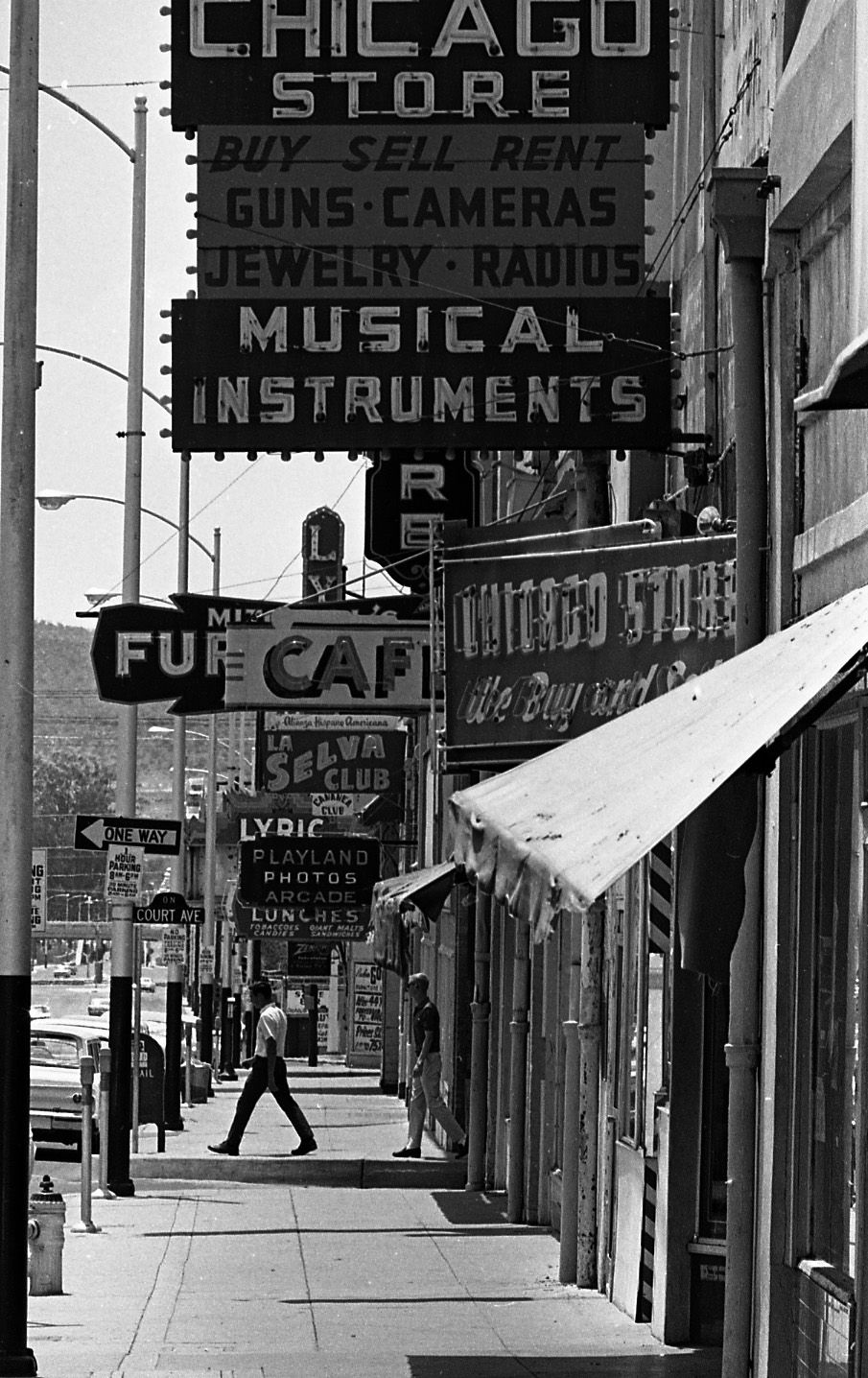
A couple men leave one of the many businesses along West Congress Street including the Chicago Store, Mitchell's Furniture Store, La Selva Club on June 26, 1966. All the buildings were demolished to make way for the county government buildings as part of the Urban Renewal project of the 1960s and 70s. Mark Godfrey / Tucson Citizen
Midtown Market
Updated
The Midtown Market and Liquor Store was at 258 S Stone Ave and West McCormick Street. It is now the parking lot of the Tucson Police Department's main building. The photo was taken on July 12, 1968. Art Grasberger / Tucson Citizen.
Sabino Otero home
Updated
The plan was to salvage the home Fremont-Sosa-Carrillo home, middle, and the home of Sabino Otero, foreground right, but in the end, the Otero building was eventually destroyed as part of march toward urban renewal on April 16, 1969. Bill Hopkins / Tucson Citizen
Belmont Hotel
Updated
Undated photo of the Belmont Hotel and the original location of El Charro Restaurant in Tucson, Ariz. Both buildings succumbed to urban renewal in the late 1960s. Tucson Citizen
Tucsonia Hotel
Updated
The Tucsonia Hotel 231 W Congress St at Main Avenue which also housed part of Reuben Gold's furniture store and Miller's Army Surplus Exchange on June 26, 1966. The building was demolished to make way for the Urban Renewal project of the 1960s and 70s. Mark Godfrey / Tucson Citizen
El Charro
Updated
El Charro Restaurant, ca. 1960s. Art Grasberger / Tucson Citizen
General Auto Sales
Updated
The General Auto Sales lot at 290 S Stone, was still around in February 1966 in the downtown area but was torn down to way for the urban renewal project. The main building for the Tucson Police Department took its place. Art Grasberger / Tucson Citizen
Del Monte Market and South Meyer
Updated
A closed down Del Monte Market, at 114 S Meyer, which still bears the sign. July 12, 1968. Art Grasberger / Tucson Citizen.
Sosa-Fremont-Carrillo house
Updated
The Sosa-Fremont-Carrillo house house was spared from destruction as the city destroyed a number of historic buildings south of the downtown area as part of its march toward urban renewal on February 16, 1969. Bill Hopkins / Tucson Citizen
Sosa-Fremont-Carrillo house
Updated
The Sosa-Fremont-Carrillo house was spared from destruction as was the large fig tree located behind the building as the city destroyed a number of historic buildings south of the downtown area as part of its march toward urban renewal on February 16, 1969. Bill Hopkins / Tucson Citizen
Pima County buildings
Updated
The Tucson Convention Center starts to take shape as construction continues on December 4, 1970. Art Grasberger / Tucson Citizen
La Placita Village
Updated
The three story United Bank building, left, was the first portion of La Placita Village to open in 1973. At right is the old El Charro Restaurant. In the background is the steel frame of other village shops. Looking east St. Augustine Cathedral can be seen in the distance. Art Grasberger / Arizona Daily Star
La Placita Park
Updated
The gazebo at La Placita Park on January 4 1967. Note: The photo is looking east and the Greyhound bus depot is in the background. Art Grasberger / Tucson Citizen
La Placita Park
Updated
La Placita Park, which was on West Broadway Boulevard near South Church Avenue, was surrounded by several businesses including El Charro restaurant and the Ronquillo's Bakery. John Hemmer / Tucson Citizen
Cordova House
Updated
The Cordova House, at 173 N Meyer Ave., was owned by Maria Cordova on April 24, 1965. The Territorial-style home at one time quartered officers when American troops arrived in Tucson in 1853. At the time of the photo commercial businesses occupied the premises on the Meyer side of the street while Mrs. Cordova lived in the rear. The house intersected Telles Street which was apparently not paved at the time. Al's Parking lot was to the left (south) of the building while the Jacobs house (not pictured) was even more to the left. John Hemmer / Tucson Citizen
Jacobs House
Updated
A piece of heavy equipment used for demolition rests in the parking lot next to the Jacobs House on North Meyer Avenue and West Alameda Street as it was being torn down as part of the urban renewal project on January 4, 1968. It was unique because it was a two-story adobe residence. Built by Barron M. Jacobs, who along with his brother, Lionel, founded Tucson's first bank, the Pima County Bank. In the late 1800s, the house was considered to be the centerpiece of Tucson society. The best and most important parties took place in it. Incredible that such an elaborate Victorian could have been finished here a year before the railroad arrived. The house was built over an old Spanish and an even earlier prehistoric site. The design was believed to have come from California. The new city hall (and part of the old city hall) is in the background. Bill Hopkins / Tucson Citizen
Jacobs Assay Office
Updated
The Jacobs Assay Office, left foreground, at 30 S Main Ave., and a private residence was on the site of a proposed modern hotel as part of the urban renewal project. The office, which was originally established in 1880, was moved to its then present position in 1908. In the distance was the new city hall, left, the Transamerican Building and the Pima County Health and Welfare building. The photo was taken on July 25, 1969. Bill Hopkins / Tucson Citizen
South Church Avenue
Updated
The rundown remains of some houses along South Church Avenue are visible along with some debris that has accumulated in this May 1962 photograph. The Marist College building and the tops of the towers of the St Agustin Cathedral are also visible in the background. It is now part of the front of the Tucson Community Center complex. Bill Hopkins /Tucson Citizen
As featured on

The building, which is more than 70 years old, has had several occupants throughout the years, most notably Access Tucson.

