

PHOENIX — Republican lawmakers want the state to conduct and pay for its own census every decade with the express goal of getting a count that excludes anyone who is not a U.S. citizen.
This could effect the political makeup of the Legislature, already controlled by Republicans, which is drawing concern from legislative Democrats.
Under Arizona law, the state is divided into 30 legislative districts after every census. By law, they are supposed to be roughly equal in population, counting everyone who lives in each district, regardless of their legal status.
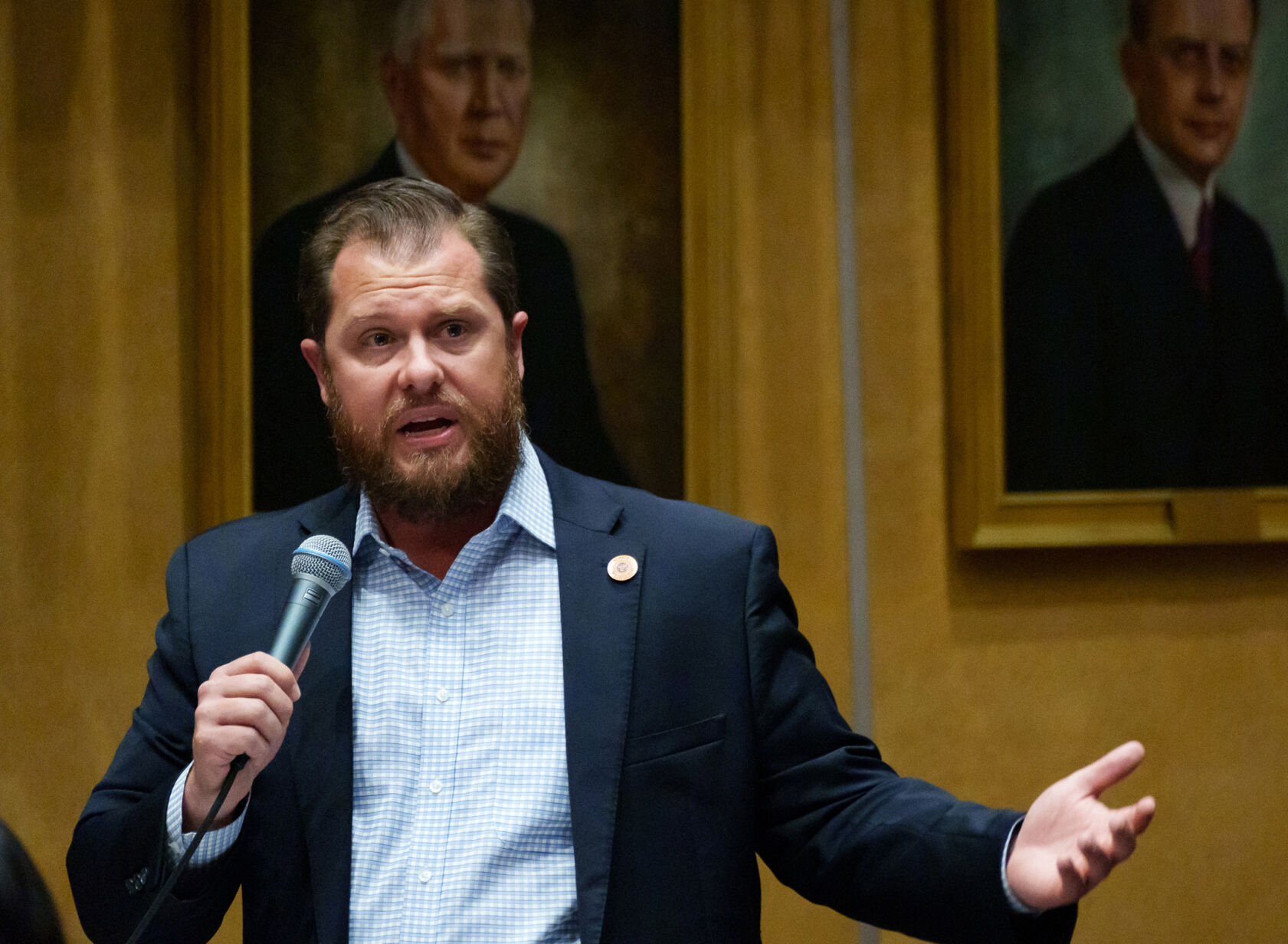
Sen. Jake Hoffman
Sen. Jake Hoffman, a Queen Creek Republicans, contends that using the federal numbers is not right.
“The U.S. Census Bureau has been politicized, unfortunately, by the Obama administration and the Biden administration’’ because they did not require the agency to ask respondents if they are citizens, Hoffman said.
“I think that is a travesty,’’ he said. “I think that when it comes to who represents the people it should be U.S. citizens in that count.’’
If approved by the GOP-controlled Legislature and then by voters, his proposal would mean the 30 districts drawn up after the 2030 census by the state’s Independent Redistricting Commission would be based solely on who is a U.S. citizen.
Put another way, areas with a higher-than-average percentage of those who are not citizens would have fewer representatives because their districts would have to be redrawn to take in a larger geographic area to find enough citizens.
That effect was not lost on then-Rep. Justin Heap when he sponsored similar legislation last year. He told Capitol Media Services that the current system results in districts with a large number of non-citizens being, in his words, “over-represented in the Legislature.’’
Senate Minority Leader Priya Sundareshan, a Tucson Democrat, called Hoffman’s proposal a form of “gerrymandering.’’
Nothing in Hoffman’s measure, if approved by voters, would directly affect the state’s congressional representation. Whether Arizona keeps its nine congressional districts or adds one or more after 2030 would still be determined by the numbers from the U.S. Census Bureau.
But Tempe Democratic Sen. Lauren Kuby said that just having a second set of people out there going door to door — and with one set asking whether everyone in the house is a citizen — could have a ripple effect on the federal count.
She said that could result in a “chilling’’ effect, with many residents, fearful of being questioned about citizen status, simply choosing not to answer and resulting in an undercount.
Sundareshan also noted that the measure would have the Independent Redistricting Commission hire an outside organization to conduct its own count.
“But it doesn’t describe how that would happen, how would we vet that organization,’’ she said. “How do we know that the entity chosen to conduct this duplicative census would not be some sort of unvetted, not reputable organization that would be handed over this significant chunk of money to go around and potentially terrorize the people in the state of Arizona?’’
On a more basic level, Sundareshan said there’s the issue of cost.
Legislative staff analysts, looking at a similar proposal last year, extrapolating out the costs of other special counts, said it could run as high as $158 million.
Hoffman brushed the numbers aside, saying the state has plenty of money if it spends it on priorities, of which he said this is one. What could disappear, he said, is spending on other issues such as $100 million into the state’s Housing Trust Fund.
The fund has provided financial assistance for first-time homebuyers and has helped to finance new affordable rental developments, homeless shelters, transitional housing and eviction prevention.
That suggestion drew derision from Kuby, who said if Hoffman is really interested in cutting state expenses, he would support saving $700 million a year by scrapping the system of universal vouchers that allows parents, regardless of income, to get state funds to send their children to private schools or home school.
But the debate in the Senate Government Committee earlier this week, largely between Hoffman and Sundareshan, really came down to who should be included in the count.
“Are you against ensuring that it is only lawful, legal citizens that are here in Arizona that are used for determination of representation here at the Capitol?’’ Hoffman asked.
“There are so many vital and needed services that are based off of census populations that contribute to not just redistricting for the purpose of representation but also the ability for us to draw down and take federal dollars for needed services that people need in this state,’’ Sundareshan responded.
Hoffman, however, said federal dollars would still be doled out based on the official federal count.
As to blaming Obama and Biden, that ignores the fact that President Donald Trump, during his first term in office, tried to get the Commerce Department to include a citizenship question in the then-upcoming 2020 census. His administration argued it was designed to help the Department of Justice better enforce the Voting Rights Act.
But the U.S. Supreme Court put a halt to the plan, saying all that was merely a pretext to put the question on the form, the first time that would have occurred since 1950.
Kuby said what Hoffman wants would undermine the purpose of a census, which is to determine who is in the state.
“Do you believe undocumented people are residents?’’ she asked.
“I believe that undocumented people right now are being deported in mass numbers because they aren’t legally supposed to be here,’’ Hoffman responded. “I do not believe they should be counted in terms of determining representation in the Arizona Legislature, or in any state legislature for that matter, or for the U.S. Congress.’’
The measure now needs the vote of the full Senate. If approved there and the House, it would go on the 2026 ballot, bypassing the need for approval by Democratic Gov. Katie Hobbs.

