

PHOENIX — The head of the Senate Education Committee thinks the salaries of the state’s three university presidents are “obscenely high.’’
He’s proposing to cap their pay at $500,000 a year — far lower than any of them are now making.
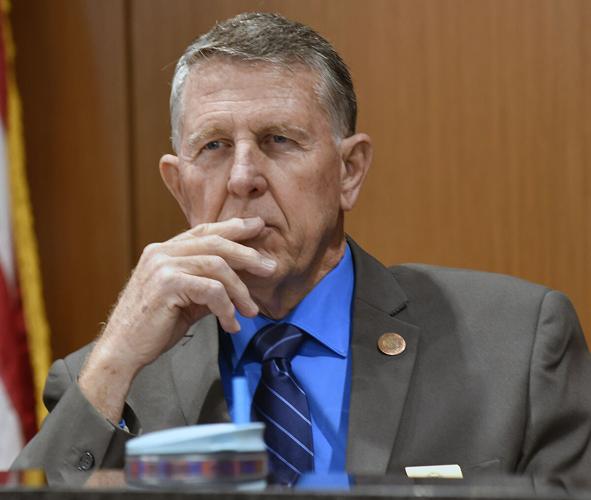
Sen. David Farnsworth’s Senate Bill 1453 also aims to prevent the Arizona Board of Regents from getting around that limit.
The legislation by the Mesa Republican would limit bonuses and benefits to no more than 15% of a university president’s salary. And those add-ons could be paid “only for performance that both exceeds the president’s assigned duties and directly benefits the institution’s students, staff or faculty.’’

Sen. David Farnsworth
The idea is getting a chilly reception from Democratic Gov. Katie Hobbs, even though her $90,000-a-year salary equals just a fraction of what the university presidents get, and despite the fact she is responsible for a state general fund budget that is approaching $18 billion.
“I support cutting out expenses wherever we can wherever possible,’’ Hobbs said Tuesday. But she said she wants to be sure the state is getting “the best of the best.’’
“And I don’t think the Legislature should be in the business of kneecapping our universities in being able to do that,’’ said Hobbs, who by virtue of her office is a member of the Board of Regents.
The regents, who oversee the state’s three public universities, decide what to pay the presidents.
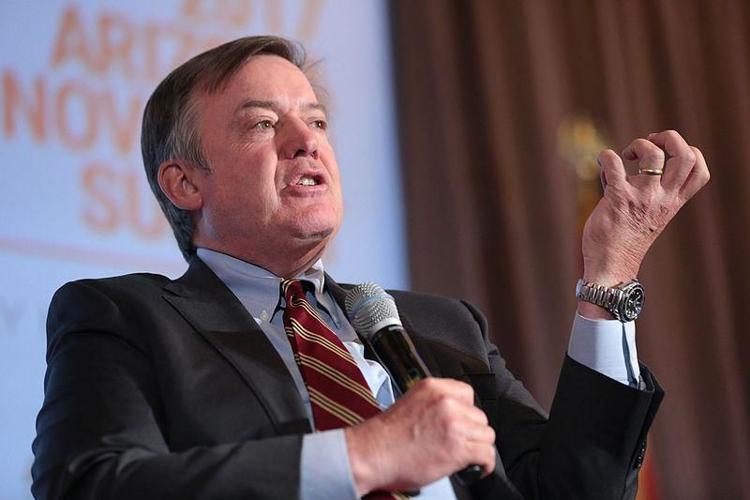
Topping the list is Michael Crow of Arizona State University. He has a base annual salary of $892,532.
On top of that he gets $70,000 a year as a housing allowance, $10,000 for an automobile allowance and contributions to his retirement program equal to 21% of his base salary.

ASU President Michael Crow
Then there is the possibility of $245,000 in additional compensation for meeting certain goals, at least one of which is measured by whether ASU sports consistently rank in the top three in the Big 12 conference.
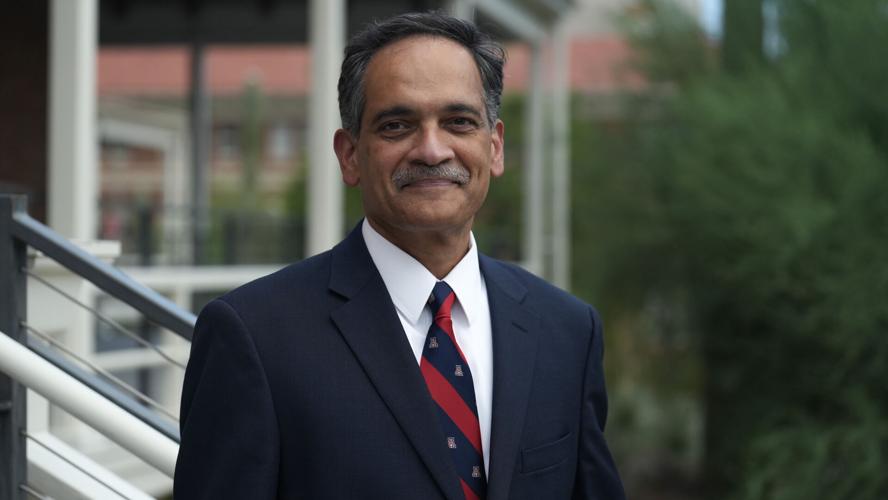
University of Arizona President Suresh Garimella gets a base salary of $810,000. There is no housing allowance as the school owns a home for its president, but he does get the $10,000 for a vehicle and retirement benefits equal to 18% of his base salary.
Garimella is eligible for another $225,000 for meeting goals including bringing the university budget under control — at one point under former President Robert C. Robbins it was $177 million in the red — and establishing the university as a dominant force in revenue-generating sports and within the Big 12 conference.

UA President Suresh Garimella
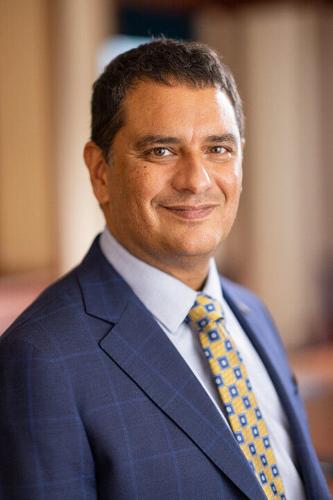
Jose Luis Cruz Rivera, president of Northern Arizona University, has a base salary of $712,925 along with retirement contributions and allowance for housing and a car. He can get another $190,000 for meeting goals.

Northern Arizona University President Jose Luis Cruz Rivera
Farnsworth acknowledged he has “a skewed perspective’’ on people making that much because of how he grew up.
“I was raised poor,’’ he said. “Then I got married young and my children grew up poor by today’s standards. And so when I look at these salaries in general I think they’re obscenely high.’’
Hobbs’ salary equals 10% or less of the total compensation packages of any of the university presidents. She has no housing alliance and there isn’t a governor’s mansion, but she is driven around by her state-funded security detail.
But Hobbs said this isn’t a question of pure numbers. She said the only way to measure whether the salaries of the university presidents are too high is by results.
“Arizona is home to cutting-edge, world-class universities who are engaged in significant research that is keeping us on the cutting edge of medicine, on technology, on advanced manufacturing, on solving our state’s and our world’s climate crisis,’’ she said.
The governor sidestepped a question of whether those successes are the result of who is the president of each institution versus deans and professors involved in that work.
Farnsworth sniffed at the suggestion that paying higher salaries results in better-qualified candidates.
“I’ve heard that argument,’’ he said. “It doesn’t impress me because, quite frankly, I have not been impressed with the job the university presidents have been doing.’’
He cited as one example the “big money problems’’ at UA.
But Farnsworth said his views about excessive salaries are not limited to the university presidents. He said they also apply to those running public agencies.
“”I think if somebody wants a big salary they ought to be working in free market, not in government,’’ he said.
Ditto, Farnsworth said, of organizations that bill themselves as nonprofit entities. “When I come across one of them, I always ask, ‘OK, how much does your CEO make?’ ‘’ he said.
“I kind of have a standard if you’re making a large salary you’re probably more interested in the money than helping people,’’ said Farnsworth.
The measure is set for a hearing in the Senate Education Committee on Wednesday.

