




The responses at first added up to nothing more than natural indignation at insensitive comments made about Charlie Kirk’s assassination.
A Pima County public defender seemed to celebrate Charlie Kirk’s assassination on Facebook, and a local attorney asked his bosses to fire him.
A Tucson City Council member appeared to curse Kirk on Instagram in the aftermath of his death, then an online mob targeted her, and a police union demanded she be removed from the council.
Arizona Daily Star columnist Tim Steller
A local florist re-posted comments suggesting Kirk’s position on guns set the stage for his own death, and in the aftermath, he was fired.
These were just a handful of the local people targeted for saying insensitive things in the aftermath of Kirk’s killing Sept. 10 in Utah, some of the episodes building into threats and doxxing. In some cases, what they said indeed seemed celebratory. In other cases, the comments were simply unsympathetic to someone whose views they despised.
What began as an organic response in Tucson and around the country quickly became an online campaign. Some popular social-media accounts run by conservative activists like Scott Presler began targeting people whose comments about Kirk they didn’t like, trying to get them fired.

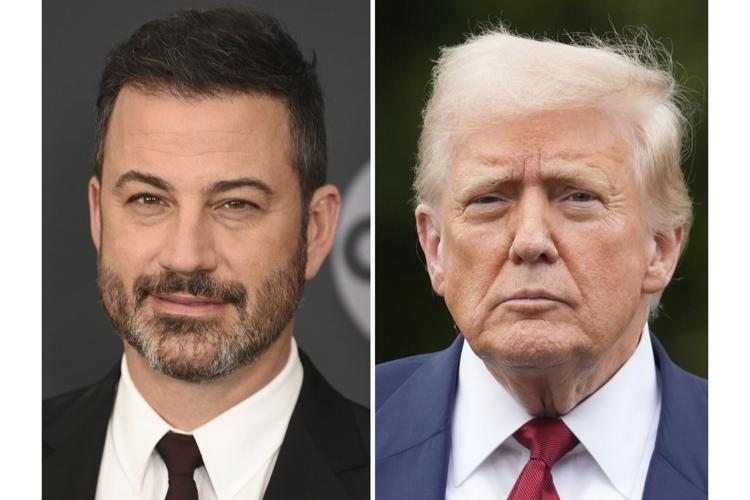
The Trump administration’s effort to punish people who were insensitive to Charlie Kirk’s death online have dovetailed with federal efforts, like the successful push to oust comedian Jimmy Kimmel from his show on ABC.
Then, last week, the national online mob became federal government policy.
“When you see someone celebrating Charlie’s murder, call them out,” Vice President J.D. Vance said when hosting the slain Kirk’s podcast on Monday. “And hell, call their employer.”
As it turns out, those small acts of disgust have now become part of something much bigger — a Trump administration effort to censor not just those who criticize allies like Kirk but also Trump and his government. The efforts to punish people who were insensitive online to Kirk’s death now dovetail with federal efforts like the successful push to oust comedian Jimmy Kimmel from his show on ABC.
Who gets to decide consequences?
“Freedom of speech doesn’t mean freedom from consequences.” That’s the party line among those who have been targeting people who made insensitive comments about Kirk’s death. So what should these extralegal consequences be, and who decides?
Tucson City Council member Lane Santa Cruz has been contemplating those issues since an online post she made, referencing “karma” in the aftermath of Kirk’s killing and saying “God curse you” in Spanish.
It was an inside reference, she later said, drawing on her evangelical Christian upbringing, not meant for consumption by people who don’t know her. But that was, of course, a naive expectation, and she was targeted widely as pictures of her post circulated online, despite a later post in which she unequivocally denounced political violence. She closed her Ward 1 council office as a result of the threats.
Congressional Democrats denounced the Trump administration’s threats against political critics in the strongest terms, saying that it strikes at the fundamental right to free speech.
“Regardless of interpretation,” she said in a text to me, “the targeted harassment, threats and doxxing against me and my family are unacceptable. It is deeply ironic and troubling that ‘free speech’ is being used as a weapon to silence and endanger others.”
The Tucson Police Protective League, one of the unions representing Tucson police officers, called on the City Council to remove her from office. Santa Cruz, meanwhile, is asking the city manager to come up with a plan to better secure her and other city officials using, among other resources, Tucson police.
Rhetoric to blame?
In the days after Kirk’s assassination, the party line from President Trump on down was that leftist rhetoric caused Kirk’s killing.
“This kind of rhetoric is directly responsible for the terrorism that we’re seeing in our country today, and it must stop right now,” Trump said.
This may have sounded familiar to Tucsonans. After the Jan. 8, 2011, mass-shooting here, targeting then-Rep. Gabrielle Giffords, Democratic Sheriff Clarence Dupnik blamed vitriolic right-wing rhetoric for the attack.
There isn’t any evidence in either case that rhetoric was the real cause. Jared Loughner, who targeted Giffords and killed six others, was in psychosis and cited delusions about grammar and literacy as his motive.
We don’t have a clear picture of the motive of Kirk’s accused killer, Tyler Robinson, yet, but he said in a text message cited in a court filing that “I had enough of his hatred.” In other words, he targeted Kirk, inexcusably to me, over Kirk’s speech.
What’s illegal when it comes to speech inciting violence was narrowly defined in a 1969 case called Brandenburg vs. Ohio. That Supreme Court ruling set up a two-part test for whether speech illegally incites violence:
1. The speech must be “directed to inciting or producing imminent lawless action,” AND
2. The speech must be “likely to incite or produce such action.”
It has to do both for the government to have the right to intervene. Vanishingly few of the criticisms of Kirk meet that standard.
‘I think he should be terminated’
Some people have pointed to celebration of Kirk’s killing as equivalent to incitement. Legally, it just isn’t.
Jeremy Zarzycki, the public defender, posted after the killing of Kirk, “They (expletive) sniped Charlie Kirk,” accompanied by emojis of champagne bottles. It was bad, in my opinion. I asked Zarzycki in a Facebook text exchange why he seems unrepentant in his views.
Speaking for himself, not his employer, he said, “I’m repentant in so much as I never want to do anything that hurts the reputation of our work as public defenders.”
“But, personally, because Charlie Kirk was a hateful person who espoused Great Replacement Theory, repeatedly implied the inferiority of black people and wanted to strip women of rights, I have absolutely no sorrow that he’s gone and, frankly, I feel relief for my marginalized friends that they have one less person in this world spewing vile rhetoric against their very existence.”
Tucson-area attorney Caitlin Watters complained to the Pima County Public Defender’s Office, Zarzycki’s employer, about the post, county spokesman Mark Evans told me.
“To celebrate the assassination of someone is really never ok,” Watters told KVOA Channel 4, “I think he should be terminated. My taxpayer dollars are paying his salary. I’m not comfortable with that.”
(Watters previously sued me, a former colleague and the Arizona Daily Star over coverage focused on her father, former Justice of the Peace Adam Watters. The Star won a dismissal of the case.)
County officials determined the post was done on his personal time and constituted protected speech, Zarzycki said. The county declined to confirm this, noting it is a personnel issue.
Designer loses his job
Patrick Love isn’t a public official — just a floral designer who worked most recently at Casas Adobes Flower Shop at Ina and Oracle.
Love, 68, told me he discovered early this year that he and his employers disagreed politically, when they got into an argument about the Department of Government Efficiency.
After Kirk was killed, Love said, the shop’s owners learned of a political discussion at work amongst the florists, and then looked up his posts online. One was a repost of the line, “I don’t support what happened to Charlie. Charlie supported what happened to Charlie.”
This was a reference to Kirk’s argument that gun deaths are an unfortunate but inevitable consequence of having a citizenry with gun rights.
Love said one of the owners told him that he needed to take down his Kirk-related posts, arguing that he represents the store, and Love refused. They eventually fired him, he said.
Owner Matt Biggs didn’t answer my specific questions about the episode, but said this:
“Providing our employees with a safe, discrimination-free workplace is and always will be our top priority. We are 100% committed to fairness, equality, diversity, inclusion, and respect. We strive to maintain a work environment where all employees feel safe, empowered and heard. We have zero tolerance for discrimination or violence of any kind. Any action taken by our management is done so within these core values and reflects our commitment to a safe and inclusive working culture.”
Misguided censorship campaign
All of this would just be a rash of natural conflict over a shocking political killing except for the broader political context. That context paints a clear picture of a government out to squash its political enemies and their speech, enrolling their supporters in the effort.
Stephen Miller, Trump’s top adviser, labeled left-wing organizations a “vast domestic terror movement” and vowed to use federal law enforcement to dismantle them.
U.S. Attorney General Pam Bondi said she would use federal force to target “hate speech” that “cheers on political violence.”
FCC Chair Brendan Carr imitated a mob boss in saying about ousting Kimmel, “We can do this the easy way or the hard way.”
Trump himself complained, “They’re giving me all this bad press, and they’re getting a license,” adding, “I would think maybe their license should be taken away.”
It’s not just ironic but also plain wrong to use the assassination of a free speech champion like Kirk to mount a censorship campaign. But that, alas, is what all this adds up to.

