


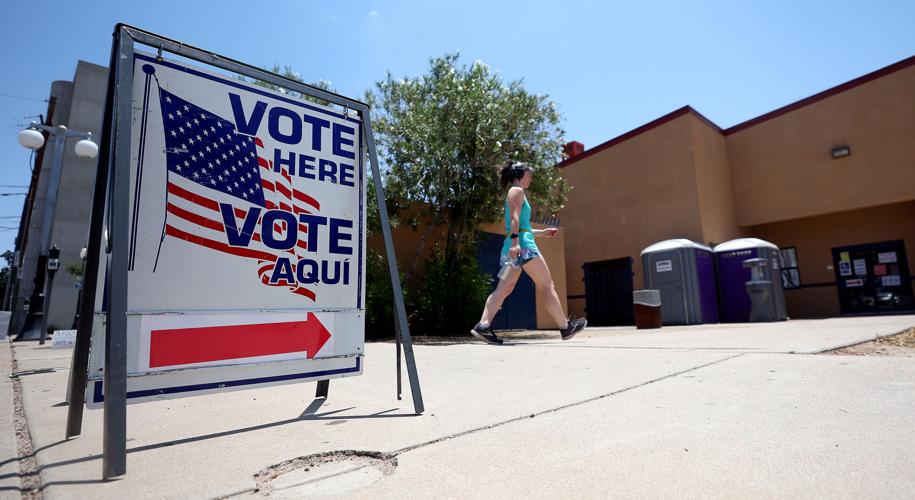

You would be excused if you aren’t too aware that a city of Tucson general election is coming up Nov. 4.
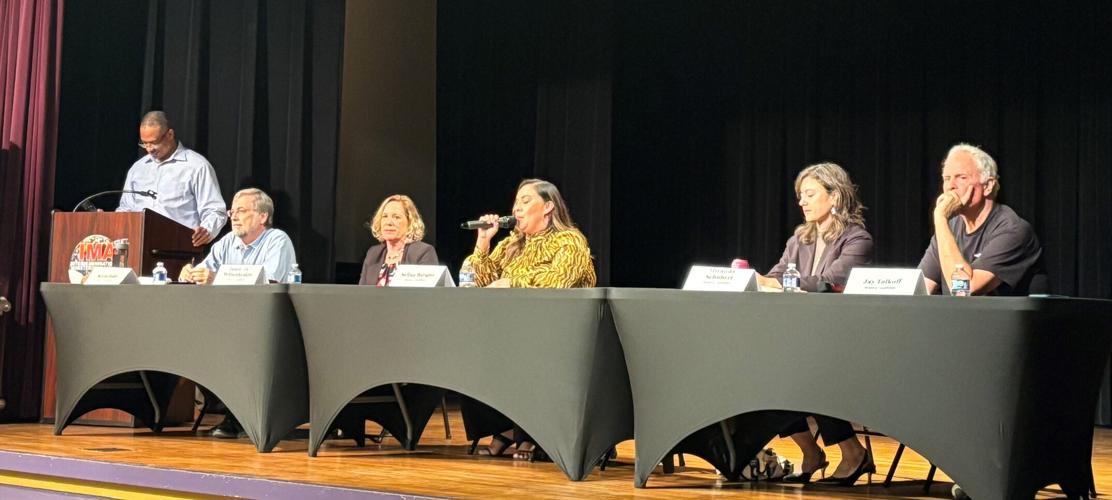
The excitement is pretty low. In fact, it’s so low that even a free barbeque dinner Monday night brought out just 50 or so attendees to the only forum for City Council candidates scheduled this general-election season.
That event was hosted by the Interdenominational Ministerial Alliance, a local African-American religious consortium, along with the local NAACP and National Pan-Hellenic Council, and held at the Dunbar Pavilion.
The League of Women Voters, which held a candidates’ forum during the primary election, has not scheduled one for the general election candidates.
To their credit, all five candidates showed up and spoke, even Selina Barajas, the Democrat who is running unopposed in Ward 5. She told me afterward that she is still door-knocking and trying to win as many votes as she can despite having no opponent.
But it is a real question whether voter turnout in the citywide general election will go much higher than the 17% it reached in the Aug. 5 primary election. And there’s a reason for that.
Although hosts of Monday night’s forum repeatedly emphasized the importance of the vote, Tucsonans are justified in wondering if it really matters much in our general elections. With Tucson having a predominantly Democratic electorate, the city’s election system effectively rigs the outcome of these races in favor of Democrats once they reach the general election stage.

The five general election candidates for Tucson City Council spoke at a forum at Dunbar Pavilion on Sept. 15.
There are 306,464 registered voters in Tucson, according to the latest data from the Pima County Recorder's Office. Of that total, 127,989 are Democrats, 106,533 are unaffiliated, and 66,103 are Republicans.
You probably know about Tucson’s so-called “hybrid” election system, which I’ve criticized repeatedly over the years for favoring the Democratic plurality. In Tucson’s partisan primary elections, it is each ward’s voters who choose the winners, but in the general election, all city voters are eligible to vote for the council member in each ward.
In other words, the whole city’s voters can overrule an individual ward’s choice of who they want to represent them, and that has happened in the east side wards sometimes.
Although Republicans have been elected under this system as recently as 2009, when Steve Kozachik won office as a Republican, we have had years of Democratic domination, with all six council members and the mayor being Democrats.
People have tried to change this system over and over, due to its evident unfairness, but the powers that be have not seen fit to put it on the ballot lately. Voters rejected proposals to create some form of ward-only elections in 1975, 1991 and 1993. After that, people repeatedly made efforts to put it on the ballot but failed, most recently in 2023.
Another effort to make Tucson elections fairer came out of the state Legislature in 2009. The legislation, sponsored by Jonathan Paton, then a state senator from Tucson, would have ended Tucson’s partisan election system and the hybrid elections.
In other words, Tucson would have had primary and general elections in which the candidates’ party was not listed, and only a ward’s voters could elect its council member. The city of Tucson challenged that law in court and won, then won a subsequent challenge to the hybrid system in federal court.
I would love to see ward-only elections and/or “jungle primaries” in Tucson. Jungle primaries are those in which every candidate of every party runs against each other, and the top two advance to the general election, regardless of party. This could even work within and help out competition in our hybrid system, if it must be preserved.
It would be interesting, for example, to see Jesse Lugo, the second-highest vote-getter in the Ward 5 Democratic primary, running citywide against Barajas in the general election.
In Ward 6, if the vote totals achieved in this year’s primary occurred in a jungle primary, the race wouldn’t be between Democrat Miranda Schubert and Republican Jay Tolkoff. It would be between Schubert and second-place Democratic candidate Leighton Rockafellow, probably a closer competition.
And that’s important in part because these guys are paid really well now — $96,500 per year. The position also gives each council member the ability to hire a handful of staff members and occasionally fund projects around town.
These pay raises, approved by Tucson voters in 2024, may have helped competition in the Democratic primary elections. There were eight candidates for the three offices in those primaries.
Ward 3 Democratic incumbent Kevin Dahl beat challenger Sadie Shaw by just 19 votes in that race. Instead of running against Shaw, who won 3,277 votes in the primary, he is facing Janet “JL” Wittenbraker, who won 1,513 primary votes.
Nothing against Wittenbraker as a candidate, but Shaw versus Dahl would probably be a more competitive general-election race in a citywide Tucson election.
That kind of competition is what voters deserve — along with a plate of barbecue ribs and a cupcake.

Tucson needs to reform its election system, which favors Democrats, to boost competition.

